
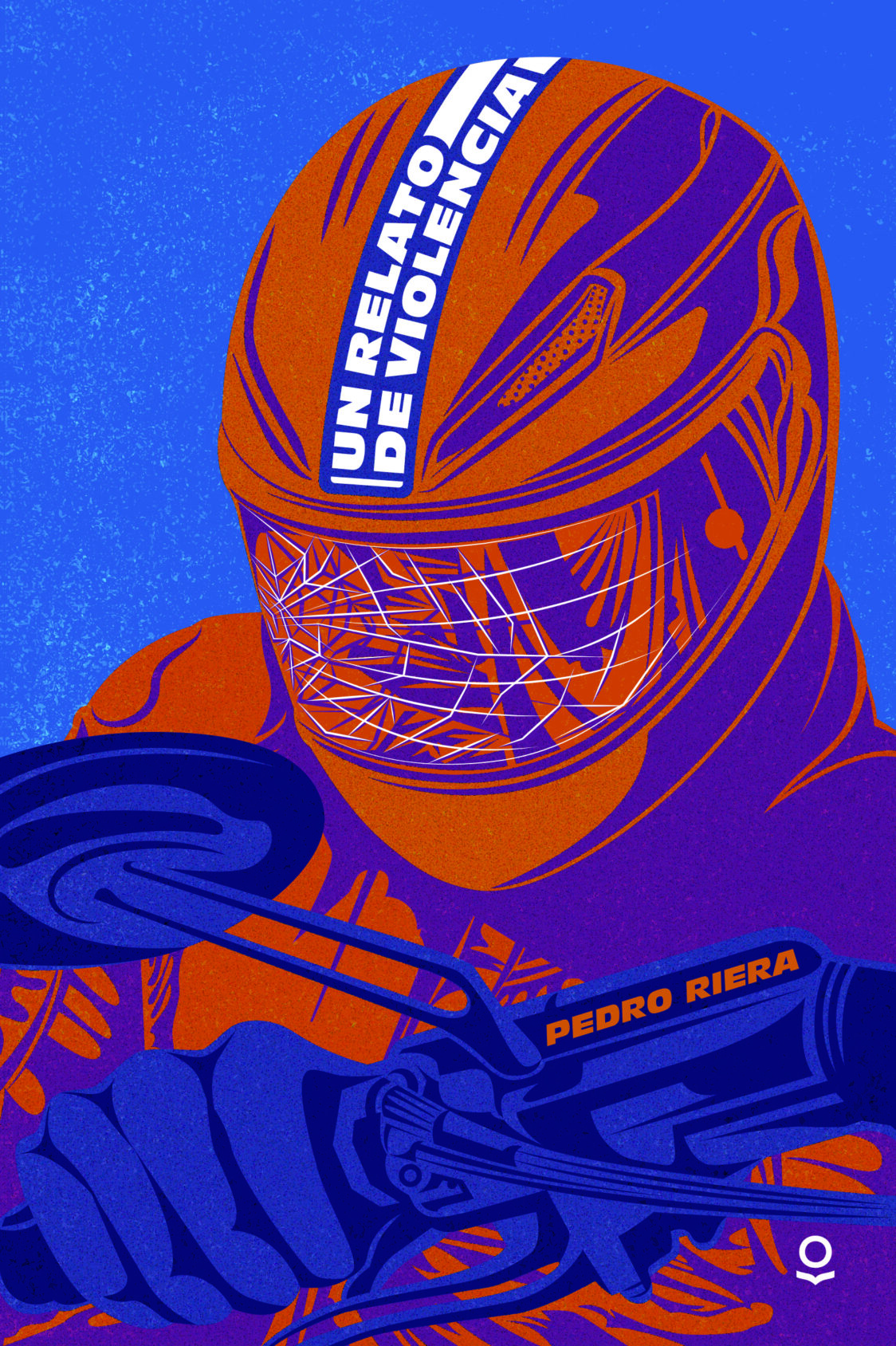
What begins as a simple act of social protest explodes into a violent game that drags Gabriel and his teenage friends toward a point of no return. A novel that leaves a burning question in the reader’s mind: can violence ever be justified?
Gabriel, a lucid, ironic teenager full of suppressed rage, carries since childhood an open wound: his relationship with Toni, a former friend—brilliant, manipulative, and always convinced he is right. Years after Toni humiliated and cast him aside, Gabriel runs into him again. That encounter becomes a trigger: Gabriel needs to prove that sometimes he, too, can be right. The opportunity arises when he witnesses a traffic jam caused by a car double-parked in a second lane, blocking an ambulance. In that moment, he sees it clearly: something must be done. Something forceful enough to prove to Toni that sometimes Gabriel is right—in this case, that violence works to change things.
Together with Fito, his childhood friend who had been pushed aside by Toni, Gabriel launches a subversive campaign: attacking double-parked cars by smashing their windshields, filming everything with a GoPro, and sharing the videos on social media. What begins as a symbolic act turns into a clandestine, visually striking, and ambitious project. They recruit Hamida, a brilliant and creative girl skilled in video editing, and later Lola, Gabriel’s idealized childhood love. The campaign gains momentum, the videos go viral, and the group becomes a small activist cell fueled by adrenaline.
But things begin to unravel. The love story that starts with Lola—intense and dreamlike—takes a dark turn. Gabriel begins to notice troubling signs in her behavior: manipulation, lies, and cruelty toward others. The campaign also mutates: Arturo, Lola’s violent ex-boyfriend, joins with his gang, bringing a more radical and aggressive force. Violence escalates gradually. Fito, eager to stop being invisible, is drawn into Arturo’s leadership, and Gabriel slowly finds himself increasingly isolated.
The breaking point comes with the brutal assault on Chema, a friend of the group whom Arturo falsely accuses of attacking one of his own at a club. From that moment on, Arturo targets him relentlessly. Aware of the danger, Gabriel hides Chema in his home, but cannot protect him: they eventually find him and beat him severely. The most devastating blow comes when Gabriel realizes that Fito, his best friend, may have been involved in the ambush. Overwhelmed with rage, he confronts him and ends up hitting him in the middle of class. The consequences are immediate: Gabriel is expelled from school. At the same time, he breaks up with Lola after discovering she has manipulated him from the beginning, using their relationship as part of a game of power and revenge.
Isolated, betrayed, and emotionally shattered, Gabriel realizes he has lost not only control of the cause, but everything that gave his life meaning. The city has begun to change—the media talks about the movement, the police take action, traffic improves—but no one credits him. He has lost control, his friends, love, and part of his identity.
The ending arrives with a symbolic act: Toni, as a test of friendship and a final lesson, shoots him with a paintball gun so he can experience what it means to be a victim. Gabriel finally understands that violence can never be controlled. It has left a real mark, yes—but the cost has been enormous.
RELEVANT INFORMATION: Pedro Riera is a Spanish writer and comic scriptwriter specializing in children’s and young adult fiction. He has won the El Templo de las Mil Puertas Prize twice, as well as the CCEI Prize, the Edebé Prize for Young Adult Literature, and the City of Málaga Children’s Literature Prize.
A Tale of Violence combines contemporary realism with the tension of a young adult thriller to create a powerful and timely narrative about justice, violence, manipulation, friendship, and power. Somewhere between a social experiment like The Wave, but in the age of YouTube, the novel delivers an intelligent and gripping critique of violence and the media, while offering a sharp and honest portrayal of teenage friendships. It stands out for its ability to blend romance, social critique, and action.
AUDIOVISUAL POTENTIAL: TV Series, Miniseries, Film, TV Film.
AVAILABLE LANGUAGES: Spanish.
Adquirir los derechos
Para ponerte en contacto con nosotros completa el siguiente formulario y te responderemos en breve.
