
In the frenetic Madrid of the 1980s Movida, a young woman from high society is found dead from an overdose in a Malasaña doorway. Friends and family try to understand what happened, revealing the darker side of an era that promised freedom but ended up claiming many lives. An intensely emotional generational drama.
Before dawn breaks, the sight of a collapsed figure in the doorway of a Malasaña building shatters the silence of early morning. Smudged makeup, punk hair, high boots… everyone assumes it’s Siberia, an icon of Madrid’s nightlife. But beneath the disguise lies Adela, the daughter of the Marchioness of Argol, dead after a frantic night that began at the legendary tribute concert for Canito at the School of Civil Engineering—the spark that ignited the Movida and extinguished her life.
To understand how she ended up there, we must go back to the previous New Year’s Eve. At a party in a villa on Pío XII Street, Adela arrives with her boyfriend Teo and runs into old acquaintances: Aldo and Ric, inseparable friends, and Diana, a former friend from whom she had grown distant due to tensions between their mothers. That night sows the seeds of betrayal, as Teo leaves with Diana’s phone number in his pocket. Days later, he seeks her out at the Vía Láctea nightclub and becomes entangled in her shady dealings. Drugs and a fascination with danger do the rest, and Teo begins an affair with Diana.
While Teo sinks deeper into that world of petty crime and addiction, Adela searches for him bar after bar. At one point, Teo reappears to ask her for a valuable necklace given to her by her mother. His excuse: to wear it during an audition for a punk band and stand out. But his real intention is to sell it to cover Diana’s drug debts. When Adela learns the truth, she confronts him in a scene filled with bitterness and accusations. It is Siberia—Aldo’s radiant, performative drag persona—who intervenes to protect her, though the damage is already done.
The following day, devastated by Teo’s betrayal, Adela meets Aldo. Trying to cheer her up, he suggests she attend the School of Civil Engineering concert dressed as Siberia—bold, dazzling, and impossible to ignore. Adela agrees, unaware it will be her last night. As we know, her body appears that same night in a doorway, dead from an overdose. Ric is the last person to see her alive.
The next day, the marchioness turns to Aldo—whom she knew in her own youth, when she too roamed Madrid’s nightlife—to clear out her daughter’s “back room,” a private sanctuary filled with memories, secrets, and an unbearable smell. Torn between guilt and the desire to preserve appearances, she demands Aldo’s silence. He leaves, dazed, and looks for Ric, but cannot find him—he is likely still out partying.
Years later, in 1983, Aldo lies dying, consumed by AIDS, cared for by Ric, now aged and ravaged by drugs. A doctor, summoned in advance “for when the time came,” administers an injection that grants Aldo a peaceful death. Ric, unable to free himself, continues injecting until the end of his own life.
In the electric glow of the Movida, where everything seemed new and possible, the story of Adela, Aldo, and their friends reveals the other side of the party: broken loyalties, dependency, addiction, and loneliness. Because sometimes the music that defines an era also marks its victims.
RELEVANT INFORMATION: Enrique Llamas is a Spanish writer specializing in the communication of visual arts, contributing to various media and writing about literature and theater. His debut novel Los Caín earned him the Silverio Cañada Memorial Award for Best Crime Fiction Debut.
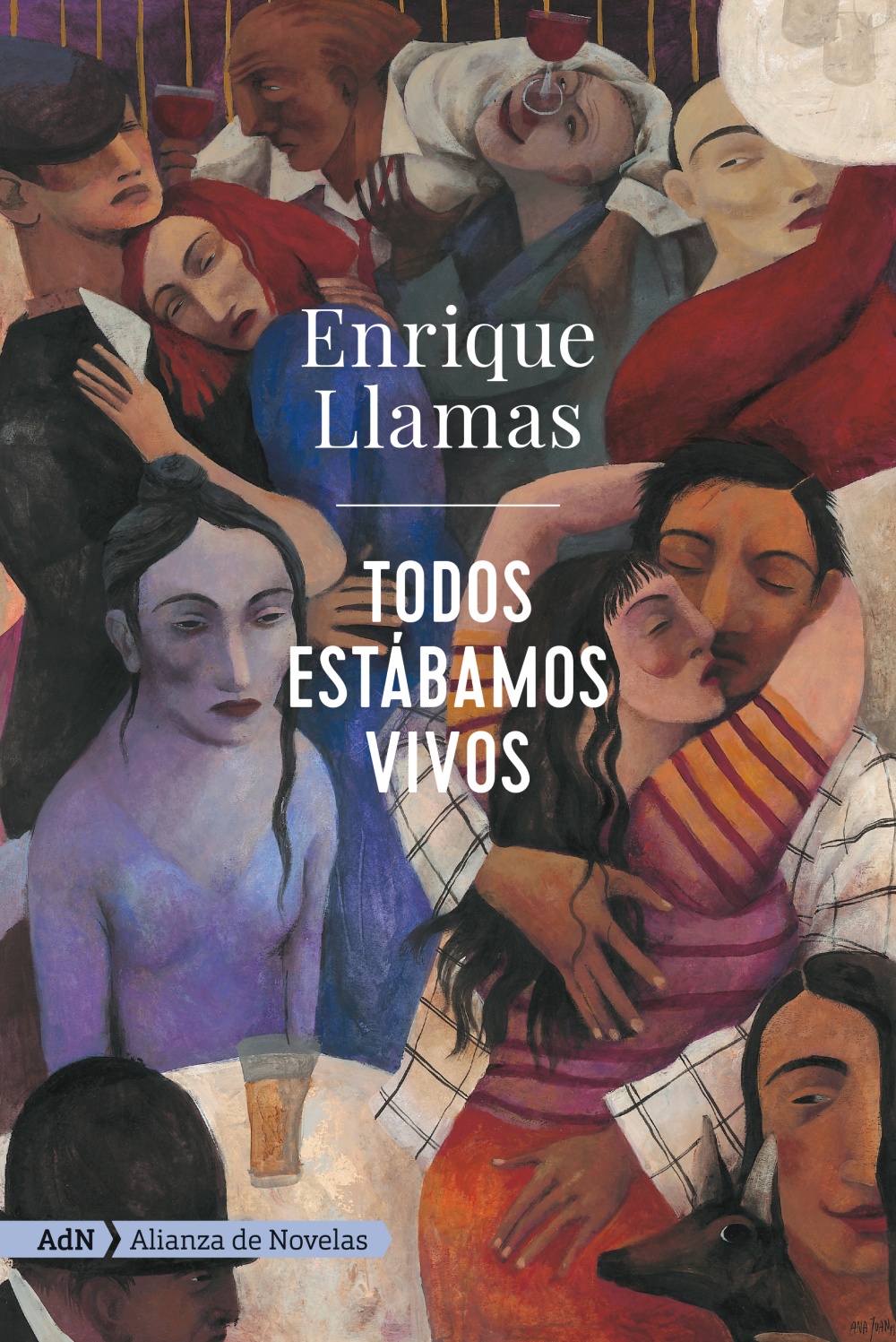
Todos estábamos vivos is an emotional, vibrant, and melancholic story set amid the excesses of Madrid’s Movida, offering an ensemble, generational portrait of an era and, above all, a way of life. The novel is structured in chapters moving backward through time, reconstructing the story from its consequences back to its causes. Characters from vastly different social backgrounds converge on a single night that serves as a microcosm of the period.
The vivid 1980s Madrid setting is enhanced by a narrative that blends the youthful, liberating energy of the era with an undercurrent of tragedy, addiction, and loss of innocence. The contrast between newfound freedom and the shadow of heroin and AIDS creates a powerful dramatic arc, portraying the time not as something to demonize, but as it truly was.
AUDIOVISUAL POTENTIAL: TV Series, Miniseries, Film, TV Movie
AVAILABLE LANGUAGES: Spanish
Adquirir los derechos
Para ponerte en contacto con nosotros completa el siguiente formulario y te responderemos en breve.
