
After an epidemic causes consciousnesses to jump uncontrollably from one body to another, a woman trapped in the body of an old man—and other victims of “the change”—are forced to live in alien bodies while searching for the people they love in a world that is falling apart.
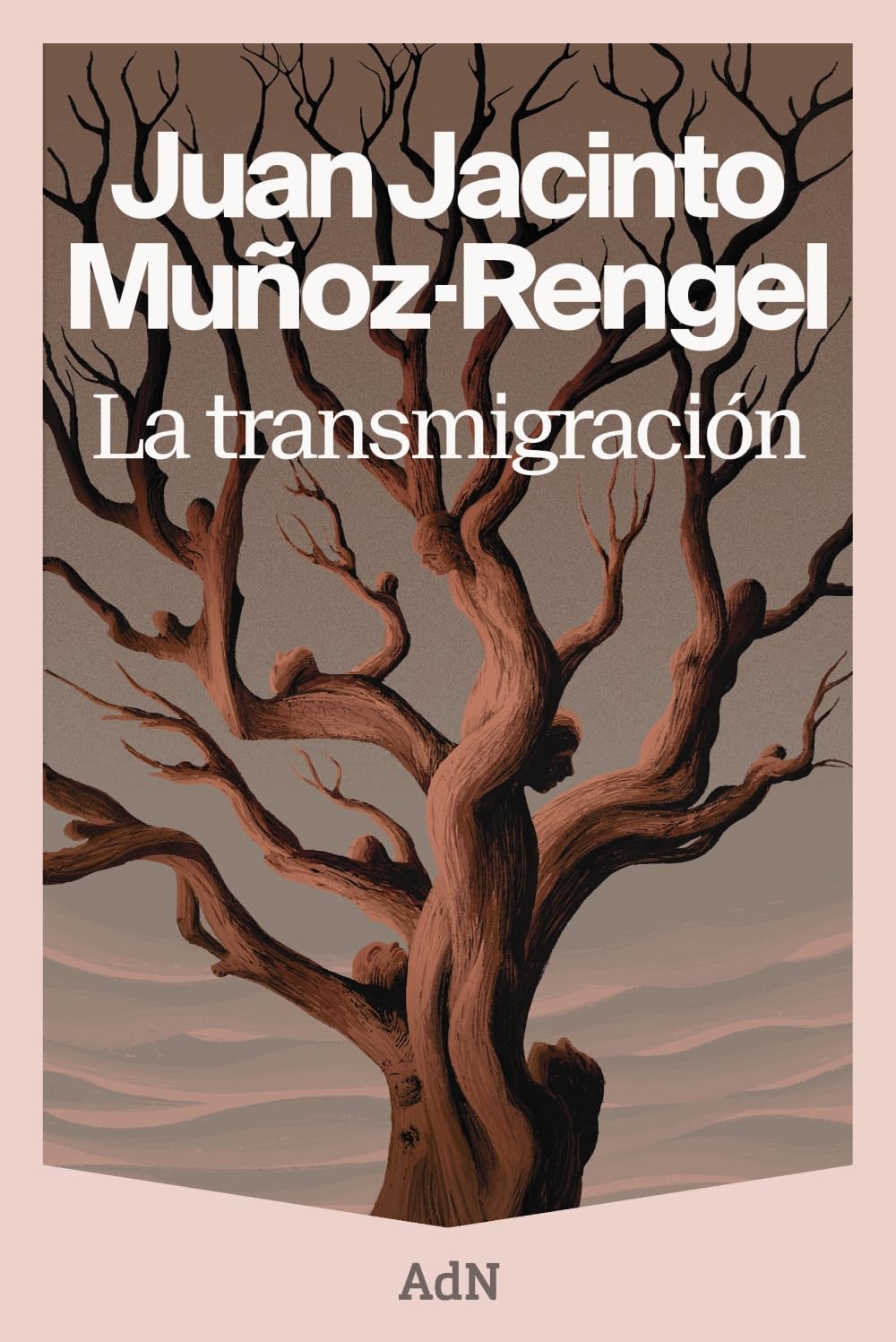
Humanity faces absolute collapse when an inexplicable epidemic—“the change”—causes consciousnesses to jump chaotically from one body to another. Within hours, the world loses all reference points of identity: families torn apart, professions rendered meaningless, institutions paralyzed. The novel follows a group of characters who, trapped in чужas bodies, struggle to survive while reconstructing who they are in a scenario where the concept of the “self” no longer has boundaries. Amid the chaos, an inevitable strain of dark humor emerges—the kind that surfaces when reality becomes so absurd that laughter is the only way to avoid falling into the abyss.
For Andrea, life was already hell before everything exploded. Her job was consuming her, and her ex-husband—a miserable abuser—had managed to take away custody of her only reason for going on: her son Rodrigo. But nothing compares to what happens when she opens her eyes and discovers she no longer inhabits her own body, but that of a sick, fragile old man with only days left to live. Disoriented, aware that no one will be able to recognize who she truly is, Andrea faces a world that has lost all logic.
The epidemic is causing consciousnesses to jump without control, erasing any sense of identity. Andrea’s body, for example, has been taken over by a child sexual predator who now walks around wearing her face. And the old man in whose body she has awakened, Doctor Garrigues, suddenly enjoys an unexpected vitality after appearing in the young, strong body of a rural slaughterhouse worker. Nor is she the only victim: Marta, an aspiring influencer, sees her life blown apart when she wakes up in Tokyo trapped in the body of a Japanese man whose language and environment are completely incomprehensible to her.
Amid the collapse, Andrea acts on pure caregiving instinct. Although she remains trapped in the frail body of the old man Garrigues, she cannot help but protect the most vulnerable. She gathers children who have awakened in alien bodies and, together with other disoriented adults, tries to keep them safe in a ruined world. Andrea joins a small group of survivors—among them adults as lost as she is, including Garrigues himself in his new physical identity—and together they turn a hospital into a minimally organized refuge: basic medical care, limited power supply, rules for coexistence. A small civilized core that contrasts with the outside world, which is becoming a savage land ruled by hunger, fear, and violence.
But hope falters when a terrifying detail comes to light: the change could happen again at any moment. The threat of a new massive exchange makes it impossible to plan for the future and renders any form of order or community precarious.
Even so, in a broken world, something unexpected begins to emerge: a form of radical empathy, born from the obligation to live literally in someone else’s skin. Between dark humor, despair, and moments of startling tenderness, Andrea clings to the only thing that gives her life meaning: finding her son in a world where bodies no longer reveal who inhabits them. And in that search, the last thing that remains intact in this new savage era is at stake: her humanity.
RELEVANT INFORMATION: Juan Jacinto Muñoz Rengel is a Spanish writer of narrative fiction—short stories, novels, and essays—with a PhD in Philosophy. His work blends the fantastic and the supernatural with philosophical reflection and a strong metafictional component. He has been translated into numerous languages (English, French, Italian, Turkish, Arabic, among others) and published in more than a dozen countries. He has received awards such as the Ignotus Award for Best Short Story Collection and the Best Novel in Spanish Award at the Celsius Festival, and has also been shortlisted for major literary prizes. In the field of short fiction, he has accumulated more than fifty national and international awards.
The Transmigration holds enormous audiovisual potential thanks to the conceptual power of its premise and the emotional intensity of its characters. Its approach—both powerful and unsettling—allows for the development of a story full of tension and mystery without renouncing moments of deep intimacy and strong emotional impact. The novel offers very solid dramatic arcs: Andrea’s struggle to reunite with her son, the formation of a community within the hospital, and the constant threat that chaos may once again be unleashed. At its core, it is a tale of survival and identity in a world on the brink of collapse—a narrative that combines action, suspense, and philosophical reflection with a tone that is as disturbing as it is human.
What the press says:
“An unprecedented collapse in the history of dystopian fiction.” — Jorge Carrión
“If our attention span hadn’t been stolen from us, everyone would be talking about this book and it would be winning all the awards.” — Fallo de Sistema, Radio 3
“The Transmigration was born to blow apart all our mental frameworks.” — El Asombrario, Público
“You won’t read anything better this year. Or the next.” — Elia Barceló
“Juan Jacinto Muñoz-Rengel always moves around the uncanny, pushing the nature of things to their limit.” — Antonio Martínez Asensio, Cadena SER
“A wonderful and terrifying novel about the eternal duality between mind and body, devoured with the eagerness of a thriller. An honest exercise in true literature.” — Miguel Garrido, Zenda
“One of the foremost exponents of the genre in Spain. The concept of identity takes on a new meaning in The Transmigration.” — Alejandro Luque, El Diario.es
AUDIOVISUAL POTENTIAL: TV Series, Miniseries, Feature Film, TV Film.
AVAILABLE LANGUAGES: Spanish.
Adquirir los derechos
Para ponerte en contacto con nosotros completa el siguiente formulario y te responderemos en breve.
