
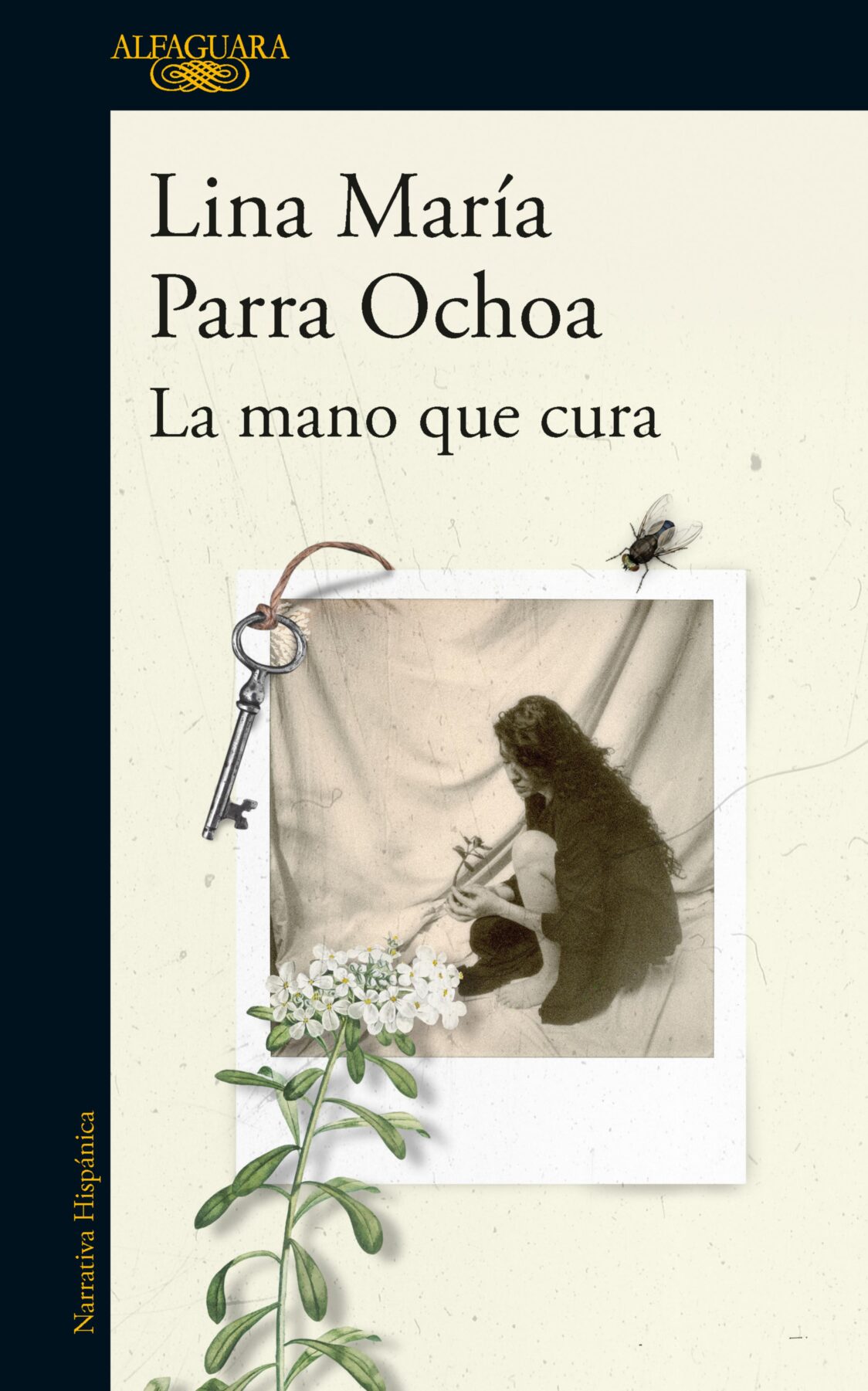
The debut novel that established Lina María Parra Ochoa as one of the new promises of contemporary Latin American literature, already translated into several languages. After her father’s death, a young woman discovers she has been marked by an ancient gift: the power to heal or to kill with her hands. Caught between grief and guilt, she must learn to live with a force that turns love into danger and every gesture into a final choice.
On the night her father is dying, Lina accompanies him through a family ritual. She cuts his toenails, places her hand on his chest, and waits for his heart to stop. An intimate and deliberate gesture, witnessed by no one else, that unknowingly activates a power she does not understand.
From that moment on, the house where she lives begins to decompose: black flies appear, plants die, mold spreads, and a presence takes on the form of her deceased father. Lina’s guilt is not abstract—it manifests as a force that threatens to destroy her family.
Lina returns to her mother’s home, where she lives with her mother, Soledad, submerged in absolute silence, and her younger sister. Grief is never spoken of; it festers. As the decay of the house intensifies, Lina begins to perceive signs she cannot explain: swamp-like odors, sudden cold, footsteps at night. She soon understands that this is not simply a haunted house, but something that comes from her own blood.
The story moves back to Soledad’s past. As a child in the town of Heliconia, she was initiated by Ana Gregoria, a teacher with ancestral knowledge connected to the earth and the dead. Ana Gregoria taught her about “the powers”: a way of reading and altering reality, destined for those born to channel them. Soledad grew up trying to live outside that world—she studied, married, and wanted to start a family. When she was unable to become pregnant, she returned to Ana Gregoria. Together they performed a ritual that made Lina’s birth possible, under one condition: the child would be bound to the powers. The father was never told.
In the present, Lina discovers that she has inherited this legacy. She has the ability to heal and to kill, and the presence inhabiting the house is the result of having used that power without understanding it. Accompanied by the recurring apparition of a black dog, Lina visits Ana Gregoria—now elderly—who confirms that the only way to stop the plague is to accept the gift and confront guilt.
In the final act, Lina and her mother face the presence together during a cleansing ritual. For the first time, the father’s death is named, as is the pact that allowed Lina’s birth and the power Soledad chose to deny for years. The house stops decomposing not because the magic disappears, but because it no longer operates in silence.
Afterward, Ana Gregoria dies, and Lina understands that she can no longer continue learning through others. She travels alone to Heliconia and enters the mountains, where she undergoes a physical, extreme experience that brings her face to face with death. When she returns, Lina has neither eliminated nor mastered her power, but she has learned how to hold it. The story concludes with the acceptance of an inheritance that offers neither salvation nor punishment, but a concrete responsibility: to live alongside the memory of the dead and the ability to intervene in life.
RELEVANT INFORMATION: Lina María Parra Ochoa is a Colombian writer, editor, educator, and workshop facilitator, with degrees in Philosophy and Literature and in Latin American Literary Studies. Her writing explores the body, memory, identity, and social tensions from a critical and sensitive perspective.
The Hand That Heals, her first novel, blends elements of autofiction, magical realism, and symbolism, and has received strong acclaim from readers and literary critics alike.
The work has strong audiovisual potential as a story that combines magical and supernatural elements with touches of horror, a constant atmosphere of tension, and a clear transformative arc for its protagonist.
What the press says:
“Parra Ochoa draws us into a world where magic, spells, and popular beliefs are part of everyday life—a way of seeing the world. A novel full of beauty and pain, a novel about women who care, protect, and look directly into one’s eyes while passing on a secret: the secret of powers, the secret of resistance.” — Ana María Iglesias, El Periódico
“A book about illness, grief, farewells to the dying, and superstition. An excellent debut novel.”
— Josep Masanés, Culturamas
“This is a captivating story, filled with magic, gifts, powers, and visions, skillfully used to dissect emotional relationships, blood ties, the weight of grief, and those powerful silences that grow between family members and become almost tangible.” — laSexta
AUDIOVISUAL POTENTIAL: TV Series, Miniseries, Feature Film, TV Film
AVAILABLE LANGUAGES: Spanish, Italian, French, Portuguese
Adquirir los derechos
Para ponerte en contacto con nosotros completa el siguiente formulario y te responderemos en breve.
