
When five thousand people are trapped inside an airport in Barcelona, the terminal turns into an improvised, chaotic, and absurd city. In the midst of confinement, two brothers set out in search of their missing father, giving rise to a comedy that is as delirious as it is moving about family, displacement, and identity in a globalized world.
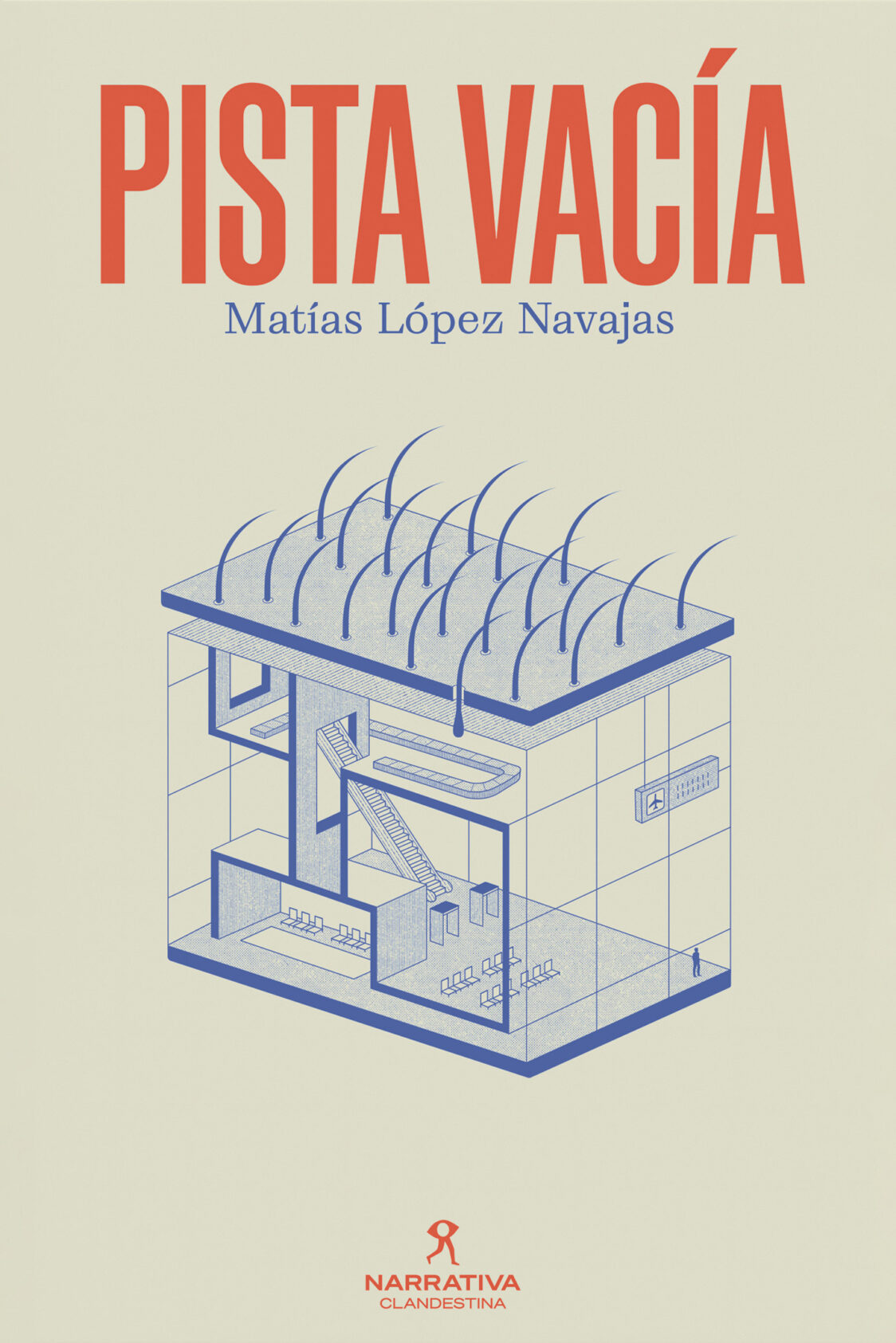
Five thousand people have been surviving for a month trapped inside the terminal of El Prat Airport. There is no electricity, no signal, no explanations. No one comes in, no one goes out. Three times a day, the baggage belts come to life, dispensing trays of food from an invisible underground level. Outside, the runway is empty. Inside, time begins to unravel.
Among those trapped are Lucas Varona, 37, a Chilean living in Barcelona, and his older brother Pablo, from whom he has been estranged for years. They reunite there because of a failed family trip: they were supposed to travel to Turkey with their father for hair transplant surgery. The airport closed before takeoff. The father disappeared.
Pablo claims he saw him board a plane in Santiago. Lucas doesn’t believe him. Still, for weeks they wander the terminal convinced—or needing to believe—that their father might appear at any moment. The search forces them to coexist and reopens a relationship marked by silence, rivalry, and a shared childhood that was never fully resolved.
Meanwhile, the airport transforms into a grotesque parallel society: squatter camps take over abandoned shops, informal leaders emerge, underground betting rings, drug use, fights, fragile alliances, and delirious theories about what is happening outside proliferate. Confinement brings out the worst—and the most absurd—in everyone.
Lucas connects with Baby Fake, a charismatic punk who lives in one of the camps and tells him about Floor Zero: an inaccessible level beneath the terminal where all the luggage accumulates. A nearly mythical place only reached by El Chino, the camp’s leader, who moves through the ventilation ducts. Pablo becomes obsessed with the idea that their father is down there. Lucas believes it’s a fantasy meant to avoid accepting the loss.
The fragile balance breaks when a list of passengers authorized to leave appears. Lucas is on the list. Pablo is not. The terminal splits between those who are leaving and those who are staying. What had been absurd coexistence turns into open violence.
Cornered by guilt and fear of abandoning his brother, Lucas lies: he claims to have information that his father is on Floor Zero. The lie pushes him past the point of no return when El Chino proposes a deal—to take them down in exchange for keeping Lucas’s identity in order to escape.
The brothers descend through the ducts on a clandestine expedition. In the darkness of the underground, El Chino abandons them and disappears with the documents. Lost in the labyrinth, Lucas and Pablo confront each other physically for the first time, unleashing everything they never said. They don’t know if they will find a way out. Nor whether their father was ever there.
They only know that when everything collapses, they will have to decide whether to stay together—or let each other go forever.
RELEVANT INFORMATION: Matías López Navajas is a Chilean writer, screenwriter, creative director, and musician. Empty Runway is his first novel, a fun and delirious work that blends absurd humor with a deep reflection on family, displacement, and identity in the globalized era.
The story lends itself strongly to an audiovisual adaptation that combines humor, mystery, and emotional conflict. It unfolds almost entirely within a single, highly recognizable location, with a strong visual identity, and presents a succession of absurd and delirious situations alongside moments of intense emotional weight. The tone oscillates between irreverent and intimate, creating a narrative that works both as a black comedy with elements of intrigue and as a contemporary family drama, with clear potential for a feature film adaptation.
What the press says:
“Empty Runway is a delirious and punk piece of fiction. A fun, clever, and at times melancholic novel that overturns many clichés of recent Latin American literature.” — Andrea Toribio, El País
AUDIOVISUAL POTENTIAL: TV Series, Miniseries, Feature Film, TV Film
AVAILABLE LANGUAGES: Spanish
Adquirir los derechos
Para ponerte en contacto con nosotros completa el siguiente formulario y te responderemos en breve.
