
Hired to track down a missing inheritance, a British lawyer discovers that the novel of a deceased writer conceals a deadly trail of clues. Each fragment triggers a crime in a real location, forcing him to cross England and Spain in a race against time that uncovers a family secret buried for decades.
Mark Wallace, a London-based lawyer marked by personal tragedy, is hired by Úrsula de la Sota, a prestigious writer and daughter of the late, renowned Spanish author Gabriel de la Sota. A newspaper article suggests that The Lord of Evil, her father’s last and most famous novel, hides clues leading to a fortune that vanished after his death. Úrsula wants to know whether the treasure truly exists, who is behind the article, and who would be legally entitled to it if it were found.
The investigation takes a radical turn when the Rector of the University of Oxford is murdered during the ceremony in which Úrsula receives an honorary doctorate. Úrsula is the last person seen with the victim and becomes the prime suspect, forcing her to flee. Soon afterward, anonymous excerpts from The Lord of Evil begin appearing in the press. Each fragment points to a real location—universities, libraries, bridges, castles, and sanctuaries—and every place visited is followed by a new murder.
The killer operates under the symbolic identity of “The Lord of Evil,” recreating in real life the crimes described in the novel. He is not an impulsive murderer: he kills to steer the course of the investigation. He eliminates those who know too much, silences key witnesses, and creates a climate of fear that compels Mark and Úrsula to keep deciphering the clues. Each step forward brings them closer to the truth, but also triggers another victim.
In Oxford, Mark comes into contact with key figures from the academic and literary world, including J. R. R. Tolkien and C. S. Lewis, who provide crucial insights for interpreting the novel’s symbolic language and the intellectual context in which Gabriel de la Sota wrote it. Through them, Mark understands that the book operates on multiple levels—literary, moral, and familial—and functions both as a physical map and as an ethical commentary.
The investigation reveals that the true driving force of the plot is a secret hidden for decades. Gabriel de la Sota had an illegitimate son, conceived outside his marriage and abandoned in childhood. That son grew up consumed by resentment and ultimately became the killer. He uses The Lord of Evil as an instrument of revenge, not only to destroy his father’s public legacy but also to force the entire family to confront a buried truth.
At the same time, Mark discovers that his involvement is not coincidental. His late wife, whom he always believed unrelated to the story, was also a secret daughter of Gabriel de la Sota. His own daughter is therefore the writer’s granddaughter. The search ceases to be professional and becomes deeply personal: by following the clues, Mark has activated a trap designed to draw all the descendants into the center of the conflict.
The final revelation shows that Gabriel de la Sota did not die as believed. He faked his death to escape the pursuit of his illegitimate son and orchestrated the fragmented publication of the novel as an extreme strategy: to lure his enemy out, expose him publicly, and provoke a final confrontation. The Lord of Evil was not a literary legacy, but a carefully constructed trap, devised with full awareness that whoever activated it would pay a price.
The ending takes place in a packed theater during a concert. There, the killer’s identity is publicly revealed. In the final confrontation, the illegitimate son dies after falling from the roof of the building. Úrsula, having understood her role in the chain of events and unable to bear the magnitude of the deaths caused, takes her own life. Mark survives, seriously injured, and remains the sole witness to the full truth, aware that the entire plot was the final move of a writer willing to sacrifice everything to close his own story.
RELEVANT INFORMATION: Alfonso del Río is a Spanish writer, lawyer, and columnist who combines legal practice and university teaching with literary creation. He is also the author of La ciudad de la lluvia and El enigma de Anne Wallace, and is one of the most prominent and promising voices in contemporary Spanish thriller fiction.
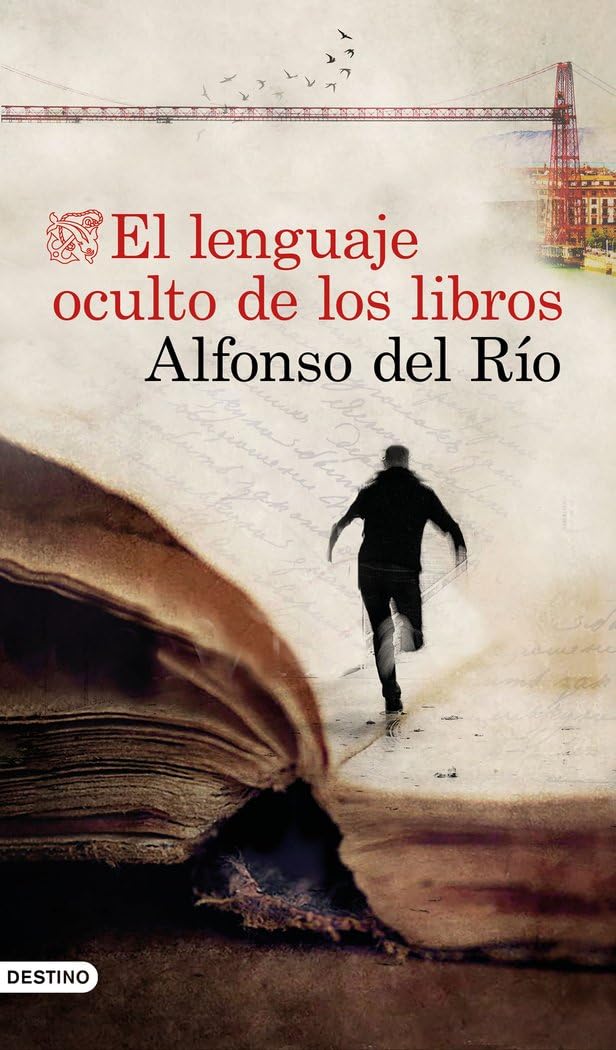
El lenguaje oculto de los libros is an adventure thriller constructed as a race-against-time treasure hunt through iconic locations. Its structure is driven by pace, constant tension, riddles, and highly visual scenes, while the use of a book as the engine of the action gives it a highly original identity, with notable characters such as J. R. R. Tolkien and C. S. Lewis playing a significant role in the development of the plot. The blend of adventure, mystery, action, and family drama makes the novel an addictive story with strong audiovisual adaptation potential, in the vein of The Da Vinci Code or National Treasure.
What the critics say:
“Alfonso del Río has achieved a great novel. A very different thriller… one that grips you from the very first pages.” — El Búho entre Libros
“Perhaps the word that best defines the novel is ‘magical.’” — Críticas Polares
AUDIOVISUAL POTENTIAL: TV Series, Miniseries, Feature Film, TV Film.
AVAILABLE LANGUAGES: Spanish.
Adquirir los derechos
Para ponerte en contacto con nosotros completa el siguiente formulario y te responderemos en breve.
