
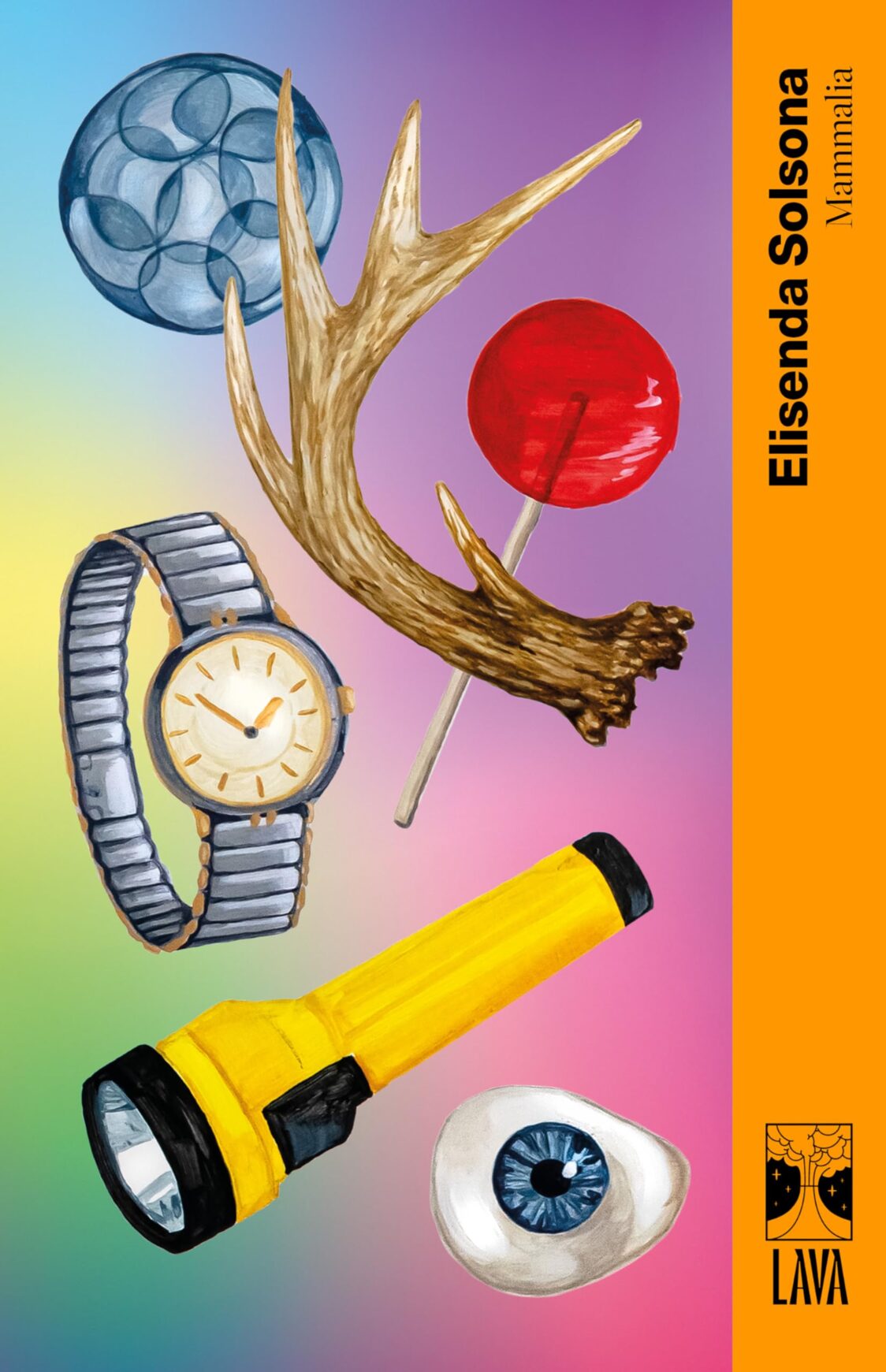
In a world where only 1% of women can gestate and their bodies are under State control, a young woman marked by the disappearance of her stepmother is forced to investigate her own origins. The search draws her into a clandestine underground laboratory, where a temporal rift is still being used to guarantee births in a world on the brink of extinction.
At the age of eight, Cora followed a whistling sound into a cavity in southern France. Inside, she found a disturbing painting: three human figures holding hands, with circles around their heads and marks on their bellies. That same night, Sara—her stepmother, a speleologist and the person she loved most—disappeared without a trace. Her father blamed Cora, and the girl grew up convinced that this innocent act had caused her loss.
Years later, in a world shaken by volcanic eruptions and an extreme reproductive crisis—only 1% of women can conceive and pregnancies are highly dangerous—Cora lives a quiet life with Joana, her partner. In the intimacy of their relationship, Cora dares for the first time to tell her how, as a child, she entered that place and how, shortly afterward, Sara disappeared. The calm is shattered when she discovers that Joana bears the same symbol tattooed on her body that Cora saw as a child. Joana got the tattoo after suffering a miscarriage at a fertility clinic. It is not a coincidence, but the beginning of a question neither of them can ignore.
The symbol pushes them to return to southern France, to the place where everything began, and to investigate alongside Rai, Joana’s tattoo artist and the creator of the design, until they uncover the existence of Synapsida: an underground clinic secretly created to guarantee births in a world that can barely produce them anymore. By exploiting a space-time breach, doctors and scientists turned to Neanderthal women as surrogate mothers, hiding their existence and appropriating the children born there to hand them over to privileged families in the present.
Cora discovers that both she and Rai were born in Synapsida, and that her father was part of the project: he participated in concealing the origins of those children and adopted her knowing where she came from, deliberately severing her bond with her biological lineage. She also finally understands what happened to Sara. The woman she believed lost crossed the temporal rift and became trapped in another time. There, living alongside Neanderthal women, she chose not to return and left behind only the painting: a message so that Cora could find the truth thousands of years later.
At the end of the journey, Cora discovers that she has inherited a body capable of gestating in a world that almost no longer can. Even so, she and Joana make a simple and radical decision: not to turn motherhood into an obligation or to repeat a system that used bodies as resources. They choose to live together, to care for the memory of those who were erased, and to build their own future, even in a world covered in ash.
RELEVANT INFORMATION: Elisenda Solsona is a Catalan writer and secondary school teacher, known for a distinctive narrative voice that blends horror, thriller, science fiction, and fantastical realism. With her first novel Mammalia, she won the Ictineu Prize and the 42 Prize for Best Original Science Fiction Work in Catalan, and was a finalist for the Òmnium Prize 2025 for Best Novel in Catalan.
Mammalia combines psychological thriller, family drama, and science fiction, but does so from an intimate and restrained approach that translates easily to the screen. Its fantastical dimension does not rely on large visual set pieces, but on clear, powerful ideas that can be conveyed through a sober, atmospheric mise-en-scène.
The story is built around a small number of characters, strong emotional relationships, and a mystery that unfolds organically, making it especially adaptable for both film and limited series formats.
Originally published in Catalan, the novel has received an excellent reception and already has a Spanish-language edition, demonstrating its ability to connect with diverse audiences.
What the critics say:
“Mammalia is a book of dark sensitivity, as if drawn on the skin of caves. Reading it is a sensory experience and, at the same time, a shiver.” — Elaine Vilar Madruga
“Elisenda Solsona has remarkable talent for weaving plots and building tension-filled atmospheres, between mystery and horror, with infertility beating at the heart of the story.” — Andrea Gumes
“Mammalia is an addictive novel. A disturbing story full of imagination, with a powerful setting and a perfectly crafted plot.” — laSexta
AUDIOVISUAL POTENTIAL: TV Series, Miniseries, Feature Film, TV Film.
AVAILABLE LANGUAGES: Catalan, Spanish.
Adquirir los derechos
Para ponerte en contacto con nosotros completa el siguiente formulario y te responderemos en breve.
