
Rut’s life revolves around caring for her neurodivergent son, a bond that is as demanding as it is deeply loving. Caught between exhaustion, guilt, and unexpected moments of tenderness, Rut learns to listen to herself and to say enough. Her story is an intimate portrait of motherhood, imperfect love, and the possibility of healing without denying the complexity of life.
Rut wants to do everything right, but her everyday life is an impossible balancing act between love, exhaustion, and a sharp sense of humor that is often the only way not to fall apart. She is a university lecturer, a mother of two, and above all the mother of Martí, an eight-year-old boy on the autism spectrum who experiences the world with overwhelming intensity. Rut deeply loves Martí and her younger daughter, Cloe, but parenting, lack of support, and the constant pressure to “do everything right” have pushed her to the limit.
When Rut faints in the middle of a class, her body finally says stop. In therapy, she is given an exercise as simple as it is revealing: to write a list of everything her son is teaching her. That intimate list, filled with irony, tenderness, and anger, runs throughout the story and becomes the guiding thread of her transformation. Through it, Rut tries to put words to a life that has become too demanding.
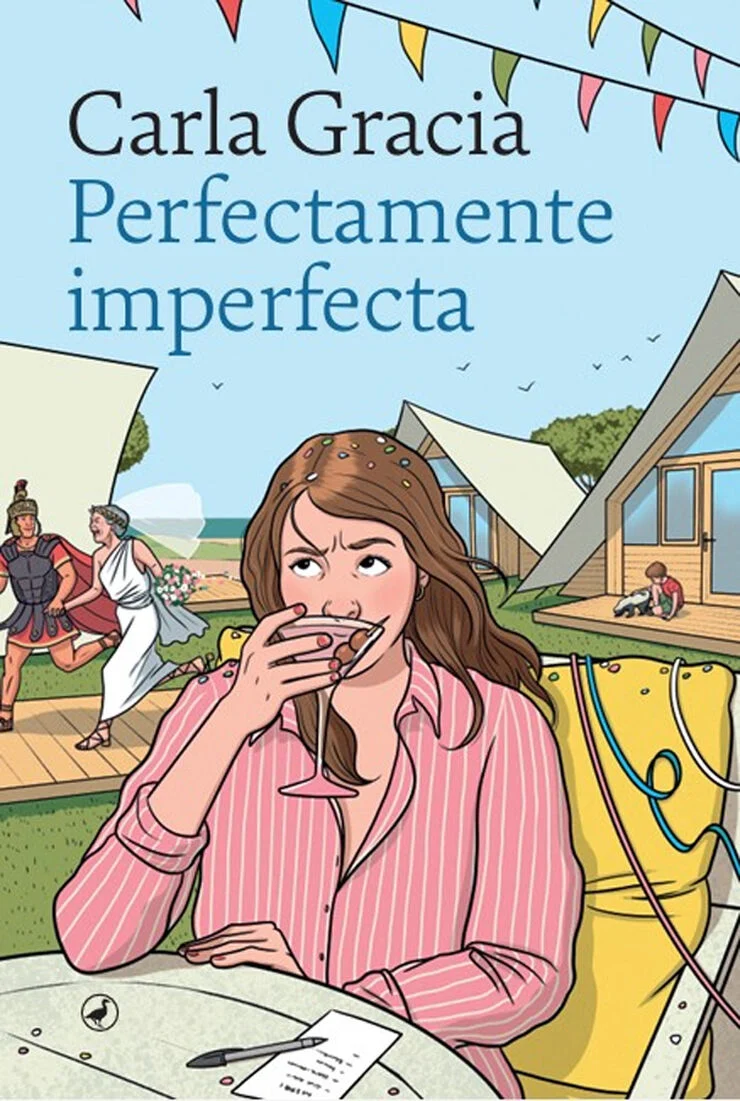
Amid this exhaustion, the family is swept into an event as extravagant as it is unavoidable: the wedding of Rut’s mother, a famous, excessive, charismatic actress with terminal cancer, who decides to marry a much younger man in a vacation setting that is as idyllic as it is uncomfortable. What should be a family celebration turns into a true pressure cooker.
The change in routines and the overload of stimuli intensify Martí’s crises. Rut tries to protect him while enduring judgmental looks, well-meaning but hurtful comments, and an ever-growing sense of loneliness. Her husband, absorbed in his work, remains emotionally absent, and a reunion with an old love offers her something as simple as it is unexpected: genuine listening, without formulas or self-help slogans.
During the wedding, one of Martí’s crises provokes a cruel reaction from the family. For the first time, Rut stops apologizing: she stands up for her son and stops asking forgiveness for his difference. This gesture marks a point of no return. Contained pain erupts in the form of a scream, not to break her, but to free her. Mother and son reconnect from a more honest place, even learning to scream together as a form of release, bonding, and shared survival.
The novel closes with Rut understanding that everything she has learned from Martí is, in fact, a lesson about herself. Inspired by real events, this story blends humor, tenderness, and a luminous perspective to portray motherhood, neurodivergence, and the possibility of healing without denying life’s complexity. An intimate and deeply human narrative, where love does not solve everything, but it sustains almost everything.
RELEVANT INFORMATION: Carla Gracia is a Spanish writer, winner of the Alghero Donna Prize for Literature and Journalism in the International section of the Rome Book Fair.
Her novels, written in an honest and reflective style, have been translated into several languages. She has also worked in the audiovisual field as a director, presenter, and screenwriter. The documentary Els que callen, in which she participated as a screenwriter, was shortlisted for the Goya Awards.
Perfectamente imperfecta is one of her most significant works: a luminous novel inspired by real events that addresses motherhood and self-acceptance with tenderness, humor, and irony. The book has strong potential for adaptation as a deeply moving and tender film, with charismatic characters, emotionally charged situations, and a clearly defined transformation arc for its protagonist.
AUDIOVISUAL POTENTIAL: TV Series, Miniseries, Feature Film, TV Film.
AVAILABLE LANGUAGES: Catalan, Spanish.
Adquirir los derechos
Para ponerte en contacto con nosotros completa el siguiente formulario y te responderemos en breve.
