
Between the outskirts of Buenos Aires and the hills of Córdoba, a journalist reconstructs a case marked by a million-dollar robbery and the explosion of a church. Following contradictory testimonies, she delves into a story of love, marginality, and religious fanaticism that challenges any official version.
Aldana “Kinki” Flores, a young delinquent from a working-class neighborhood on the outskirts of Buenos Aires, plans and executes, together with her partner Pablo and other members of their gang, a million-dollar robbery at the local bingo hall.
The plan is simple, direct, and effective: Aldana enters posing as cleaning staff, they subdue the employees, and in less than ten minutes they walk away with nearly twenty million pesos. For Aldana, it is not only about the money—what she truly wants is to escape with Pablo and start a new life far from crime.
She carries out the heist with the group, but the escape fails almost immediately. Part of the gang betrays her, takes half the loot, and disappears. Aldana is left alone with the remaining money, hunted by the police and with no real chance of getting away.
Pablo does not take part in the robbery. Days before the heist, he suffered an accident that left him severely injured and he was rushed to the hospital. During his hospitalization, he begins experiencing mystical episodes and religious delusions. Once discharged, he cuts all ties with Aldana and his former life and reinvents himself as a Pentecostal pastor, founding his own church. His scarred body and survival story quickly turn him into a charismatic leader: he gathers followers, preaches redemption, and builds a fervent community around himself.
Devastated by her partners’ betrayal and Pablo’s abandonment, Aldana travels to Córdoba to find him. Her intention is clear: to convince him to run away together using the money she still has. Their reunion is tense, violent, and desperate. Aldana confronts him with their shared past and their love story. Pablo refuses. He is convinced that God saved him to fulfill a spiritual mission and sees Aldana as a threat to his new identity.
The police arrive at the church, alerted by the active search for Aldana as the prime suspect in the bingo robbery. Cornered between his old life and his new faith, Pablo spirals into crisis. As a last resort to force their escape, Aldana lights the fuse of homemade explosives she brought with her. They fail to get away. The explosion kills Pablo. Aldana survives with severe injuries.
Officially, the incident is closed as a gas leak accident. There is no in-depth investigation and no clear accountability. Part of the money is found scattered among the debris.
Four years later, in 2020, Eugenia Ardillo, an alcoholic journalist on the verge of being fired, is assigned to write a retrospective article about the robbery and the explosion. Eugenia returns to the neighborhood and begins interviewing Aldana, former accomplices, police officers, and members of the congregation. Through audio recordings and cross-referenced testimonies, she reconstructs the entire chain of events: the heist, the internal betrayal, Pablo’s conversion, the romantic rupture, and the church’s rise as a popular phenomenon.
Eugenia notices inconsistencies in the official account and understands that the explosion was the result of Aldana’s desperate attempt to recover Pablo and escape with him. But she also realizes that the truth no longer matters. For the faithful, Pablo is not a former criminal who died in a violent conflict—he is a martyr.
The climax takes place during a tribute ceremony at the church, now transformed into a popular shrine. There are religious chants, offerings, and an exalted crowd gathered around a statue of Pablo. Eugenia walks through the scene as faith turns into collective spectacle. Among the crowd, she recognizes Aldana, hooded, watching from the margins, ready to disappear once again. Pablo’s informal canonization is sealed: the cult grows, fueled by narrative, pain, and collective need.
Eugenia publishes her article without naming direct culprits. She understands that Pablo was a broken yet charismatic man turned into a saint because people needed to believe in something. Aldana, meanwhile, remains trapped between love and crime.
The myth endures. The truth dissolves.
RELEVANT INFORMATION: Marina Condó is an Argentine writer, screenwriter, and copywriter. Through her project MarinaEscribe, her outreach profiles on YouTube and TikTok gather tens of thousands of followers.
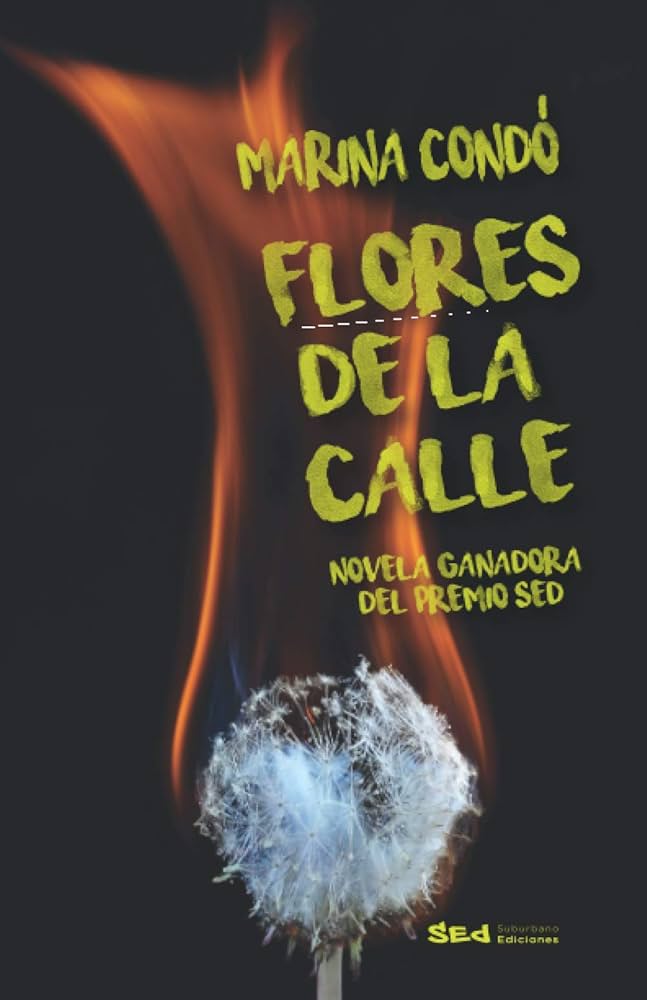
She has won minor short-story awards as well as the Premio SED de Novela for Flores de la calle, her narrative debut—a crime thriller structured as a journalistic investigation that combines crime and romantic tragedy with a dry, realistic, and contemporary tone.
The story stands out for its pacing, multiplicity of viewpoints, and strong social grounding through elements such as faith and marginality. Its fragmented narration, complex characters, and powerful settings consolidate its audiovisual potential as a contemporary thriller.
AUDIOVISUAL POTENTIAL: TV Series, Miniseries, Feature Film, TV Movie.
AVAILABLE LANGUAGES: Spanish.
Adquirir los derechos
Para ponerte en contacto con nosotros completa el siguiente formulario y te responderemos en breve.
