
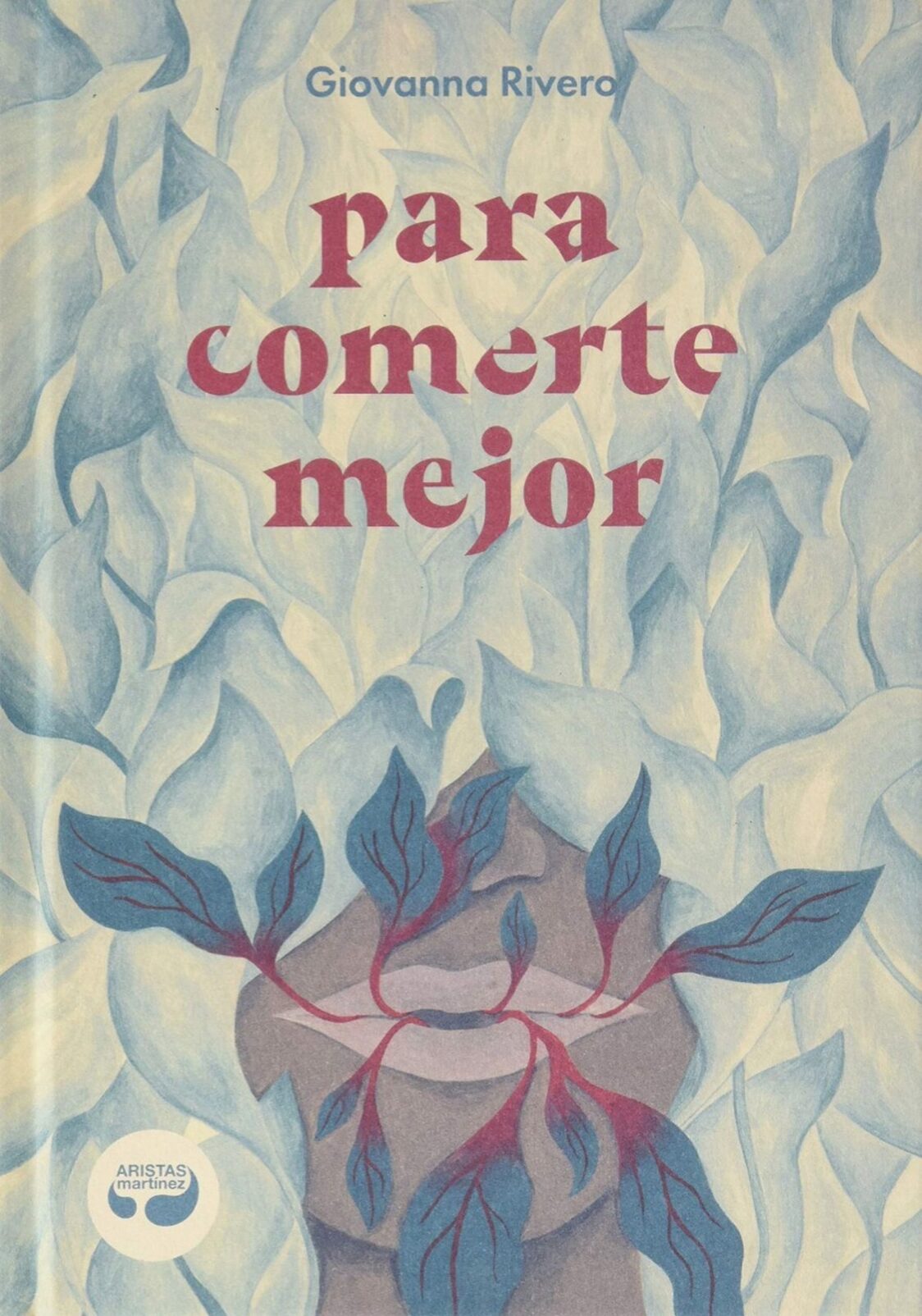
A kindergarten teacher who turns into a zombie after being possessed by her resurrected friend; a sociologist who becomes pregnant from the sound of a flute in the sewers; a mother who fuses her daughter with a tree to save her from danger… Twelve psychological horror stories set in a magical and violent Bolivia, where the monstrous emerges from the everyday, from love and despair.
To Eat You Better is a collection of twelve stories that explore the monstrous lurking within the everyday, where hunger, illness, death, and bodily transformations form the core of the narrative.
Here, the fantastic breaks into Bolivian and American reality to reveal the darkest and deepest bonds between its characters, creating an atmosphere of intimate horror and desolation.
In Of Your Own Kind, a kindergarten teacher confronts a writer friend who came back to life at his own funeral. Ever since he grabbed her wrist in the grave, she feels a deadly opacity invading her, as if he had stolen her soul.
In Smoke, the narrator recalls a moment from her childhood when Piri, a young assistant at her grandmother’s sausage factory, disappeared without a trace. Years later, during her grandmother’s wake, the now-teenage narrator sees Piri among the attendees. To comfort her, he tells her a story, but suddenly vanishes—and no one else seems to have seen him there.
In The Stone and the Flute, a sociologist investigating a homeless leader living in the sewers discovers he is her uncle, a hippie who once cured her childhood illness with the sound of his flute. Now, in the sewers, he impregnates her in the same inexplicable way.
Saulo’s Two Names follows a woman visiting her brother Saulo in a psychiatric hospital. He suffers hallucinations and speaks of beings who want his eyes, reviving a dark family past involving a father who surrounded himself with crippled and blind people. She discovers Saulo has been visited by three foreign friends—one of them one-eyed—and realizes those beings have returned to claim him.
In Kè Fènwa, a foreign teacher survives the Haiti earthquake protected by a restavek (child slave). Together they wander among mass graves until he leads her to a voodoo ritual, where she discovers that the heart beating inside a jar is her own, torn from her in a previous ceremony.
Yucu presents Duke Moldova, an immortal living in Bolivia’s Beni region. A young waitress, Lena, offers him her baby tooth. He takes her into the forest and drinks her blood, passing on his curse and promising she will resurrect in a few days. As the town lynches him, he calmly waits for her to awaken and come find him.
In It Passed Like a Spirit, Ana waits to become the offering that will conceive a child of Evo Morales. But the putrefied presence that impregnates her during the ritual is not that of the indigenous leader, but of a strange being. Later, a midwife shows her a deformed child—product of failed offerings—revealing her own monstrous fate.
Return is set in a future imperial Bolivia. A woman comes back to see her son, a four-armed being conceived as an offering, confined in an underground cavern where the regime hides “special” children. With her necrotic hand, she cuts his gum to pass on her illness—an inheritance of love against state control.
In The Man with the Leg, a woman undergoing fertility treatment becomes obsessed with a Bronx beggar whose leg is gangrenous. After its amputation, she ends up cradling the limb in the subway, connecting the stranger’s sacrifice with her own longing for life.
In the Forest portrays a terrified mother who fears her daughter may have been abused by a group of young men. Hiding from them in a forest clearing, the mother prays to a tree—and miraculously, the girl merges with the trunk, turning into wood to escape danger just before being seen.
In Albumin, an astronaut recently returned to Earth struggles with his rejection of his wife, who has undergone cosmetic surgery. He finds refuge at his crewmate Mark’s house, where, while frying eggs, they seal a pact to go in search of mysterious extraterrestrial eggs orbiting in space.
In Voisins du zéro, Cecilio Buenaventura, trapped in gambling addiction, travels to a remote hotel after making a pact to save Lucy, the girl he loves like a daughter, who suffers from a severe kidney disease. Though not her biological father, he is willing to give everything for her, having already lost her mother through gambling. In an indigenous casino, he faces his final bet and discovers that what is truly at stake is his own kidney. By accepting defeat, he completes his sacrifice and seals the pact.
RELEVANT INFORMATION: Giovanna Rivero is a Bolivian writer of short stories and novels, considered one of the most original and successful voices in contemporary Spanish-language literature.
Her work has been published in Bolivia, the United States, Spain, and Argentina, and has received awards such as the Santa Cruz Municipal Literature Prize, the Franz Tamayo Short Story Prize, and the BancoSol Prize for Best Book Published in Bolivia. Her book To Eat You Better won the Dante Alighieri Prize, and the story Albumin, included in the collection, received the Cosecha Eñe Prize.
To Eat You Better is a collection of psychological and fantastical horror stories filled with supernatural elements that intensify reality. The stories function as metaphors for structural violence and deeply human despair. The audiovisual potential of this collection is very high: each story works as a standalone anthology episode, with powerful twists, striking and cinematic imagery, and relatively low production costs, as they rely more on atmosphere and psychological unease.
AUDIOVISUAL POTENTIAL: TV Series, Miniseries, Film, TV Movie
AVAILABLE LANGUAGES: Spanish
Adquirir los derechos
Para ponerte en contacto con nosotros completa el siguiente formulario y te responderemos en breve.
