
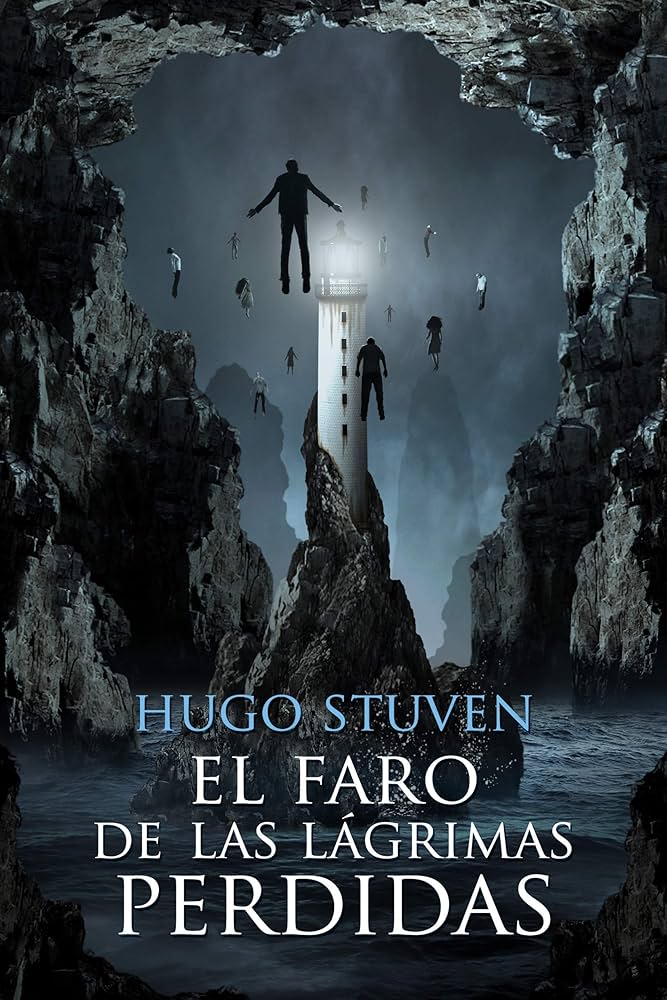
After a painful breakup, a young photographer loses himself in a remote coastal town and discovers an ancient shipwreck hidden deep beneath the sea. But when he returns to the surface, nothing is the same: someone has altered the course of his life, and an abandoned lighthouse holds the answer.
Zoe, an amateur photographer nearing thirty, arrives alone in a remote fishing village seeking peace after his breakup with Bárbara. She wanted children, but he could not face that future. From the moment he arrives, the lighthouse towering above the cliffs exerts an inexplicable pull on him.
During a dive in a nearby cove, Zoe discovers an underwater wall plunging into a dark abyss. Curiosity drives him closer, and a powerful current drags him into a cavern where he glimpses the remains of an ancient shipwreck: the Sirius, lost in 1906. That same night, Zoe has a nightmare in which he sees his father Roberto with eyes distorted by horror. When he wakes, fear blends with painful memories: his father’s abandonment, the emotional distance between them, and a wound that never truly healed.
The next day, Zoe returns to the sea. The current swallows him once again, and he loses consciousness. A fisherman rescues him, and he awakens in the village hospital, confused. They tell him that when he was found, he was wearing ordinary street clothes, not diving gear. A strange feeling begins to take hold. Something is wrong.
When he develops the film from his camera, unease turns into certainty: the photographs show him with Bárbara, embracing in front of the lighthouse. Fragmented memories begin to return. He vaguely recalls the argument, the cliffside, the goodbye. He could swear she had been there with him.
Back in the city, during Christmas Eve, Zoe is struck by a terrifying premonition: he sees his father Roberto dying. He rushes to the highway and finds his father’s car wrecked. Roberto falls into a coma and dies days later after a long vigil. Zoe collapses emotionally. He isolates himself, drinks heavily, stops eating. But a seemingly insignificant object drags him back toward the mystery: a pen with the image of the Sirius, given to him at the village photography shop. He investigates, remembers the cavern, the wreck, the current. Slowly, he begins to believe that the place hides something beyond reality itself.
After saying goodbye to Bárbara — who, despite their separation, has cared for him following his father’s death — Zoe sneaks into a diving school and steals the equipment he needs. Alarmed, Bárbara follows him back to the village, but she arrives too late: she watches helplessly as a pair of diving fins disappears beneath the water. Her screams vanish into the darkness while Zoe descends into the abyss.
On the brink of suffocation, a green light surrounds Zoe and drags him into the cavern. There, he discovers a colossal being: the guardian of the lighthouse of lost souls, where the spirits of those who died before their time reside. The guardian reveals the truth: Zoe was never supposed to fall into the sea. In reality, he was in the car with his father on the night of the accident. Roberto died instantly, while Zoe fell into an irreversible coma, and both souls were taken to the lighthouse.
But the guardian made a pact with Roberto: his father agreed to remain there forever, feeding the lighthouse as an eternal presence, in exchange for allowing Zoe to return two days before the accident. He had been in the village with Bárbara and fell from the cliff after arguing with her. That fall — which he barely remembers, and which his mind reshaped into a solitary escape — prevented him from getting into the car that night.
Among the floating souls in the cavern appears Roberto. He embraces Zoe, comforts him, and begs him to live. Not to waste his second chance. At last, Zoe understands that he cannot change his father’s fate — only accept his own. He plunges into the cavern’s lake and awakens in the hospital. He has survived.
He remembers nothing of the journey, only a vague sensation, like an impossible dream. Zoe and Bárbara reunite and rebuild their relationship. They travel, live, and promise themselves a future together. And when they return to the lighthouse in springtime, Zoe asks her to marry him. They have an entire lifetime ahead of them to recover the time they lost.
RELEVANT INFORMATION: Hugo Stuven is a Spanish screenwriter and film director known for films such as Anomalous (2016) and Solo (2018), as well as for his work in television series and documentaries, establishing himself as a multidisciplinary creative voice.
Alongside his filmmaking career, he has also pursued writing, publishing novels such as The Lighthouse of Lost Tears, finalist for the Premio Minotauro, one of the most prestigious awards in Spanish-language fantasy literature. The novel has strong audiovisual potential thanks to its blend of drama, fantasy, and mystery.
Its narrative structure — built around flashbacks and nonlinear storytelling — is filled with suspense and emotion. Visually, it offers powerful settings that would lend themselves to an atmospheric and sensory adaptation. The protagonist’s emotional arc, centered on guilt, loss, and redemption, provides a strong dramatic core, while the final twist delivers a deeply impactful climax, especially effective in audiovisual format.
AUDIOVISUAL POTENTIAL: TV Series, Miniseries, Film, TV Film.
AVAILABLE LANGUAGES: Spanish.
Adquirir los derechos
Para ponerte en contacto con nosotros completa el siguiente formulario y te responderemos en breve.
