
A young painter of humble origins rises through Barcelona’s bourgeois society while falling in love with an anarchist factory worker. As the city erupts in strikes, violence and repression, they are swept into a conflict that forces them to choose between survival, remaining true to their ideals… or losing everything, including each other.
In the turbulent Barcelona of the early twentieth century, marked by inequality, labour unrest and repression, Dalmau Sala and Emma Tàsies live a love story shaped by social struggle.
Dalmau is a young artist of humble origins, the son of a persecuted anarchist, who finds himself caught between two opposing worlds: his family, committed to the workers’ cause, and the ceramics workshop of Don Manuel Bello, his mentor, an influential conservative bourgeois and devout Catholic. Emma, meanwhile, shares the ideals of those striving for a fairer society. United by love and a shared social conscience, they dream of building a future together in a city as hostile as it is full of opportunity.
Montserrat, Dalmau’s sister and Emma’s closest friend, is an active anarchist and is imprisoned for her political activities. In an attempt to secure her release, Dalmau accepts Don Manuel’s help, but only on the condition that he and his family publicly renounce anarchism and embrace Catholic doctrine. Montserrat refuses, but Emma, driven by love, secretly agrees to take her place in the compulsory catechism classes. When Montserrat discovers the deception, she feels deeply betrayed. Shortly afterwards, during a general strike, she is killed in a burst of gunfire while arguing with Emma behind a barricade.
Montserrat’s death shatters the fragile balance that held the couple together. Emma is unfairly blamed by the anarchists, and her situation worsens when nude portraits Dalmau painted of her become public. The scandal destroys her reputation: she loses her job, her home and the support of those around her. Unable to protect her or uncover the source of the betrayal, Dalmau is consumed by guilt. Their relationship reaches a breaking point when he assaults her during an argument, and Emma decides to leave him for good.
From then on, their lives take separate paths. Emma descends into poverty, suffers abuse and humiliation, and eventually finds a new purpose through Republican politics. She becomes a respected public speaker and attempts to rebuild her life with Antonio, with whom she has a daughter, Julia. Dalmau, meanwhile, spirals into self-destruction through alcohol, morphine and an obsessive relationship with Úrsula, Don Manuel’s daughter. Her accidental death leaves him a broken man on the run.
As the years pass, further losses reshape their lives. Antonio’s death leaves Emma alone once again, while Dalmau, after reaching rock bottom, overcomes his addictions and begins rebuilding himself. This transformation allows him to reconnect with Emma and young Julia. Though old wounds remain, they forge a new bond built on resilience and mutual protection.
The outbreak of Barcelona’s Tragic Week in 1909—with its strikes, popular uprisings and brutal repression—becomes the story’s decisive turning point. Emma emerges as an active voice in the protests, while Dalmau uses his art as a form of political resistance. Hunted by the authorities, they realise that Barcelona is no longer safe. When Emma risks her life to save Dalmau from arrest, they recover the trust they had lost. Together with Julia, they flee to France, leaving behind a city that has taken almost everything from them.
Years later, now reunited as a couple and with Dalmau internationally acclaimed as a painter, they return to Barcelona. The city has changed, but memory has not. Facing the past confirms that some wounds never truly heal, while reminding them that they have survived poverty, violence, betrayal and separation. Their lives, shaped by passion, guilt and struggle, remain bound together by a love that neither time nor suffering has managed to destroy.
RELEVANT INFORMATION: Ildefonso Falcones is a Spanish writer and lawyer, widely regarded as one of the most successful historical novelists writing in Spanish. His books have become an unprecedented publishing phenomenon, selling millions of copies worldwide, translated into dozens of languages and published in more than forty countries. Several of his novels have already been successfully adapted for television.
Throughout his career he has received numerous prestigious awards, including the Euskadi Silver Prize (2006), the Qué Leer Award for Best Spanish Book of the Year (2006), the José Manuel Lara Foundation Award for the best-selling novel (2006), the Giovanni Boccaccio Award for Best Foreign Author (2007), the Fulbert de Chartres Award (2009) and the Rome Prize for Foreign Literature (2010).
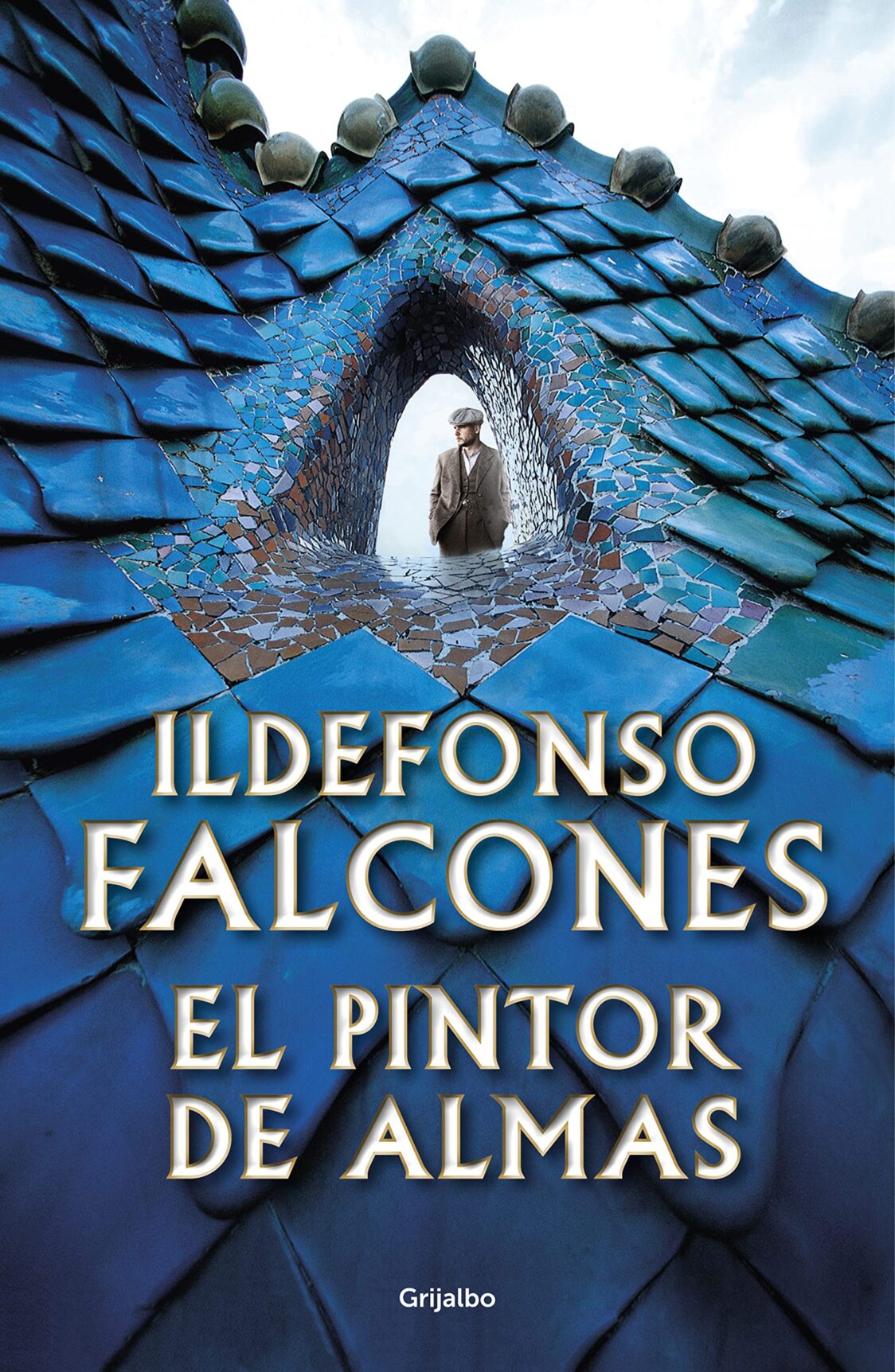
The Soul Painter is a historical drama set in early twentieth-century Barcelona that intertwines a powerful love story with the era’s profound social and political conflicts. Through the relationship between Dalmau and Emma, the novel delivers an emotionally charged narrative of loss, separation and survival against a backdrop of poverty, repression and violence. The compelling characters and their personal struggles are enriched by a vivid portrait of a city in transformation, with the splendour of Catalan Modernism and historical events such as the workers’ uprisings and the Tragic Week providing striking visual appeal and exceptional audiovisual potential.
PRESS REVIEWS
“It portrays the social struggles of early twentieth-century Barcelona through a passionate love story.” — El Cultural
“Richly developed characters and precise, vivid insight into a fascinating period of history: both a pleasure and a learning experience […] The Soul Painter unfolds with irresistible power. Who could resist it?” — Juan Ángel Juristo, ABC Cultural
“Fast-paced and gripping, while brilliantly depicting the construction of our city, the class struggle and the clash between architectural styles. Captivating from the very first page. Ildefonso Falcones is the finest writer of historical fiction in Spain this century—quite simply, and without exaggeration.” — José Mª Fuster-Fabra, La Razón Cataluña
AUDIOVISUAL POTENTIAL: TV Series, Miniseries, Feature Film, TV Movie.
AVAILABLE LANGUAGES: Spanish, Catalan, Czech, Danish, Dutch, Finnish, German, Italian, Polish, Portuguese, Romanian, Russian, Serbian.
Adquirir los derechos
Para ponerte en contacto con nosotros completa el siguiente formulario y te responderemos en breve.
