
The friendship between Manuela, an Asturian maid, and Alexandra, a rebellious aristocrat, defies the rigid class barriers of a Spain shaped by war and dictatorship. When the Civil War separates Manuela from her daughter, who is sent to the Soviet Union, her struggle to reunite her family becomes intertwined with a love story marked by social differences and the passage of time.
Manuela Baizán’s life begins in rural Asturias in 1912, on the very night the Titanic sinks. She is born into an impoverished farming family where her arrival, as a girl rather than a boy, is met with disappointment. Her childhood is shaped by hardship, the deaths of several siblings, and the silence into which her mother retreats after these tragedies. Within this hostile environment, Manuela develops remarkable intelligence and resilience, along with an unwavering determination to build a different future for herself.
When poverty forces the family apart, she is sent to work for the Solís de Armayor family, a powerful aristocratic household. There she meets Alexandra, the family’s heir, a young woman far ahead of her time who constantly challenges the limits imposed by her social class. A profound bond develops between them, transcending social barriers. Alexandra becomes Manuela’s ally, introducing her to a new world and granting her access to education, culture, and a different understanding of her place in society. It is within this environment that Manuela also meets Juan Gregorio Covián, a brilliant law student whose attraction to her is constrained by rigid social conventions.
At the same time, Alexandra is pushed toward the destiny expected of someone of her status, while Manuela attempts to build a future alongside Elías Fernández, a worker committed to the ideals of the Second Spanish Republic. Together they start a family and welcome a daughter, Telva. During these years, Manuela discovers her talent for millinery, a skill that soon becomes her primary means of making a living.
The outbreak of the Spanish Civil War shatters this fragile balance. Elías disappears, Telva is evacuated to the Soviet Union along with thousands of other children, and Manuela is left alone in a Spain dominated by postwar repression. In this context, survival takes precedence over every aspiration.
From then on, Manuela rebuilds her life through her craft. Her hat-making evolves from an individual skill into a small business that allows her not only to support herself but eventually to employ other women. The workshop becomes both a path to economic independence and a discreet center of female solidarity during the harshest years of Franco’s regime.
Thanks to Alexandra’s unwavering support, Manuela manages to move forward and eventually reunites with Juan Gregorio. After years of sacrifices and social constraints, they establish a life together and have a son, Gorio. Juan Gregorio develops a successful legal career within the Francoist system, attaining a stable position that ensures the well-being of his family.
Meanwhile, Telva grows up in the Soviet Union, trained as an engineer within a political and social system radically different from the one she left behind. Her education in the socialist bloc, and later her professional experiences in Cuba, shape her into an independent woman deeply marked by displacement. Her return to Spain does not bring an easy reintegration. Ideological differences, political suspicions, and her own fragmented identity complicate reconciliation with her family. These tensions ultimately affect Juan Gregorio’s professional standing as well, placing his position within the system under scrutiny.
At the same time, Gorio comes of age in a Spain that is beginning to transform. Following his own path as a lawyer, he embodies the transition between two eras.
With the arrival of democracy, the country begins a profound transformation that is reflected within the family itself. After decades of war, exile, and silence, the different generations gradually succeed in rebuilding their bonds.
In the final years of her life, Manuela looks back on the results of a long journey of resilience. She has built a place of her own, sustained her family through its most difficult moments, and paved the way for future generations of women. At her side throughout it all remains Alexandra, whose loyalty has been decisive at every stage of her life.
The story concludes as a sweeping intimate saga shaped by the defining events of the twentieth century, where the friendship between two women from opposite worlds, the struggle for independence, and the ability to rise above history itself become the true driving forces of the narrative.
RELEVANT INFORMATION: Ana Lena Rivera is a bestselling Spanish author specializing in historical fiction, with tens of thousands of copies sold. She is recognized for her ability to intertwine her characters’ personal experiences with the major milestones and social transformations of Spain throughout the twentieth and early twenty-first centuries.
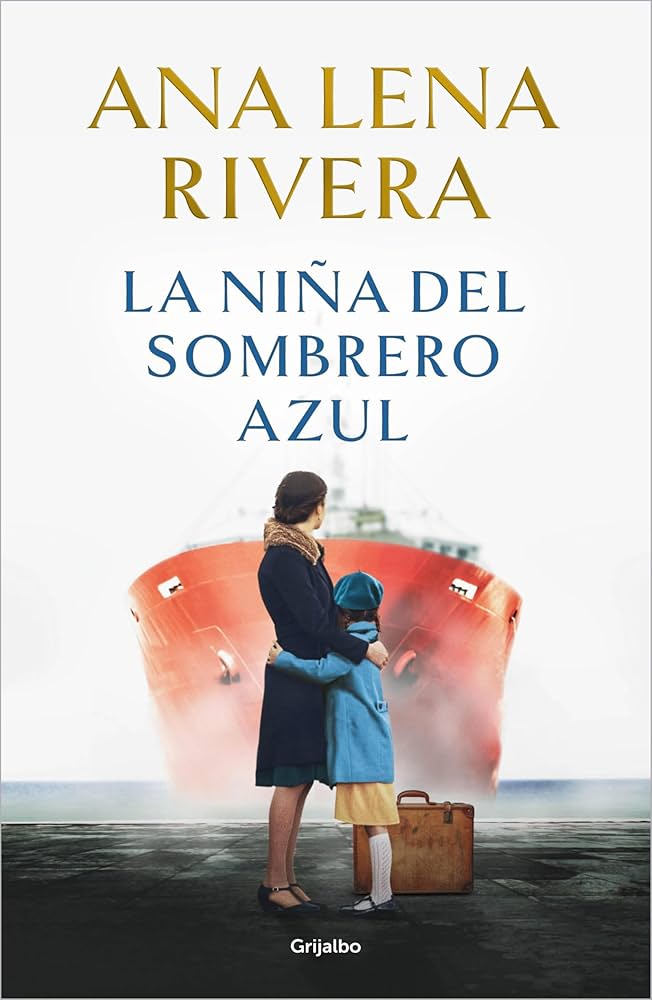
The Girl with the Blue Hat is an expansive historical, family, and female-centered saga that chronicles twentieth-century Spain through several generations shaped by love, war, exile, and social change.
Through Manuela’s life, the novel crafts a deeply emotional, captivating, and highly addictive narrative. The strength of its female characters, its broad historical scope, and its rich variety of settings make it ideal source material for a period drama series capable of combining historical spectacle with intimate and universal stories about survival, identity, love, and family bonds.
WHAT READERS SAY
“A captivating story, full of tenderness.” Virginia, La Casa del Libro reader
“It is a tender and moving book, with a story that hooks you from the very beginning and truly endearing characters.” María, La Casa del Libro reader
“A novel as real as life itself.” Un lector indiscreto
“A beautiful, poignant, and deeply moving novel.” Marta entre libros
AUDIOVISUAL POTENTIAL: TV Series, Miniseries, Feature Film, TV Movie.
AVAILABLE LANGUAGES: Spanish.
Adquirir los derechos
Para ponerte en contacto con nosotros completa el siguiente formulario y te responderemos en breve.
