
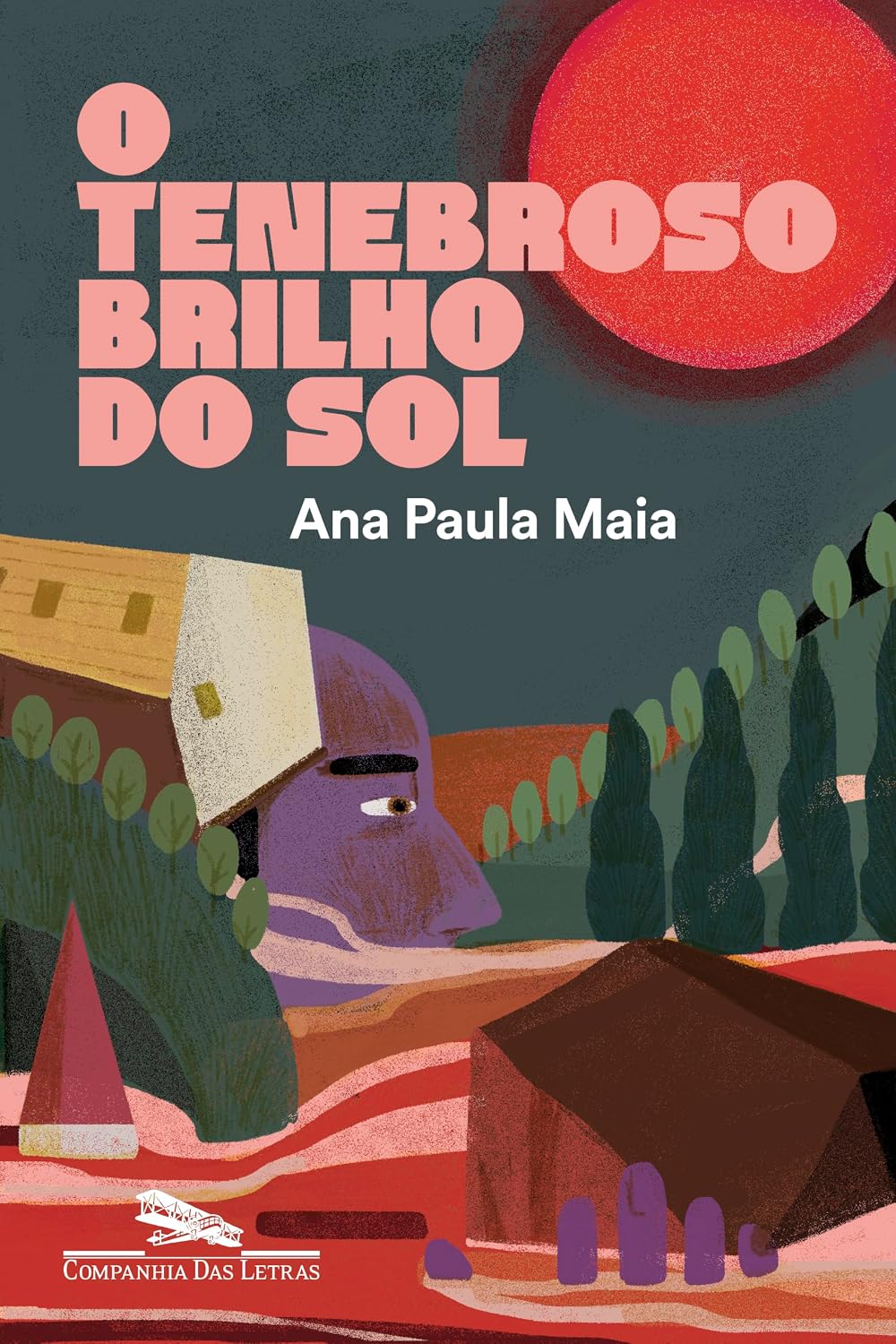
In a valley devastated by a flood, a man survives alone, surrounded by mannequins he has arranged as though life had never vanished. As he digs through the mud searching for his children, he comes to understand that some things cannot remain buried. A novel by Ana Paula Maia, one of the most important voices in contemporary Latin American literature.
The valley always dawns the same way, as if time itself had stopped. Eliote, the only inhabitant left after the flood that devastated the region, lives in a basement at the foot of the mountain. In the catastrophe, he lost his mother, his wife Anabel, and his two young children, whose bodies were never recovered. Now he works as the area’s watchman, monitoring the rivers and the risk of landslides, while day after day he digs through the mud in the hope of finding his children.
To withstand the loneliness, he dresses mannequins he finds in an abandoned house, places them throughout the valley, and speaks to them as if they were its former inhabitants. His only human contact is Juárez, a distant cousin who brings him supplies every two weeks and witnesses his slow deterioration.
At night, a strange sphere of light begins to appear in the forest. Eliote watches it from the basement window, fascinated and unsettled. Soon, he discovers that the mannequins seem to move by themselves: the one representing Mrs. Malva, a teacher who disappeared years ago, appears in the security camera recordings in different positions, yet always facing the forest.
The narrative then ventures into the past. Eliote remembers his brother Endrick, who took his own life by throwing himself into a reservoir years earlier. Endrick feared the sun and spoke of an “ominous brightness” that concealed something within its shadow. Before dying, he claimed to have seen Mrs. Malva disappear before a sphere of light emerging from the water. Eliote always suspected his brother was lying, but he never had any proof.
Driven by these phenomena, Eliote travels to a neighboring town to obtain a front-loader tractor. With the machine, he accelerates his excavation and begins uncovering the bodies of flood victims. As the digging progresses, he finds Mrs. Malva’s buried body, casting doubt on Endrick’s account and leading him to suspect that his brother may have killed her.
Shortly afterward, the discovery of his children’s bodies unleashes the repressed memory of the night of the tragedy. The truth emerges in all its cruelty: Anabel, devastated by severe postpartum depression, murdered the children. Upon finding them dead, Eliote reacted by suffocating her with a plastic bag. Then, in a desperate attempt to conceal the crime—and erase his own pain—he manually opened the dam gates, causing the flood that ravaged the valley and buried the truth beneath the disaster.
After burying his children in the small cave he had turned into a memorial, Eliote is left completely empty, without purpose or any possibility of redemption. He then decides to enter the forest, following the presence of the orb one final time.
There, in the darkness, his dissolution begins: moss climbs over his body, slowly immobilizing him as he moves forward. Nature absorbs him without resistance. By dawn, Eliote is no longer a man but part of the landscape itself: his arms become branches, his legs trunks. He remains forever integrated into the same valley where he lost everything.
RELEVANT INFORMATION: Ana Paula Maia is a Brazilian writer, screenwriter, and musician. Her work includes screenplays, theatrical monologues, and novels. She has received the Cercador Prize and the PEN Translates Award and was longlisted for the Republic of Consciousness Prize in the United Kingdom and Ireland. In addition, she was recognized by The Guardian and Foyles as one of the best books translated into English in 2023. She also received the São Paulo Prize for Literature for Best Book of the Year. Her works have been translated into German, Croatian, Spanish, English, and Italian. Her novel As on Earth, So Beneath the Earth was shortlisted for the prestigious International Booker Prize 2026.
The Ominous Brightness of the Sun offers exceptionally compelling material for an audiovisual adaptation, with a powerful visual identity that combines rural folk horror with psychological mystery. The devastated valley, the mannequins that seem to come to life, the moss overtaking bodies, and the enigmatic sphere of light emerging from the forest create a striking and singular visual world with strong screen impact. The blend of grief, guilt, ancestral tradition, and a touch of the supernatural gives rise to a tense and deeply cinematic story, sustained by a tormented protagonist and a small cast of characters in a claustrophobic yet recognizable setting. It is a story that can be easily relocated, allowing for an exploration of horror rooted in the land and its customs, where the landscape itself becomes a character.
WHAT THE PRESS AND READERS SAY:
“Ana Paula Maia is the Brazilian writer who breaks boundaries by exploring the horror genre and the darkest side of the human condition.” VEJA
“An internationally acclaimed genre author.” Forbes Brasil
“Ana Paula Maia stands above the rest.” Inter Press Service
“Her prose is beautiful and absorbing.” The New York Times
AUDIOVISUAL POTENTIAL: TV Series, Miniseries, Feature Film, TV Movie.
AVAILABLE LANGUAGES: Portuguese.
Adquirir los derechos
Para ponerte en contacto con nosotros completa el siguiente formulario y te responderemos en breve.
