
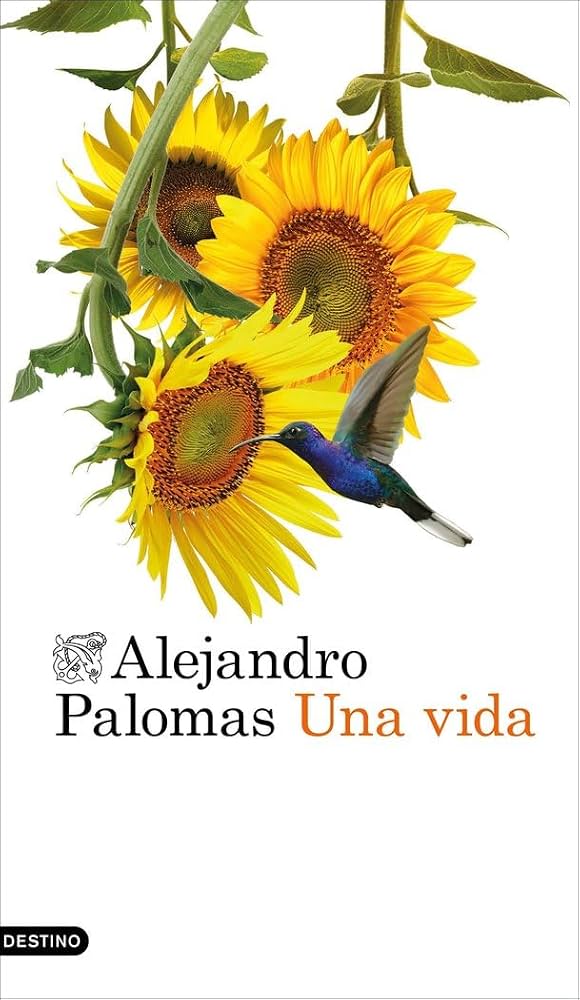
A Mother | A Dog | A Love | A Life
Amalia has a very particular way of loving: meddling where she is not invited, saying what nobody else dares to say, and turning every disaster into an opportunity to gather her loved ones around a table. At sixty-five, while her three children struggle to survive their own emotional turmoil, she weaves around them an invisible network of love, humor, and secrets. Because in Amalia’s family, nothing is simple, but everything matters.
Amalia is a sixty-five-year-old woman who, after divorcing a husband who left her bankrupt and without a pension, has managed to rebuild her life on her own terms.
Partially sighted, naturally clumsy, and blessed with an imagination capable of turning any everyday situation into an adventure, Amalia lives with her dog Shirley and has become the center of a family that revolves around her.
Her three children could not be more different. Silvia, the eldest, is responsible, controlling, and accustomed to taking care of everyone. Emma, the middle child, still carries the pain of a loss she has never managed to overcome. And Fer, the youngest, is a sensitive man who takes refuge in other people because he is still afraid to build a life of his own.
Each of them must confront their fears, losses, and desires while Amalia, with her unique blend of innocence, humor, and wisdom, pushes them forward. Four stories connected by an extraordinary woman who proves that even after losing almost everything, it is always possible to start over.
In A Mother, Amalia gathers her three children, Silvia, Emma, and Fer, in her apartment on New Year’s Eve.
Forty-one-year-old Silvia has just been fired from the multinational company where she worked and knows that her marriage to Peter, a Norwegian who has decided to return to his country, is also over. Emma, a teacher, lives with her girlfriend Olga and still carries the trauma of Sara’s death, her former partner. To everyone’s surprise, Emma is pregnant. Fer, the youngest, has moved into Amalia’s home after breaking up with his boyfriend and unexpectedly running into Manuel, his father, who once again disappeared without answering any of his questions. Also attending the dinner is Eduardo, Amalia’s brother, a charming man who invents a Portuguese fiancée simply so he has something to talk about. In reality, he is profoundly lonely.
Amid confessions, doubts, and arguments, the new year begins. At dawn, mother and son take their dogs, Shirley and Max, for a walk. Amalia asks Fer to move out and build a life of his own, because remaining by her side will only make the eventual separation more painful. Fer understands that he must dare to trust again. They return home together, both knowing that the time has come for each of them to follow their own path.
In A Dog, set three years after that New Year’s Eve dinner, Fer sits in a café in Barcelona waiting for news about R, his new dog, who has just been hit by a car. Amalia unexpectedly appears with Shirley and immediately realizes that something is wrong. Fer tries to hide the truth because he does not want to burden a woman who has already suffered enough. While waiting, he remembers how R came into his life.
After the unexpected death of Max, the Great Dane given to him by his ex-boyfriend, Fer withdrew into grief. Concerned for him, Amalia decided to intervene by bringing him a white puppy, convinced that caring for another living creature might help him reconnect with life. For weeks, Fer rejected the dog. Then, during a stormy night, the puppy climbed onto his bed and placed a paw on his chest. That simple gesture broke his resistance, and Fer decided to keep him.
While Fer waits at the clinic, the rest of the family continues evolving. After losing both her job and her marriage, Silvia decides to move to Pennsylvania with her new partner, John. Emma, after losing the baby she was expecting and ending her relationship with Olga, starts considering becoming a mother on her own.
Sensing that Fer has never fully committed himself to the dog, Amalia gives him a notebook she has filled over the years with possible names. She explains that refusing to name the dog means being afraid to love him and lose him. When Fer finally reaches the clinic, he learns that the dog has survived surgery, and at last finds the name he has been searching for over three years: Rulfo.
In A Love, Emma is preparing to marry Magalí on the same day as Amalia’s birthday. As the family gathers for the wedding, Fer struggles to maintain a lie he has been building for months. Still single and afraid his mother will worry about him, he has invented a Swedish boyfriend named Sven. With the help of Oksana, Amalia’s Russian housekeeper, he has fabricated trips, schedules, and an entire history for a man who does not exist. The problem arises when Amalia excitedly announces that she is finally going to meet him.
Magalí quickly wins Amalia’s affection. Silvia, however, convinced that she must protect her mother, distrusts this growing intimacy and fears Magalí may be trying to replace her or take advantage of her. When she confronts her, Magalí reveals a tragic story: her parents were murdered during the Argentine dictatorship, and she was raised by the police commissioner responsible for her mother’s death. The confession changes Silvia’s perspective. She realizes that Magalí is not trying to replace anyone. She, too, has found in Amalia the maternal figure she lost far too soon.
The wedding finally takes place at the civil registry office, where Amalia, after arriving late, moves everyone with a wildly improvised poem. Later, during the celebration at the mill, Amalia reveals that Manuel has died. After saying goodbye to him at the funeral home, she discovered, to her surprise, that she felt relief rather than pain. Fer then confesses that Sven never existed and was merely an invention meant to reassure her. Amalia is not angry. Instead, she tells him that he does not need to invent a relationship to make her happy; he simply needs to build his own life. Fer realizes this is his mother’s final lesson: to stop hiding and allow people to walk their own paths.
In A Life, Amalia, now in her seventies, begins to notice that her body no longer responds as it once did. What seems to be a minor fall leads her children to accompany her to the hospital, where they learn she is suffering from a serious illness.
The diagnosis forces Silvia, Emma, and Fer to confront a possibility they have always tried to keep at a distance: losing their mother. For the first time, they are the ones who must care for Amalia and make decisions on her behalf, while trying to hold together a family that has always relied on her to bring everyone together.
Silvia takes charge and organizes every detail, convinced that control is the only way to protect her mother. Emma struggles to balance her own wounds with Amalia’s needs, while Fer, unable to accept that anything might change, seeks refuge in others once again. Along the way, two new figures enter their lives: Anca, the caregiver who becomes part of Amalia’s daily routine, and Mauro, a yoga teacher who develops a special connection with the family.
As the illness progresses, the three siblings revisit their childhood, their losses, and all the things they never dared to tell one another. Even in her most fragile moments, Amalia continues to use humor and imagination to face the inevitable. Eventually, her children come to understand that caring for her also means learning how to let her go.
As the family prepares to say goodbye, they discover that a mother can leave the world without ever ceasing to be part of the lives of those who love her.
RELEVANT INFORMATION: The Amalia Saga is a family series that is tender, deeply emotional, and acclaimed by both readers and critics. The third installment, A Love, won the Nadal Prize. Its unique blend of family drama, humor, and emotion revolves around a charismatic, imperfect, and profoundly lovable central character. The four novels allow the characters and their relationships to evolve over time, with each story exploring loss, secrets, separation, and new beginnings.
Alejandro Palomas is a Spanish writer and translator who has received numerous literary distinctions, including the Protagonista Jove Prize, the National Prize for Children’s and Young Adult Literature, the La Isla de los Libros Prize, and the Joaquim Ruyra Prize for Young Adult Fiction. He has also been shortlisted for the Primavera Novel Prize and the Ciudad de Torrevieja Novel Prize.
Its audiovisual potential is exceptionally strong thanks to the richness of its characters, the balance between comedy and drama, and the wide range of situations it portrays, from family gatherings to everyday moments filled with humor and emotion, all driven by the unforgettable figure of Amalia.
CRITICAL ACCLAIM
“What a delightful character!” — Devorim
“A very real, contemporary, complex, and human family.” — Medial TV
“A moving reflection on family history.” — La Vanguardia
“A new exercise in emotional virtuosity.” — Lecturalia
“Absorbing, tender, intriguing; a story that makes you feel and reflect.” — Lecturalia
AUDIOVISUAL POTENTIAL: TV Series, Limited Series, Feature Film, TV Movie.
AVAILABLE LANGUAGES: Spanish, Bulgarian, Catalan, French, Greek, Icelandic, Italian, Polish, Portuguese, Romanian, Serbian.


Adquirir los derechos
Para ponerte en contacto con nosotros completa el siguiente formulario y te responderemos en breve.
