
The story of the woman who uncovered one of the biggest corruption scandals in Spain’s history. Persecuted by the very system that was supposed to protect her, she is forced into exile and overwhelming solitude, while fighting to defend the truth and maintain her dignity at an extraordinarily high personal cost.
The story of Ana Garrido is based on real and documented events. Ana is the woman who exposed one of the largest corruption cases in Spanish democracy: the Gürtel network, which ultimately led to the fall of Mariano Rajoy’s government in 2018.
Her bravery came at an unimaginable price: she lost her job, her home, her social and family support, and lived marked by isolation, fear, and betrayal. Today, her name symbolizes the struggle of those who dare to confront power and pay a devastating price for defending the truth.
The story begins in Costa Rica, where Ana lives in exile after reporting irregularities in a town hall in western Madrid. She remains there for almost two years, until she receives a call that changes everything: the Spanish justice system summons her as a key witness. This unexpected judicial summons opens a mystery: why did an exemplary civil servant end up fleeing the country and becoming the piece that could topple a government?
A major flashback takes us back to the beginning. Ana arrives at the town hall thanks to her university circle and soon enjoys the economic boom of the real-estate bubble: parties, influential contacts, social prestige. But her integrity places her in the eye of the storm. When she refuses to facilitate irregular contract awards, the system turns against her. Isolated and depressed, she decides to document everything. Her secret dossier—born of discreet alliances with journalists and internal enemies of the local power—accidentally ends up in the hands of the regional president and unleashes relentless persecution.
In Costa Rica, while the scandal erupts in Spain, Ana follows each development with anguish. When she returns to reclaim her position, she faces rejection from former colleagues, workplace harassment, and suffocating social hostility. Only a councilman from the opposition dares to support her. Her story reaches the media: first a viral article, then TV debates and national radio. Ana becomes a symbol of anti-corruption during the height of the 15M movement. Yet fame does not save her life: she loses her job, her attempts to reinvent herself fail, and eventually she loses her home.
Tension peaks when her partner is bribed to clone her computer, unaware that it contains explosive audio recordings implicating high-ranking figures, including the president of the Senate. The evidence Ana collected reveals the involvement of top political officials and thrusts her back into the media and judicial spotlight. The UDEF, the courts, and the press step in, while she faces betrayal, defamation, and the constant risk of losing everything.
On the verge of collapse, she even attempts to take her own life, reflecting the personal cost of standing up to a corrupt system. Even so, her resilience and dignity turn her into a symbol of integrity, proving that a single person—a normal, ordinary woman, but principled—can challenge power and open cracks of light in an environment dominated by shadows.
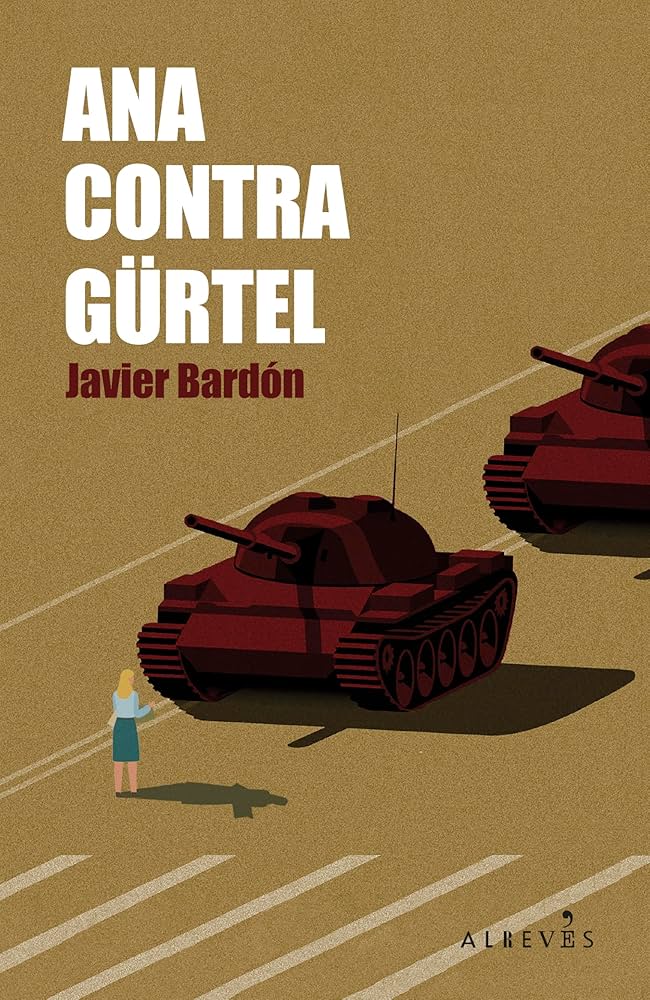
RELEVANT INFORMATION: Javier Bardón is a licensed psychologist and writer. His book Ana contra Gürtel tells the true story of Ana Garrido and combines political thriller with human drama, offering enormous audiovisual potential.
The character arc—from downfall to survival and resistance—has a deeply cinematic narrative strength. And the use of present tense and flashbacks maintains suspense, introduces powerful twists, and allows for the exploration of complex characters.
With a tone reminiscent of Spotlight, Erin Brockovich, or Borgen, this story has all the elements to become a powerful, inspiring, and socially relevant series or film.
AUDIOVISUAL POTENTIAL: TV Series, Miniseries, Film, TV Film.
AVAILABLE LANGUAGES: Spanish.
Adquirir los derechos
Para ponerte en contacto con nosotros completa el siguiente formulario y te responderemos en breve.
Error: Contact form not found.
