
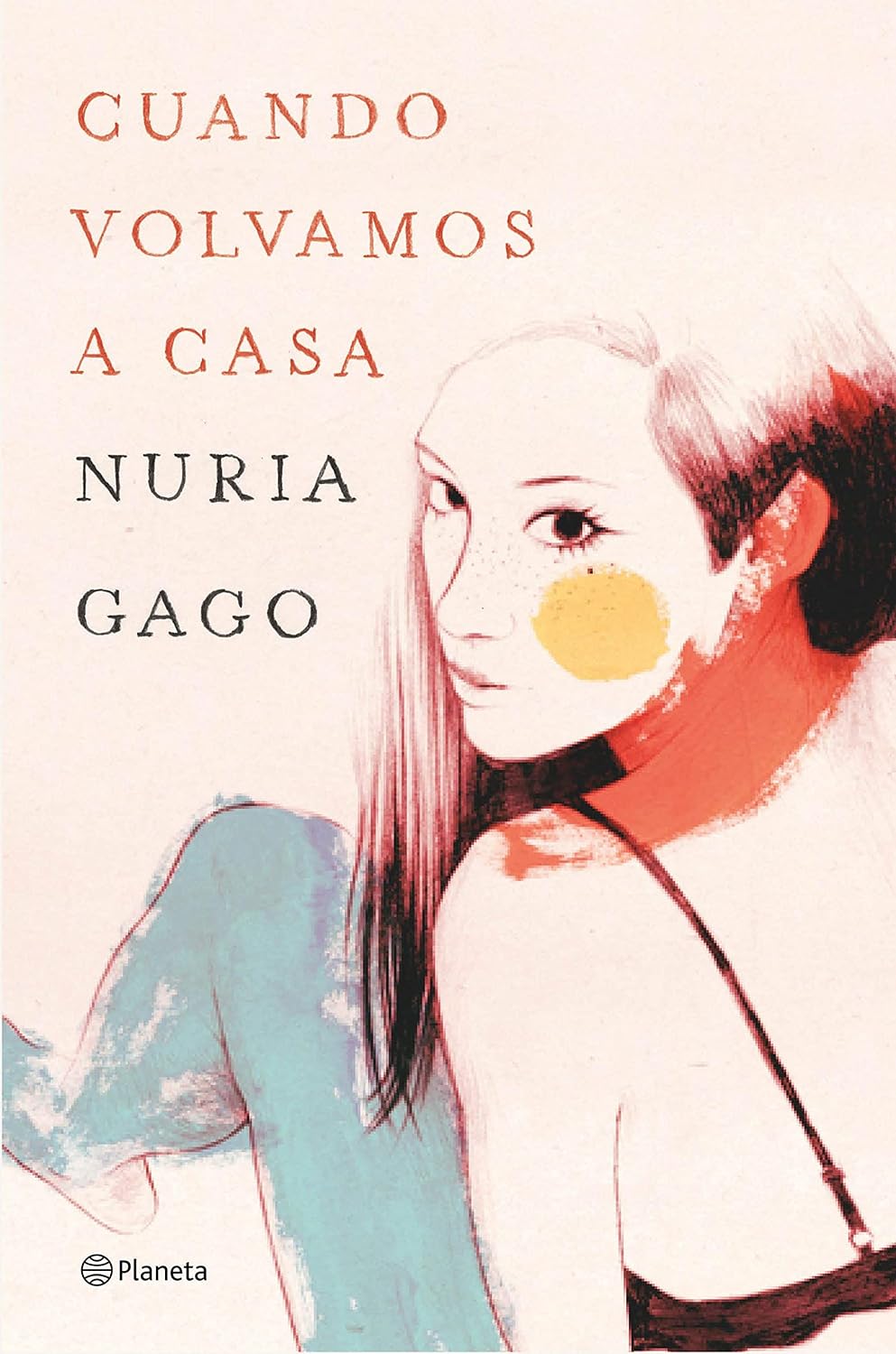
After her mother’s death, Paula has spent her life searching for the sense of home she lost as a child. But when the relationships that sustain her world begin to fracture and a new love enters her life, she must finally confront her deepest wounds and discover whether it is possible to build a family of her own without remaining trapped in the past. A tender and deeply moving novel by writer and actress Núria Gago.
Following her mother’s death when she was a child, Paula has spent her entire life trying to fill a void that never truly heals. Unable to feel completely safe anywhere, she takes refuge in other people’s lives, avoids solitude, and even adopts another name, Oceanne, whenever she needs to hide from the world.
She works in a university café and has built her life around a small chosen family made up of her closest friends, especially Manu and Sergio, two brothers who have long filled the space left by many absences. Yet despite her efforts, Paula still cannot find the place where she truly feels at home.
Around her, others carry wounds that continue to shape their lives. Laura is trying to rebuild herself after separating from her daughter’s father while learning to navigate motherhood alone, a role she never felt prepared for. Susana lives with the consequences of a childhood trauma buried for years, one that has gradually undermined her marriage to Roberto. And Álvaro, a teacher newly arrived in town, remains consumed by guilt over an accident years earlier, when he lost sight of a child during a school activity and the disappearance was never resolved.
When Paula and Álvaro meet, they immediately recognize something familiar in one another: the experience of living under the shadow of loss. A genuine connection develops between them, forcing Paula to confront many of her own fears. At the same time, Manu continues to occupy a central place in her life. What has always seemed like an unbreakable friendship begins to reveal a more complicated reality: unable to move on from a past relationship and unwilling to face his own loneliness, Manu has made Paula the emotional center of his existence without ever fully acknowledging it.
The delicate balance within the group is shattered when Paula’s father suffers a severe case of appendicitis, awakening in her a devastating fear of becoming orphaned. Convinced she may lose the only family she has left, she relives the pain of her childhood with renewed intensity. During this difficult period, it is Sergio who remains by her side. Quiet, generous, and always attentive to the needs of others, he gradually becomes the source of support Paula has been searching for all along without realizing it. What begins as a profound friendship slowly evolves into a mature and peaceful love story that forces them both to reconsider their lives.
Meanwhile, the other storylines continue to unfold. Susana begins a painful journey of recovery as she finally confronts the abuse she suffered as a child, experiences that have shaped every aspect of her adult life. Roberto must learn how to accompany her without trying to rescue her. Laura discovers that it is possible to fall in love again without sacrificing her independence. And Álvaro comes to understand that he will never be able to build a future while continuing to punish himself for a past that cannot be changed.
As the characters move forward, the novel presents an ensemble portrait of ordinary people trying to rebuild their lives after pain. Through a warm and hopeful perspective, the story explores friendship, love, loss, guilt, and the universal need to belong. Little by little, each of them discovers that home is not always a place or a blood family, but rather the people who choose to stay when everything else seems to fall apart.
In the final stretch of the story, Paula realizes that she has spent too much of her life trapped by the absence of her mother and by the constant fear of losing those she loves. Together with Sergio, she begins to build a life based on trust, stability, and mutual care. And when an unexpected encounter allows her to say a symbolic goodbye to her mother, she finally understands that wounds never disappear completely, but they do not have to govern a person’s life forever.
When We Return Home is a warm and hopeful ensemble drama about people seeking to heal their emotional fractures and find their place in the world. A story about chosen families, second chances, and the possibility of beginning again even after the deepest losses.
RELEVANT INFORMATION: Núria Gago is a Spanish actress, screenwriter, director, and writer, particularly known for her work in numerous film and television productions, including Héctor (2004), for which she received a Goya Award nomination for Best New Actress, as well as the television series MIR, Herederos, and Amar es para siempre.
Her artistic career combines acting with writing, to which she has devoted a significant part of her professional life. Her work as a novelist earned her the Azorín Novel Prize. Her fiction is distinguished by a sensitive exploration of human relationships and everyday emotions, with particular attention to loneliness, affection, and the need for connection.
When We Return Home is a character-driven novel built around themes such as loss, identity, friendship, and romantic relationships. Its narrative prioritizes the emotional evolution of its characters, which is precisely what gives it remarkable audiovisual potential. The richness of its interconnected relationships, the strength of its dialogue, and the subtlety of its conflicts make it excellent material for adaptation into a dramatic television series capable of connecting with audiences through the intimacy of complex, relatable, and deeply human characters.
AUDIOVISUAL POTENTIAL: TV Series, Limited Series, Feature Film, TV Movie.
AVAILABLE LANGUAGES: Spanish.
Adquirir los derechos
Para ponerte en contacto con nosotros completa el siguiente formulario y te responderemos en breve.
