
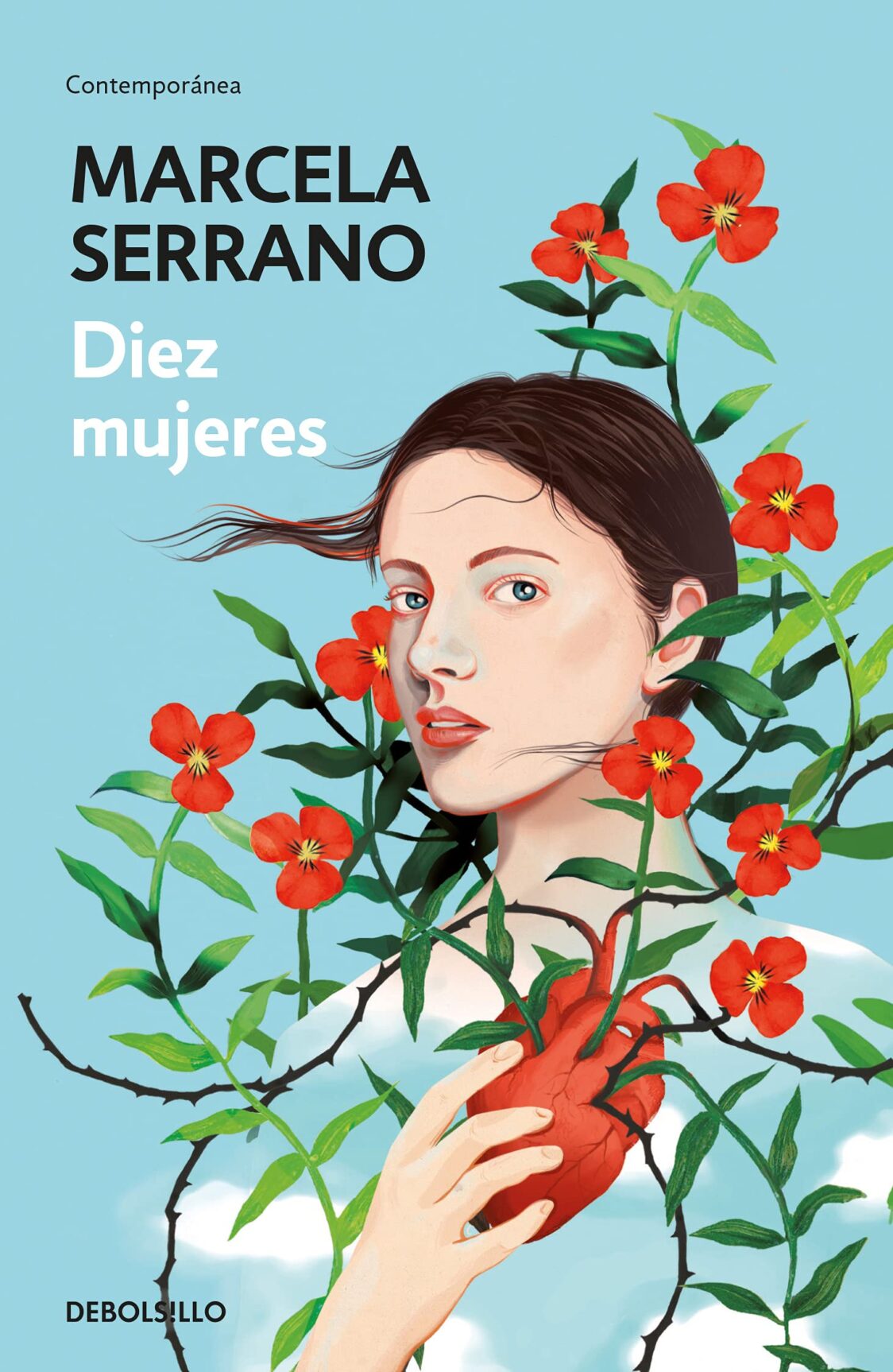
Brought together by a psychiatrist, nine women from vastly different ages, backgrounds, and life experiences agree to share the stories they have spent years keeping silent. Heartbreak, absence, difficult motherhoods, trauma, and shattered dreams emerge during a single day that forces them to confront their wounds and discover that, sometimes, healing begins when someone listens to what we never dared to say. The most emblematic novel by Marcela Serrano, one of the great voices of Latin American literature.
In a house on the outskirts of the city, psychiatrist Natasha gathers nine of her patients for an unusual experience: over the course of a single day, they must tell the story of their lives without reservation. Through their confessions emerges an intense emotional journey through the loves, losses, and wounds that have shaped each of them. Natasha knows that none of them has arrived there by chance. All carry old pain that continues to define their present.
The first to speak is Francisca, an architect marked by her mother’s inability to love her. The death of her brother and her mother’s subsequent mental decline left a profound mark on her life, to the point that her greatest fear is repeating that same emotional emptiness with her own daughters. Next comes Mané, an actress who recalls the years when she was admired and desired. The accidental death of her great love, Rucio, shattered the foundation of her existence and forced her to confront aging, financial instability, and the nostalgia for a happiness that never returned.
Juani’s story is defined by caregiving. First for her ailing mother and later for her daughter Susy, who has been diagnosed with bipolar disorder. In order to protect her, Juani has sacrificed both her financial stability and emotional wellbeing, living under the constant fear of losing her. Simona then recounts the passion she shared with Octavio, the most important man in her life. Years of disappointment gradually eroded the relationship. To preserve her dignity, she chose to leave him and accept a painful solitude that remained compatible with fidelity to herself.
Layla, a journalist of Palestinian origin, carries the scars of exile and the trauma of a rape suffered during a trip to Gaza. The resulting pregnancy and unresolved pain drove her into alcoholism and a prolonged period of self-destruction. Luisa, meanwhile, has spent decades waiting for news of Carlos, her husband, who was detained and disappeared during the dictatorship. The uncertainty forced her to raise their children alone and turned her existence into a never-ending vigil.
The final testimonies complete this rich portrait of female experience. Guadalupe recounts the difficulties of accepting herself as a lesbian in a hostile environment. Andrea, a successful journalist, discovers that professional prestige is insufficient to fill the void left by fading love and the fear of growing older. Ana Rosa, shaped by a repressive upbringing and childhood abuse, confesses to a life built upon guilt, sacrifice, and renunciation.
As Natasha listens to each story, she recognizes the same need in all of them: the desire to be understood and loved. She herself carries her own losses and knows that some wounds never completely heal. Yet by sharing their experiences, these women cease to feel isolated in their suffering. When evening falls and each returns to her life, their problems remain, but they no longer carry the same weight. The true transformation comes not from solving them, but from finding, even for a few hours, a space where pain can be heard.
The novel concludes with a deeply melancholic and profoundly human realization: despite their differences, all these women share the same struggle to survive their wounds and find a way forward.
RELEVANT INFORMATION: Marcela Serrano is a Chilean writer and visual artist, widely regarded as one of the most important voices in Latin American literature since the 1990s. Her work is characterized by a strong feminist perspective and the exploration of relationships between women, female identity, memory, and the social and political tensions of Latin America.
The author of twelve novels, she won the Sor Juana Inés de la Cruz Prize in 1994 for We Loved Much (Nosotras que nos queremos tanto), received the Santiago Municipal Literature Prize, and was a finalist for the Planeta Prize. Her works have been translated into numerous languages and several have been adapted for the screen.
Ten Women is an emotionally powerful ensemble novel that intertwines the stories of ten women united by their need to make sense of the wounds that have shaped their lives. The novel explores heartbreak, motherhood, loss, abandonment, identity, and the search for affection from a wide range of perspectives, creating an intimate mosaic of female experience.
Its confessional structure, psychological depth, and richly contrasting characters give it remarkable audiovisual potential, particularly as a dramatic limited series in which each woman’s story could unfold as a self-contained narrative while Natasha serves as the connecting thread that links them all.
CRITICAL ACCLAIM
“Her novels are wise and lucidly feminine. Reading Marcela Serrano is like looking into the eyes of all the women in the world.” — Arturo Pérez-Reverte
“Marcela Serrano is an heir to Scheherazade. Thanks to writers like Marcela, life will never have the last word.” — Carlos Fuentes
AUDIOVISUAL POTENTIAL: TV Series, Limited Series, Feature Film, TV Movie.
AVAILABLE LANGUAGES: Spanish, German, French, Italian, Portuguese, Arabic.
Adquirir los derechos
Para ponerte en contacto con nosotros completa el siguiente formulario y te responderemos en breve.
