
After losing everything in London, a woman travels to the Empordà to restore an abandoned garden and ends up uncovering a crime silenced for decades. As love restores her will to live, she must confront the man who destroyed that family—before he erases the last remaining evidence.
Iris Everthorne hits rock bottom in London. Within days, she loses her job at an elite bank, discovers her fiancé is cheating on her with her boss, and is once again overwhelmed by guilt over the death of her younger sister, Lily, who was run over years earlier. That unresolved grief has distanced her from her mother and left her without a personal direction.
When she comes across a strange advertisement—seeking a “sensitive and hardworking” person to restore an abandoned garden on an estate in the Empordà, Catalonia—she accepts without fully knowing why. Shortly before, a botanical card reading had given precise words to her existential exhaustion. Iris packs her bags and leaves, seeking silence, soil, and distance.
She is welcomed by Abelia, the estate’s caretaker, who settles her in the Casa del Olvido: a mansion closed for years, covered in ivy, with a garden completely dead. There, Iris begins the physical work of clearing and restoring the land. She soon meets Marc, the maintenance manager, a reserved man who seems as rooted to the house as the trees themselves. Together they prune, plant, reopen paths, and restore water to the well. In that slow rhythm, an intimate closeness begins to grow.
Marc is the son of Anaïs Loin, the former owner, a painter who died when he was a child. Iris discovers her hidden paintings in a sealed greenhouse and realizes that space had been Anaïs’s refuge from a violent marriage. As the garden begins to bloom again, Marc and Iris share their wounds: he, marked by his mother’s death and a childhood of abandonment; she, by Lily’s loss. Trust gradually transforms into love.
Meanwhile, Iris investigates the estate’s past. Among newspaper clippings, sketches, and Anaïs’s herbarium, an unsettling suspicion emerges: the painter did not die in an accident. For years she had been isolated by her husband and forced to ingest aconite until she was physically weakened. Before dying, she hid a letter denouncing the poisoning and asking that her son be protected.
Marc’s father, co-owner of the house, has always maintained another version of events: he blamed Marc himself for his mother’s death and kept him at a distance, burdened with shame. Now he wants to sell the estate to settle debts and definitively close that chapter.
The appearance of Alister, Iris’s ex-fiancé, underscores the contrast between the life she left behind and the one she is beginning to build in Catalonia. However, an urgent phone call forces her to return to London to accompany her mother after a stroke. There, she manages to confront her grief: she visits Lily’s grave and begins to mend her relationship with her mother.
When she returns to the Empordà, Iris and Abelia find Anaïs’s posthumous letter. They decide to take it to the notary on the day the sale is to be formalized. The public reading of the document dismantles the father’s version of events and frees Marc from the guilt he has carried since childhood.
That same night, cornered, the father sets fire to the greenhouse in an attempt to destroy the paintings and any remaining evidence. The fire spirals out of control. He becomes trapped inside and dies in the flames.
The house survives. Anaïs’s artistic legacy is preserved. The garden is reborn.
Iris and Marc remain together, united by a love born from loss and the earth. The estate becomes a space of memory and life, where pain does not disappear but transforms into roots. Iris has awakened. The garden has as well.
RELEVANT INFORMATION: Carla Gracia is a writer, lecturer, and researcher. She has published several novels translated into multiple languages and won the Alghero Donna Prize in the International section of the Rome Book Fair. In addition to her literary work, she has worked as a TV director and presenter and as a screenwriter for audiovisual projects such as Cibercríms and the short film Els que callen, shortlisted for the Premios Goya.
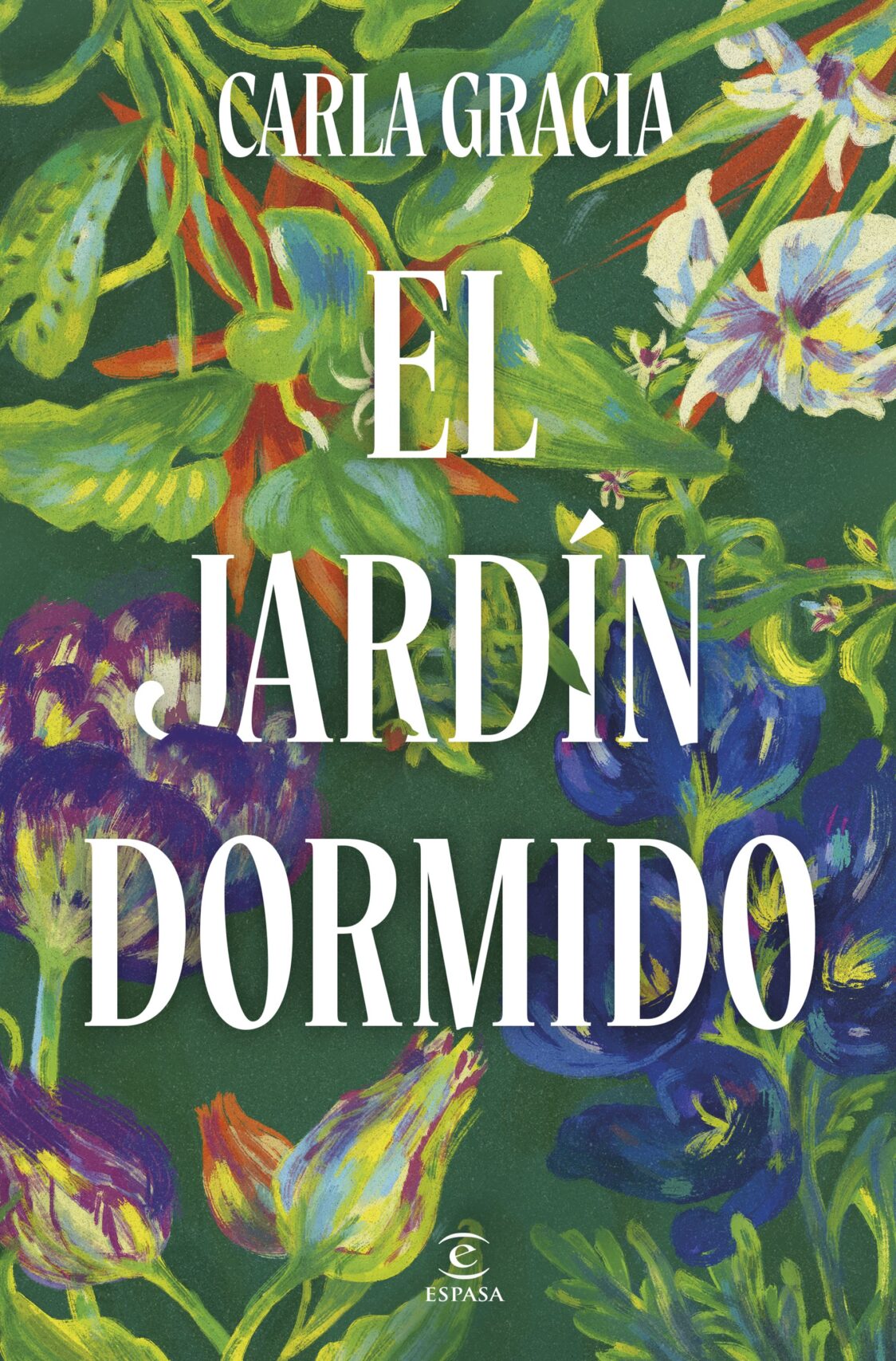
El jardín dormido solidly combines romantic melodrama and gothic mystery within a visually powerful setting, where the abandoned garden, the house, and the Empordà landscape act as emotional mirrors of the characters. The love story unfolds intimately and progressively, with sustained emotional depth that runs parallel to the revelation of the estate’s dark past. This balance between romance and mystery reinforces a clear and immersive plot. Thanks to its atmosphere, settings, and central conflict, the novel has strong audiovisual potential and is easily adaptable into a miniseries or feature film capable of reaching a broad audience.
AUDIOVISUAL POTENTIAL: TV Series, Miniseries, Feature Film, TV Movie.
AVAILABLE LANGUAGES: Spanish.
Adquirir los derechos
Para ponerte en contacto con nosotros completa el siguiente formulario y te responderemos en breve.
Error: Contact form not found.
