
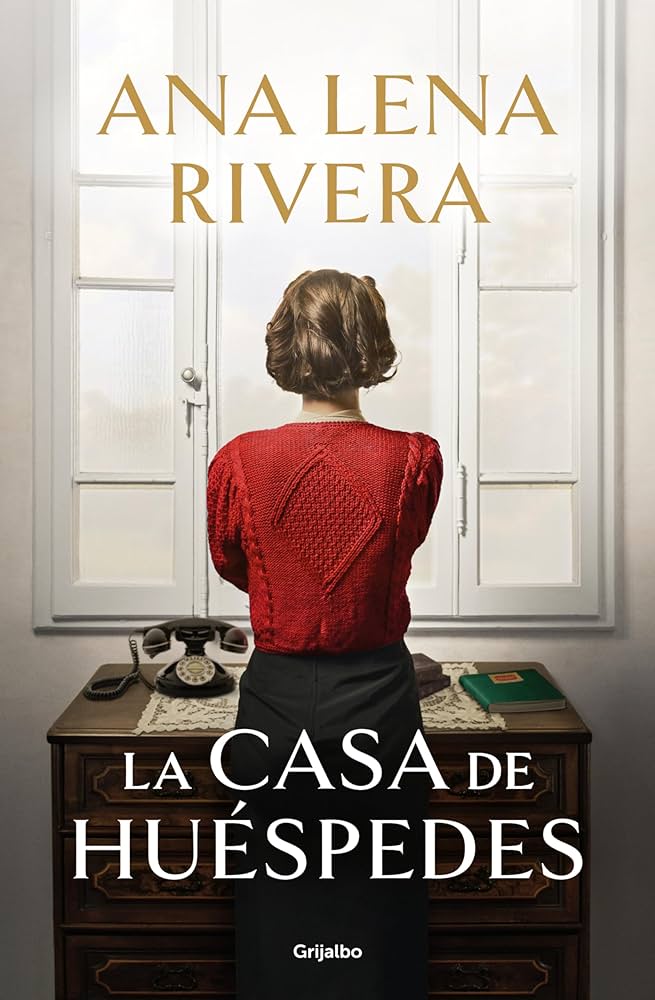
An explosion in Madrid in 1937 forever intertwines the destinies of two women: one exiled by war, the other trapped in a lie she must conceal for the rest of her life. Across several generations, secrets, losses, and sacrifices weave the story of a family marked by survival, love, and the search for its true origins.
In March 2025, in Oviedo, Caridad accompanies her best friend, Margarita, through the final hours of her life. Before Alzheimer’s disease could completely erase her memories, Margarita asked her to write down the true story of their family, so that her son, Fer, and granddaughter, Violeta, could understand where they came from. That story begins almost a century earlier.
In 1937, during the Spanish Civil War, Madrid is subjected to relentless bombing. In one such attack, Ángela, a young woman of humble origins, loses the parents who raised her as the daughter of a building’s caretakers. Amid the rubble, she finds a baby girl, Margarita, whose own parents have also died that same night. Without family or resources, and aware that the child belongs to a wealthy family, Ángela makes a desperate decision: she will pass herself off as the baby’s mother. Armed with the documents she manages to rescue, she assumes the dead woman’s identity and travels to Asturias, where the paternal Acebedo family welcomes her as another widow of the war. Thus begins a new life built upon a lie that Ángela must sustain for decades.
At the same time, another story unfolds beyond Spain’s borders. Elvira, the daughter of the owners of a Madrid guesthouse, flees to France with her mother before the conflict begins. They remain there during the early years of exile until World War II erupts across Europe. Under Nazi occupation, Elvira’s life is shattered once again: her mother dies in a labor camp, and Elvira is raped, becoming pregnant as a result. In 1944, she gives birth to her daughter, Fania, conceived through that traumatic event, which Elvira resolves to keep secret. After the war, she returns to Spain with the child and attempts to rebuild her life in Oviedo, where she opens a boarding house called Casa Flora. It becomes both her livelihood and a refuge for others.
Meanwhile, Margarita grows up within the Acebedo family as a privileged young woman, completely unaware of her true origins. Ángela, now her mother in every sense, successfully integrates into this world of privilege despite her background, adopting the manners and expectations of the social class to which she now appears to belong. Over time, the original deception solidifies into a stable identity, though always sustained by the fear of being exposed.
Throughout the 1950s and 1960s, the lives of Margarita and Fania, who have been raised in very different circumstances within the same city, eventually intersect. Within this shared environment—shaped by life in Oviedo and the bonds formed around Casa Flora and its social circle—the two young women develop a close friendship, alongside Caridad, who bears witness to it all.
As an adult, Margarita marries Fernando, a lawyer connected to the Acebedo family. What appears to be a stable marriage begins to unravel when Fernando embarks on a secret affair with Fania—an affair that becomes even more complicated when Fania becomes pregnant. Yet fate intervenes once more. During her pregnancy, she is diagnosed with a serious illness and dies shortly after giving birth to a son.
Fania’s death marks another turning point. Margarita discovers that the child is her husband’s son, but decides to conceal the truth. She claims the boy as her own and raises him together with Fernando as though he were their legitimate child. The boy, Fer, grows up unaware of the reality.
At this point, the decisions of one generation begin to repeat themselves in the next. Elvira, devastated by the loss of her daughter, chooses not to claim her grandson and accepts remaining on the sidelines rather than destroying the life that has been built around him. Ángela, for her part, continues to guard the secret of Margarita’s true identity. Caridad, who knows the whole truth, becomes the sole keeper of the complete story, never revealing it.
Over the following decades, the family’s history remains hidden. Fer grows up, builds a life of his own, and has a daughter, Violeta, never suspecting that his identity rests upon a series of carefully buried secrets. Meanwhile, Margarita grows old and, in the early twenty-first century, begins to develop Alzheimer’s disease.
Finally, in 2025, as Margarita lies on her deathbed, the long silence comes to an end. Caridad fulfills the promise she made years earlier and delivers the manuscript containing the family’s true story to Fer and Violeta. Through its pages, they uncover the truth: their family was built upon extreme decisions made in times of war, hidden identities, sacrifices, and renunciations. Understanding that past cannot change what happened, but it allows them, for the first time, to make sense of their story and close a chapter that remained concealed for nearly a hundred years.
RELEVANT INFORMATION: Ana Lena Rivera is a bestselling Spanish author specializing in historical fiction, acclaimed for her ability to intertwine the personal experiences of her characters with the major events and social transformations that shaped Spain throughout the twentieth and early twenty-first centuries.
The Guesthouse combines the scope of a family saga with the emotional depth of historical drama to create a profoundly moving story about identity and the legacy of the past. Spanning several decades and anchored by a strong ensemble of female characters, the novel explores how war, postwar repression, and family silences shape entire generations.
The author herself has described the novel as a reflection on memory, exile, trauma, and the necessity of confronting the past in order to heal.
Its audiovisual appeal lies in the strength of its protagonists, the richness of its historical settings, and a compelling narrative filled with secrets, impossible loves, and moral dilemmas.
WHAT READERS SAY
“A story about women, told by women as real as life itself.” Revista Tarántula
“Captivating from the very first pages.” La Jungla de las Letras
“With a simple and approachable prose style, it especially draws you in from the middle of the novel onwards, and you simply cannot put it down because it is full of twists that keep you engaged at every moment.” ZumodeLibros
AUDIOVISUAL POTENTIAL: TV Series, Miniseries, Feature Film, TV Movie.
AVAILABLE LANGUAGES: Spanish.
Adquirir los derechos
Para ponerte en contacto con nosotros completa el siguiente formulario y te responderemos en breve.
