
After inheriting a house in Valencia, a German psychologist discovers that her family concealed a secret about her grandmother that will change her life forever.
Katharina, a 38-year-old German psychologist, learns that she has inherited a dilapidated villa in Valencia from her great-aunt María—a relative whose existence she never even knew about. Still grieving the loss of her parents and recently unemployed, she decides to accept the inheritance and temporarily relocate to Spain. As she begins renovating the property, she forms friendships with her flatmate Sara and her neighbor Virtudes, develops a complicated relationship with Manuel, her lawyer, and starts a budding romance with Luis, a journalist who helps her investigate her family’s past.
A discovery hidden inside a wardrobe—a board bearing the message “Dear Elena: I am not crazy. Love, Mum”—raises an unsettling possibility: María may not have been Katharina’s great-aunt at all, but her biological grandmother. Determined to uncover the truth, Katharina begins searching through archives and investigating the Bétera Psychiatric Hospital, where María was confined before her death.
Her investigation encounters numerous obstacles. The hospital refuses to release information, but Luis uses his press credentials to interview Amparo, a former patient who knew María. Through Amparo’s testimony and a manuscript discovered among María’s belongings, a tragic story emerges. María had a daughter named Elena—Katharina’s mother—and her confinement to a psychiatric institution was the result of a terrible injustice.
After the death of her second child, Francisco, María’s husband Juan blamed her for the tragedy. When he discovered her speaking to the dead baby and began an affair with Isabel, the family nanny, he declared María insane and had her committed. For nearly twenty years she endured electroshock treatments, isolation, and humiliation. It was not until her transfer to the Bétera Psychiatric Hospital in the 1970s that she regained some measure of dignity, though never her freedom or her daughter.
The discovery of Elena’s original birth certificate finally confirms María’s maternity. Katharina also learns that Manuel, her lawyer, is actually the son of Juan and Isabel—and therefore her uncle—a revelation that shatters her trust. Further documents, together with confessions from Virtudes and Isabel herself, complete the puzzle: Ángela, María’s sister, and her husband Pablo were pressured by Juan into raising Elena as their own. Juan manipulated official records so that Elena would be legally registered as the daughter of Ángela and Pablo.
At the same time, Katharina rebuilds her own life. She opens a psychological practice in the inherited house, strengthens her relationship with Luis, and faces a difficult encounter with the dying Juan, who expresses remorse, asks for forgiveness, and offers her his entire fortune. Katharina chooses to use the money to establish a foundation in María’s memory, dedicated to helping disadvantaged psychiatric patients.
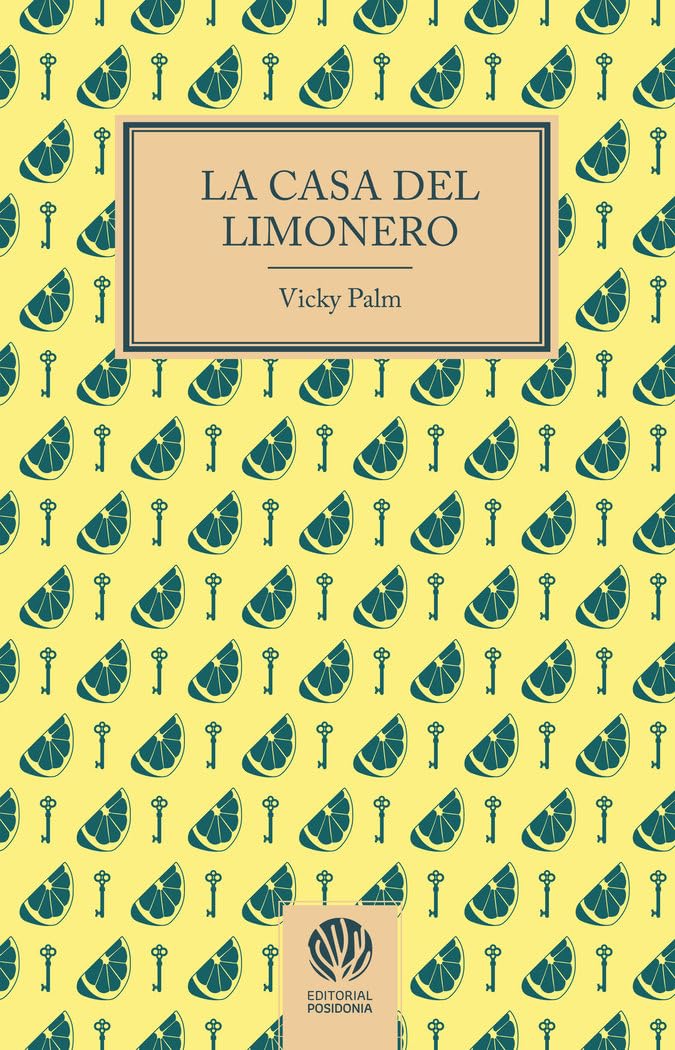
In 2017, accompanied by Luis, she visits María’s grave and renames the family home The Lemon Tree House—a symbol of a new beginning, free from the burden of lies and silence.
RELEVANT INFORMATION: Vicky Palm is a blogger and writer who previously self-published a poetry collection. The Lemon Tree House is her debut novel, blending family drama, mystery, and social critique into a compelling and emotionally powerful narrative.
The novel’s dual timeline structure—alternating between Katharina’s contemporary investigation and flashbacks depicting María’s life—creates sustained suspense while gradually unveiling long-buried secrets. Its exploration of historical injustices, including the repression of women within Francoist psychiatric institutions and the manipulation of family identities, provides a strong social and historical dimension.
The story offers rich emotional complexity through its layered characters, family revelations, and themes of memory, truth, healing, and identity, making it especially well suited for adaptation.
AUDIOVISUAL POTENTIAL: TV Series, Miniseries, Film, TV Movie
AVAILABLE LANGUAGES: Spanish.
Adquirir los derechos
Para ponerte en contacto con nosotros completa el siguiente formulario y te responderemos en breve.
