
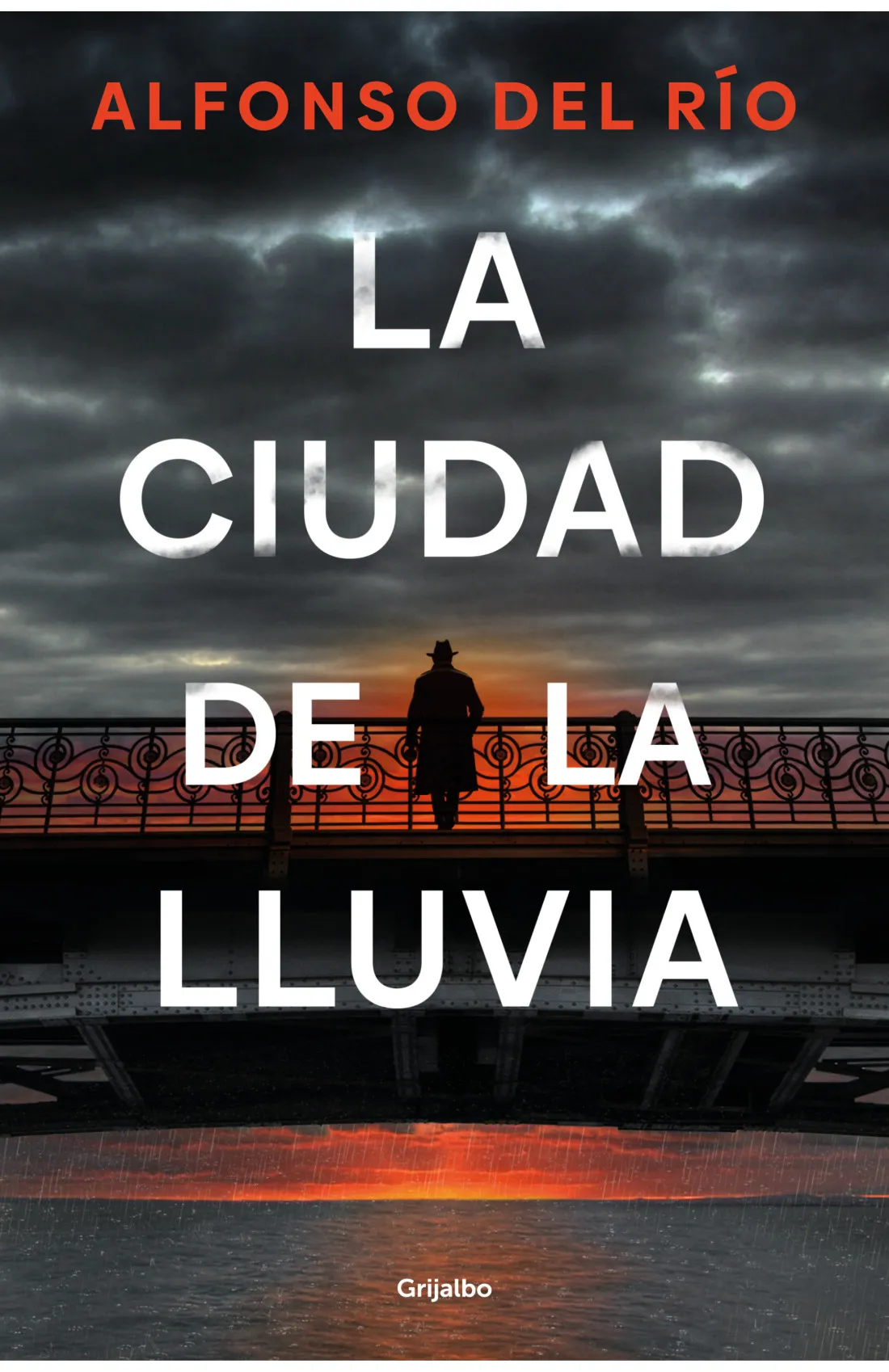
In Bilbao in 1983, a series of seemingly accidental deaths connects a young footballer and the daughter of a powerful businessman. United by loss, they begin an investigation that leads them to a crime committed during World War II. As they move forward, they discover that someone is using their investigation to carry out a long-planned act of revenge.
Bilbao, 1983. A series of seemingly unrelated deaths shakes the city’s financial elite. A top-level businessman dies burned alive in a factory fire; days later, his chief financial officer is found dead at home; and weeks later, an elderly man with no public relevance dies during severe floods that devastate the city. The police close all three cases as accidents, but among those close to the victims there is a lingering sense that these deaths are neither random nor independent.
The elderly man who dies during the floods is Rodrigo Lezo, grandfather of Alain, a young Athletic Club footballer whose professional career was abruptly cut short by a serious injury. Before his death, Rodrigo had received direct threats linked to his past, threats that explicitly extended to his grandson. Convinced that his grandfather’s death was not accidental and that he himself may be in danger, Alain decides to investigate.
His search leads him to María, the daughter of the businessman who died in the fire. She never accepted the official version of her father’s death either. As they examine an old photograph belonging to Rodrigo, María recognizes in it another of the men who has died. The image was taken at an airfield in Berlin in 1941 and shows several men linked by a past event that none of them ever wanted to make public. From that moment on, Alain and María are convinced that the three deaths are part of the same pattern and decide to continue investigating, fully aware that someone is watching them, following them, and trying to prevent them from reaching the truth.
Their investigation leads them to hidden corporate archives, deliberately buried financial operations, and cultural donations used as a façade. Little by little, they reconstruct a story that goes back to World War II: in 1941, a small group of men—among them the three deceased—took part in a secret operation in which they sold a defective encryption machine to the Nazi regime. The operation allowed them to grow rich and consolidate their power for decades, but it had a decisive consequence: to erase any trace of the fraud, they sacrificed an innocent woman, framing her for the betrayal and condemning her to death.
Seeking legal support and protection, Alain and María turn to David, a highly respected lawyer and María’s former romantic partner. When he sees the photograph, David becomes visibly unsettled: he recognizes the place where it was taken and admits that he was there as a child. Everything suggests that he could be the next victim. Weeks later, David begins receiving threats identical to those that preceded the previous deaths, reinforcing that suspicion.
As Alain and María try to protect him, they notice disturbing behavior: David is always one step ahead, handles information no one has given him, and seems to anticipate every move of the investigation. They eventually uncover the truth: David is the son of the woman executed in 1941 and has devoted his entire life to avenging her death. From a position of power, respectability, and absolute control, he has forced those responsible to take their own lives one by one, using fear, blackmail, and silence as his only weapons, never exposing himself directly.
In the final act, David confesses his story as he prepares his definitive escape. Devastated, Alain and María realize they have been used as necessary pieces in a revenge meticulously planned for decades. Years later, both try to rebuild their lives while David disappears without a trace, convinced that he has won his personal war at the cost of renouncing forever any possibility of redemption.
RELEVANT INFORMATION: Alfonso del Río is a Spanish writer, lawyer, and columnist who combines legal practice and university teaching with literary creation. He is also the author of El lenguaje oculto de los libros and El enigma de Anne Wallace, and is one of the most prominent and promising voices in Spanish thriller fiction.
La ciudad de la lluvia, with thousands of copies sold, is a dark thriller built around two timelines, sustained pacing, and a dense atmosphere. The novel combines historical conspiracy, psychological drama, and suspense, anchored by a strong antagonist and by characters drawn into an investigation that overwhelms them. In tone and story, it sits close to references such as Seven or Zodiac, with strong potential for audiovisual adaptation as a feature film or series.
What the critics say:
“A novel that unquestionably grips you. The narrative pace and the two timelines make it highly compelling.” — Readers’ opinion on Casa del Libro.
“A true thriller with chilling, vertiginous scenes that any reader, whether a genre fan or not, will enjoy right up to the final page.” — La magia de los buenos libros. La ciudad de la lluvia blends a story with classic noir undertones and an originality that will satisfy any reader.” — Arantxa Rufo Reseñas.
AUDIOVISUAL POTENTIAL: TV Series, Miniseries, Feature Film, TV Film.
AVAILABLE LANGUAGES: Spanish.
Adquirir los derechos
Para ponerte en contacto con nosotros completa el siguiente formulario y te responderemos en breve.
Error: Contact form not found.
