
From a prison cell, Manolita Chen—artist, pioneer, and LGTBI icon—reconstructs a life that defied Franco’s dictatorship and found in the stage an act of resistance. Based on real events, her story transforms an individual biography into a mirror of modern Spanish history.
Manuela Saborido, known as Manolita Chen, sits in pretrial detention accused of drug trafficking. She is over sixty and carries a life shaped by persecution. From her cell, while awaiting trial, she retraces the path that led her there: first as a trans woman in Francoist Spain, later as someone who never fully fit into the democracy that followed.
Her story begins in Arcos de la Frontera, Cádiz. As a child, she is punished for expressing a feminine identity deemed unacceptable. She endures family violence, arbitrary arrests, forced institutionalization, and electroshock “therapies” imposed by the State. The message is constant: correct yourself or disappear. In the face of such pressure, she finds her only possible escape—the stage. Singing, makeup, transformation—performance becomes resistance and survival.
Her escape to Barcelona marks the beginning of her adult life and artistic career. In the city’s red-light district, she enters the professional world of drag performance. She undergoes clandestine hormone treatments, works in nightclubs, and survives exploitation, prostitution, and police harassment. Despite everything, her talent and determination propel her toward recognition: she wins competitions, performs in renowned venues, creates her own company, and achieves notoriety that crosses borders.
After Franco’s death, Manolita participates in the first LGTBI demonstrations. With the arrival of democracy, the laws that criminalized her disappear—but the stigma remains. She returns to her hometown, opens businesses, tries to build stability, and forms a family, adopting a daughter. For years she lives away from the spotlight until her ex-husband is arrested for drug trafficking, casting suspicion over her once again. Eventually, the same case reaches her: the Guardia Civil searches her home, and Manolita is arrested on charges of drug trafficking.
The narrative unfolds from this present of confinement, but it is Manolita’s life that drives the story. Through multiple voices—family members, police officers, fellow performers—an existence marked by institutional violence and social rejection emerges, alongside an unbreakable will to live. Past and present intersect, revealing how repression was not an isolated episode but a pattern that extended across decades.
The novel is structured as a choral narrative crossing three key moments: childhood under Francoism, the trans performance circuit of the 1970s and 1980s, and a present that once again places her body under suspicion.
Beyond the portrait of one woman, Manolita’s life is also the story of a country—from the enforced silence of dictatorship to the incomplete promises of democracy. A life that allows us to traverse more than half a century of Spanish history from the margins, giving face and voice to a memory long made invisible.
RELEVANT INFORMATION: Abraham Guerrero Tenorio is a Spanish poet, novelist, and educator, awarded the Premio Adonáis de Poesía (2020), one of the most prestigious prizes in Spanish-language poetry, and the Premio El Ojo Crítico de Poesía (2021). He has also received honors such as the Certamen UCOpoética (2018), the Premio MálagaCrea de Narrativa, and the Premio Alcaraván de Poesía, and won the XXVII Premio de Novela Universidad de Sevilla.
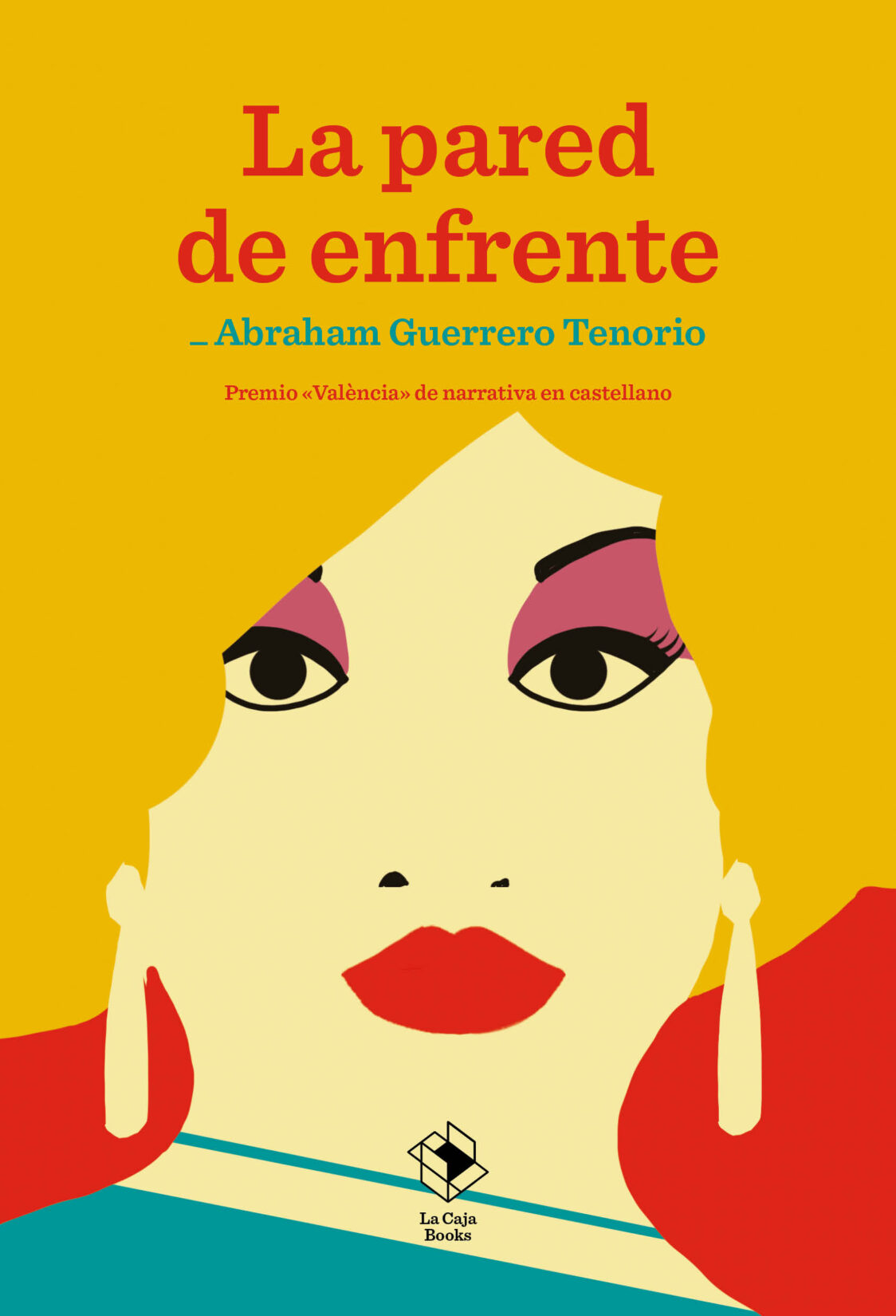
La pared de enfrente, winner of the Premio València de Narrativa en Castellano 2025, recounts the story of Manolita Chen, one of the most significant figures in Spain’s LGTBI memory and a key icon of drag performance and trans resistance during Francoism and the democratic transition.
It is a biographical drama that moves through pivotal moments of Spain’s recent history, connecting the intimate with the political in a clear and direct way. Its structure—built on time shifts and multiple perspectives—translates naturally into audiovisual language, with strong potential as a biopic for a limited series or feature film.
AUDIOVISUAL POTENTIAL: TV Series, Miniseries, Feature Film, TV Movie.
AVAILABLE LANGUAGES: Spanish.
Adquirir los derechos
Para ponerte en contacto con nosotros completa el siguiente formulario y te responderemos en breve.
Error: Contact form not found.
