
A lawyer decides to defend an old friend accused of murder. What appears to be an open-and-shut case soon turns into an investigation full of unexpected twists. A gripping procedural blending legal drama with crime thriller, led by a compelling and charismatic female protagonist.
On the very first morning of her working day, criminal defence lawyer Clara Caballero receives disturbing news: her friend Irene, a kind-hearted university professor, has been arrested in the Cantabrian town of Comillas. She is the sole suspect in the murder of a man no one seems to recognise. Her husband found her standing in the garden beside the victim’s body, and although the evidence appears overwhelming, Clara agrees to represent her—with one condition: if she discovers Irene is guilty, she will withdraw from the case.
The victim is journalist Pedro Ortega, whose death is linked to another unsolved murder from years earlier: that of writer Rubén de la Vega, Irene’s former partner. Clara’s confidence in her friend begins to crumble as Irene’s connection to two separate homicides comes to light.
As the investigation progresses, Clara conducts her own inquiry alongside the official police investigation. She delves into Irene’s past, uncovering old conflicts within academic circles, fractured relationships with friends, rivals and former lovers. Every new discovery casts further suspicion on Irene: her ties to the murdered writer, her silence regarding key events from the past, and inconsistencies in her alibi.
At the same time, Clara and her colleague Tomás receive anonymous threats, uncover attempts by Rubén’s family to manipulate the investigation, and begin to suspect Irene’s husband Diego, whose ambiguous behaviour and the conveniently disabled security cameras at his office place him under increasing scrutiny. As personal relationships become entangled with the investigation, the atmosphere grows ever more oppressive.
While reconstructing Pedro Ortega’s final days, Clara discovers that the journalist had been investigating Rubén’s murder and believed he had identified the real killer. His own murder, committed just before he intended to publish his findings, confirms that someone is willing to kill to keep the past buried.
In a final twist, Clara uncovers the shocking truth: the murderer is her own boss, Fernando. Years earlier, he had plagiarised an unpublished novel by Rubén, launching his own successful writing career. When Rubén discovered the theft, Fernando murdered him to protect his secret. Years later, he also killed Pedro Ortega to silence the investigation and planted the body at Irene’s house to frame her. Even more chillingly, Fernando had hired Clara precisely because of her friendship with Irene, intending to monitor her and prevent anyone from reopening the case.
Clara survives Fernando’s attempt to kill her and ultimately secures Irene’s complete exoneration, restoring justice where it truly belongs.
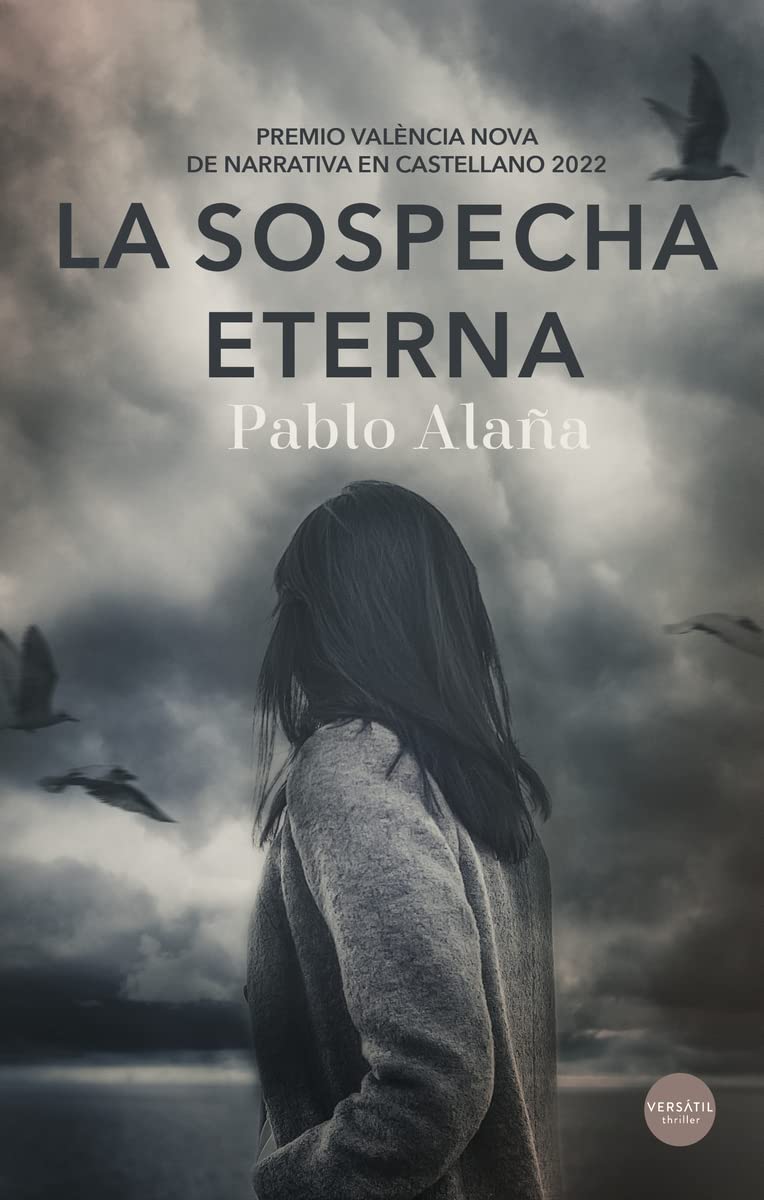
RELEVANT INFORMATION: Pablo Alaña is a Spanish author specialising in thrillers. The Eternal Suspicion is his debut novel and the winner of the 2022 Premio València Nova de Narrativa en Castellano.
The Eternal Suspicion sustains suspense from beginning to end, surprising readers with a tightly constructed plot that becomes a gripping journey into the inner workings of the justice system. Combining legal drama with police procedural, the novel explores not only the mechanics of a complex criminal defence but also the trial conducted by the media, public opinion and appearances. With short chapters, a brisk pace and precise prose, the novel delivers an addictive reading experience driven by unexpected twists and a carefully orchestrated flow of clues and revelations.
AUDIOVISUAL POTENTIAL: TV Series, Miniseries, Feature Film, TV Movie.
AVAILABLE LANGUAGES: Spanish.
Adquirir los derechos
Para ponerte en contacto con nosotros completa el siguiente formulario y te responderemos en breve.
