
Francoism, the transition, democracy, European integration, the financial crisis… Spain has undergone major transformations in recent decades. However, beneath these economic and political changes, the same network of power—composed of politicians, technocrats, bankers, and major business figures—may have persisted, adapting to each era in order to maintain its influence. This essay tells their story as an alternative view of 20th- and 21st-century Spain.
What if, behind every major political change in Spain, the same interests had almost always remained in place?
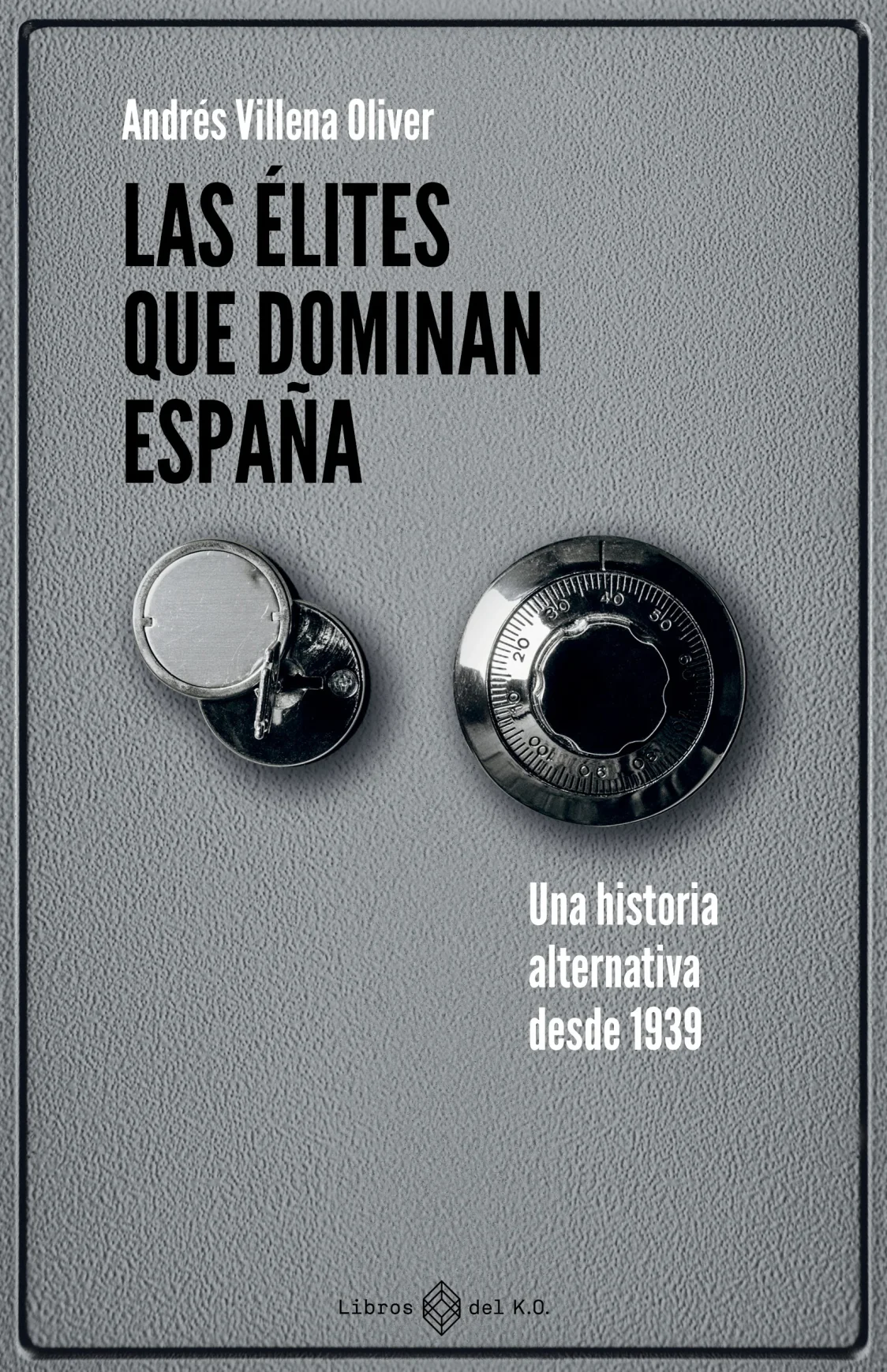
That is the central thesis of The Elites That Rule Spain by Andrés Villena Oliver: a history of the country told not as a succession of governments and ruptures, but as the continuity of a network of power composed of politicians, senior civil servants, technocrats, bankers, business leaders, and major media outlets. A system that spans dictatorship, transition, and democracy, adapting to each era without losing control of what truly matters.
This is not a hidden conspiracy, but something far more recognizable: specific names, institutions, and career paths. Ministries, banks, boards of directors, offices, public bodies, and newsrooms where, over decades, the same families, technical profiles, and professional circles intersect and reappear. Revolving doors, discreet alliances, and decisions made in low-visibility spaces that ultimately shape the direction of the country.
The story begins in the postwar period. In the 1940s, the autarkic economy functions as a system of distribution: while the majority survives in scarcity, a minority linked to the regime—banking, large landowners, and industrialists close to power—consolidates its position and accumulates influence. It is during this time that the connections between the State and capital are established, shaping the decades to come.
At the end of the 1950s comes the first major shift. Technocrats replace ideological discourse with the language of efficiency. With the 1959 Stabilization Plan, they open the economy, attract investment, and connect Spain to the outside world. The model changes—but not who occupies the key positions: power is reorganized, not redistributed.
In the final years of Francoism and during the Transition, a generational handover takes place. Economists, senior civil servants, and professionals trained within the State itself take up positions of influence. Democracy is built on agreements that allow political change while preserving much of the economic and administrative networks. Rather than a rupture, it is a reconfiguration of the system.
Under the governments of Felipe González, Spain modernizes and integrates into Europe. At the same time, a new alliance is consolidated between politics, banking, large corporations, and the media. Privatizations, economic growth, and new business groups reinforce an ecosystem in which the boundaries between public and private become increasingly blurred.
The 1990s and 2000s push this model to its limits. Real estate expansion, easy credit, large construction firms, and banks growing both domestically and internationally. Economic success becomes the dominant narrative, while risks accumulate beneath the surface. The system appears solid, but rests on fragile balances.
The 2008 crisis shatters that image. Bankruptcies, bailouts, austerity measures, and social discontent open a fracture. However, the book argues that even this moment of rupture does not dismantle the network, but forces it to readjust: new parties, new faces, and new discourses coexist with the continuity of the same decision-making circuits, now more closely tied to Brussels and major international funds.
The elites described by Villena share three defining features across the entire period: a power network in which politicians, senior civil servants, and technocrats circulate between government and business; the central role of capital, especially banking; and a narrative that, in each historical moment, presents their decisions as necessary to guarantee stability or prevent collapse.
The result is an unsettling and concrete взгляд at contemporary Spain: not just who governs, but who decides, who influences, and who remains when everything else changes. A story of continuity beneath the appearance of change, raising a fundamental question: when a country transforms on the surface, who ensures that real power continues to occupy, almost always, the same positions?
RELEVANT INFORMATION: Andrés Villena Oliver is a Spanish economist, sociologist, university professor, and essayist specializing in the critical study of political and economic power and elites in Spain. His work combines academic research, sociopolitical analysis, and public outreach.
The Elites That Rule Spain is a comprehensive and accessible essay that examines the formation of administrative and economic elites in Spain and their role in political decision-making and the functioning of democracy. The work has strong audiovisual potential, offering an alternative reading of Spain’s recent history—ideal for a documentary series combining historical research, archival footage, and testimonies that help explain how power truly operates. The recurring thread of elites constantly reinventing themselves provides a clear and compelling narrative for audiences.
AUDIOVISUAL POTENTIAL: TV Series, Miniseries, Film, TV Movie
AVAILABLE LANGUAGES: Spanish
Adquirir los derechos
Para ponerte en contacto con nosotros completa el siguiente formulario y te responderemos en breve.
Error: Contact form not found.
