
A family reunites after years apart in an Asturian manor, but what begins as a celebration turns into a nightmare when two deaths trigger a family investigation that unearths decades of lies.
In 2003, Tomás Salcedo, a conservative senator, returns to the family manor in Nueva de Llanes, Asturias, to celebrate what is supposed to be his mother’s final birthday. But the reunion turns tragic: his sister Mariana is run over by Tomás’s car in a strange accident. Tomás claims he left the car without the handbrake on a slope and, upon getting out, it struck Mariana. However, Judge Dolores Miranda quickly suspects that something far darker lies beneath. At the same time, it emerges that their mother also died the night before from a pill overdose. Ángela, Mariana’s twin sister, arrives from the United States to find a shattered family, while the youngest brother, Leo, returns from a self-destructive spiral of partying and drugs.
The roots of the drama stretch back to the 1970s and 1980s. Ramón Salcedo, politician and father of Tomás, Mariana, Ángela, and Leo, was close friends with Bernabé Zamora, a police officer. Together, they indulged in nights of excess—alcohol, paid sex, and debauchery. Years later, Bernabé settles on the Salcedo estate as its caretaker, along with his children: Roberto—Tomás’s best friend—and Flor, his autistic daughter. A close bond develops between the two families, though only Mariana seems able to connect with Flor, communicating with her through music.
During a fateful summer, Flor dies during an excursion, and Emilio Sariego, a young university student who worked as a painting model for the Salcedo matriarch, is wrongly accused of her murder. The trial is a sham, and despite weak evidence, he is convicted. Emilio is brutally tortured by Bernabé Zamora, Flor’s father.
Months before her own death, however, Mariana had begun investigating on her own and uncovered a police report proving Emilio’s innocence: at the time of Flor’s death, he was posing for Mrs. Salcedo. The report also pointed to Tomás as the true culprit. This document was concealed for decades by Ramón Salcedo and his wife. Before dying, Mariana left behind recordings exposing sexual abuse, complicit silences, and her decision to bring Tomás to justice. She also confessed to administering the overdose that killed their mother. Days later, the so-called accident involving Tomás’s car took place—was it really a coincidence?
After listening to Mariana’s recordings, the siblings finally uncover the truth about Tomás. Forensic evidence and discreet actions by Judge Miranda confirm that Mariana’s death was not accidental but deliberately caused by Tomás to silence her after she confronted him. Cornered by the judge, Roberto, Ángela, and Leo, Tomás flees.
The story concludes with a gesture of reconciliation: at the airport terminal, Ángela—who had planned to return to the U.S.—reappears, taking Leo and Roberto by the arm. At last, the secrets have come to light. Whether Tomás will face justice remains unknown as legal proceedings continue, but while the past cannot be changed, perhaps healing is still possible.
RELEVANT INFORMATION: Javier Rovira (Almería, 1967) is a pianist and a conservatory professor in Madrid, as well as a graduate in Hispanic Philology. For years, he has combined his musical and teaching career with writing. In 2012, he was a finalist at the Festival du Premier Roman de Chambéry. He is the author of several novels, including Los amigos fieles and Mala Mar.
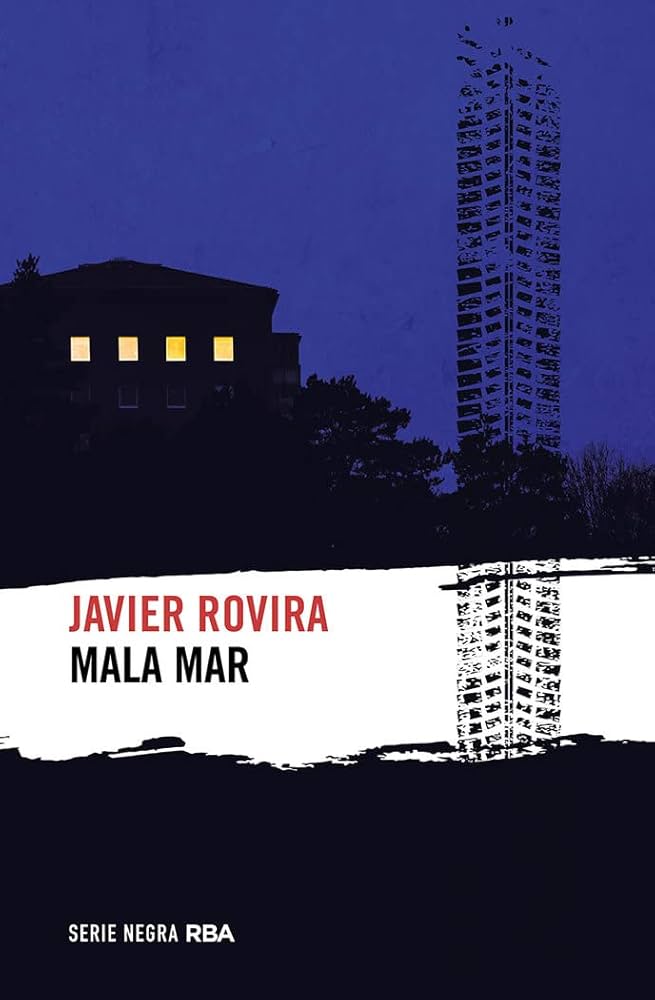
With an ensemble structure and a gripping pace, Mala Mar blends the family thriller with generational drama, weaving together mystery, memory, and politics in a story marked by high dramatic tension and surprising twists.
AUDIOVISUAL POTENTIAL: TV Series, Miniseries, Film, TV Movie
AVAILABLE LANGUAGES: Spanish
Adquirir los derechos
Para ponerte en contacto con nosotros completa el siguiente formulario y te responderemos en breve.
