
Three privileged young people create a clandestine club where consent is staged, bodies are commodified, and a generation with no future sells itself to a perverse idea—disguised as subversion—for the illusion of feeling alive.
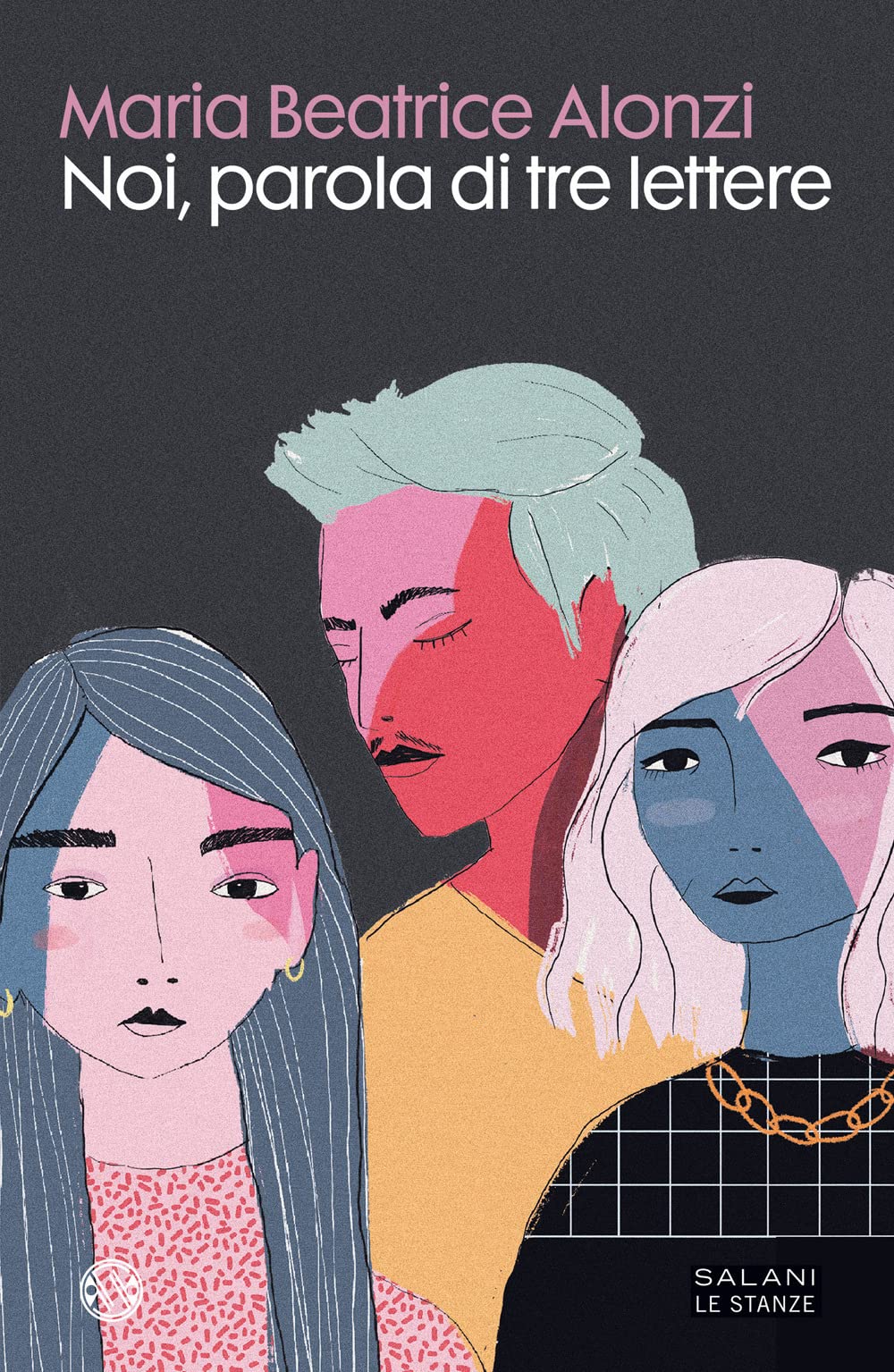
Teresa, Margherita, and Carlo grow up in an environment of privilege and apparent perfection. Young, beautiful, cultured, and admired, they share the same void: a life without purpose. Between them arises an inevitable attraction, a forbidden and shifting love where desire, dependency, and power intertwine.
They are three pieces of the same mirror: Teresa longs to be seen and loved unconditionally; Margherita fears dependence and turns control into her refuge; Carlo, marked by his father’s death, oscillates between irony and a need for redemption. Their bond does not fit social norms: they love each other, hurt each other, and complete one another in a balance as intense as it is fragile.
From this union an idea is born: to create a space of their own, an elegant game where beauty, freedom, and pleasure blur into art. They dream of a select community that lives sexuality without guilt or prejudice, a circle where desire is celebrated as a form of resistance.
Margherita designs the structure: secret parties for beautiful, sophisticated young people, where connection is guided by rules of exclusivity and aesthetics. To carry this out, she relies on Baby, a trusted bartender tasked with developing a special cocktail—a refined mix containing a drug that relaxes and disinhibits those who drink it—which becomes the symbol of this new way of relating. There is no submission, only the promise of freedom: an attempt to build a secret, emotional, and sensual elite.
For the trio, the project becomes their reason for being. Teresa experiences it as a way to belong to Margherita; Carlo sees it as a path toward reconnecting with himself; and Margherita views it as the chance to materialize her ideal of absolute love. What began as an intimate game turns into a shared utopia. Baby, for her part, brings their ideas into reality and sustains the machinery they could only imagine.
Ludovica, a shy and insecure girl, is chosen to inaugurate the system. Margherita captivates her with attention and promises of transformation. Ludovica believes she is entering an artistic, liberating ritual, convinced that there she can reinvent herself and find her place—to the point of yearning to become part of the threesome between Margherita, Carlo, and Teresa. Her fragility also attracts Luca, her friend, who watches the trio’s closeness with unease yet cannot help wanting to be part of it.
But the pivotal night ends in failure. At the club, men hesitate, other girls panic, and one collapses badly due to the adulterated cocktail. Among the most affected is Federica, a trans girl humiliated by the clients’ transphobia and taken in by Baby—revealing the ethical fracture between those who execute the plan and those who try to repair its damage. The atmosphere shatters: ambulances arrive, silence dominates, and eyes avert. What was meant to inaugurate a revolution becomes a warning that they have crossed a dangerous line.
Afterward comes the void. No one calls. No one explains. Ludovica, who believed she had finally found her place, realizes she was expendable. She goes from feeling chosen to feeling invisible. Loneliness and emptiness push her to take her own life. Her death activates Luca, who confronts Margherita and exposes just how far her destructive influence has spread beyond the trio itself.
From that point on, the pieces scatter. Margherita leaves the country. Carlo enters rehabilitation. Teresa remains trapped between guilt and silence, wondering where everything began to fall apart. The story leaves no heroes behind—only the remnants of a dangerous idea, irreversible consequences, and the certainty that playing at being gods is always perilous. The shadow of the parents—domestic violence in Margherita’s family, political ambition in Teresa’s, and the tragedy that marked Carlo—ultimately reveals itself as the emotional substrate that drove the three of them toward the abyss they created.
RELEVANT INFORMATION: Maria Beatrice Alonzi holds a degree in Humanities and is a specialist in nonverbal behavior. She is also a lecturer and speaker at Sapienza University of Rome and a bestselling author as a science communicator. Noi, parola di tre lettere is her debut novel, an intense and provocative work that explores the darkest zones of human relationships and youth through the story of three twenty-something protagonists.
The story combines three layers familiar to contemporary audiences: youthful love, aspirational elite aesthetics, the psychology of emptiness, and social violence disguised as sophistication. With a choral cast of complex, tormented characters, the novel functions as a complex love story with elements of emotional thriller and generational drama, where the tension between love, desire, and power creates an unsettling tone reminiscent of The Idol, Euphoria, or The Talented Mr. Ripley. Although the novel’s plot is self-contained, the ending leaves open the possibility of sequels or spin-offs.
AUDIOVISUAL POTENTIAL: TV Series, Miniseries, Feature Film, TV Film.
AVAILABLE LANGUAGES: Italian.
Adquirir los derechos
Para ponerte en contacto con nosotros completa el siguiente formulario y te responderemos en breve.
Error: Contact form not found.
