
In a Mexican village about to be flooded, Violeta clings to the land where her mother and daughter lie. Amidst dispossession, male violence, and an inherited secret, her resistance traces a story of memory, body, and identity. The novel is part of Mexican social realism interwoven with myth.
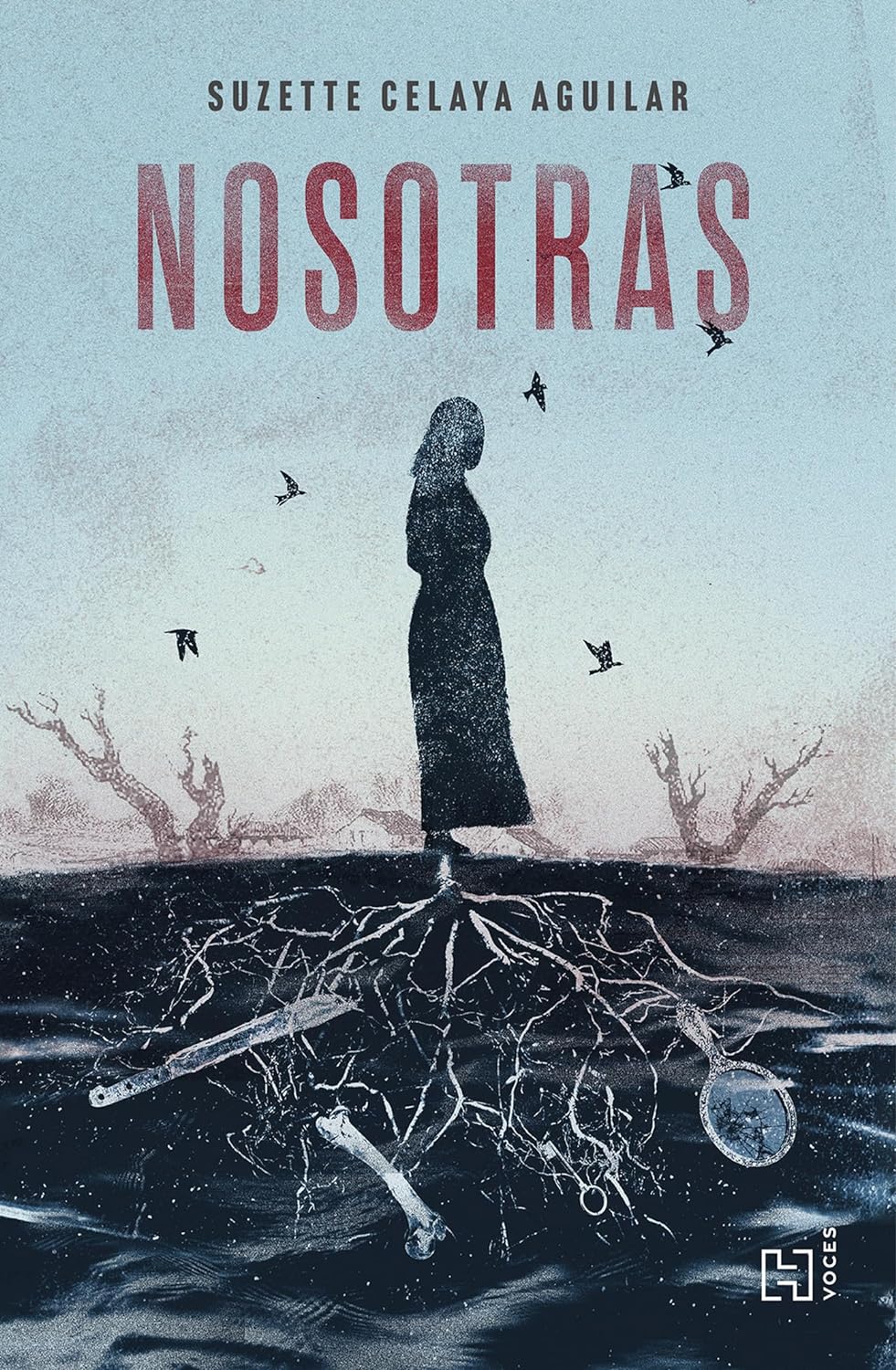
In 1967, Violeta lives in a Mexican town destined to vanish beneath the waters of a dam. At 31 years old, she has always lived under the shadow of family tragedy: her mother committed suicide when she was a teenager, her daughter was stillborn, and her husband abandoned her. After the death of her grandmother—who never accepted the dark skin of her granddaughter—Violeta is left alone in a town that crumbles as houses collapse and families flee.
Clinging to her grandfather’s house and to the land where her mother and daughter are buried, Violeta confronts pressure from government officials urging all the town’s residents to leave, as well as the reappearance of Fermín, a former youthful love who returns after living in the United States, now transformed into a violent man. The town is also shaken by the arrival of Lina Parra, an ambitious young woman who suffers harassment from the church sacristan and temporarily takes refuge in Violeta’s home. Social tension explodes when Fermín murders his wife, Cora, and the women of the town decide to take justice into their own hands, executing him in a scene of collective catharsis.
A counterpoint emerges in the figure of Don Fortunato Corbalá, an older, wealthy man with a past deeply intertwined with Violeta’s family. At the most decisive moment, when the water is about to swallow the town, Violeta decides to exhume the bodies of her mother and daughter to take them with her. Fortunato helps her dig them up and reveals a devastating secret: what was said about the grandmother was true—she took her daughter, Violeta’s mother, to the city to prostitute her, and he himself had a relationship with her. He confesses that he fell in love with her and wanted to escape with her, but was never able to because the grandmother prevented it. The revelation leaves a disturbing possibility hanging in the air: that Fortunato may, in fact, be Violeta’s father.
This hidden bond between Fortunato and her mother gives Violeta a new perspective on her origins and on the legacy of pain she carries. But Violeta does not flee. She gives Lina her grandmother’s jewels as a symbol of a possible future and decides to stay with her dead. In the final image, she merges with the soil of the cemetery—the highest point in the town—and imagines herself transformed into a tree as the water covers everything.
RELEVANT INFORMATION: Suzette Celaya is a Mexican writer, researcher, and communicator. She has won several awards for her short stories, as well as the Concurso del Libro Sonorense and the Amazon First Novel Prize for her novel Nosotras, a work of great narrative power that blends intimate tragedy, social criticism, and lyrical magical realism. Nosotras is a novel of enormous visual and emotional strength, where the personal and the political intertwine. A deeply dramatic story with a powerful final twist and a strong character arc centered on Violeta, a female protagonist of remarkable force.
AUDIOVISUAL POTENTIAL: TV Series, Miniseries, Feature Film, TV Movie.
AVAILABLE LANGUAGES: Spanish.
Adquirir los derechos
Para ponerte en contacto con nosotros completa el siguiente formulario y te responderemos en breve.
Error: Contact form not found.
