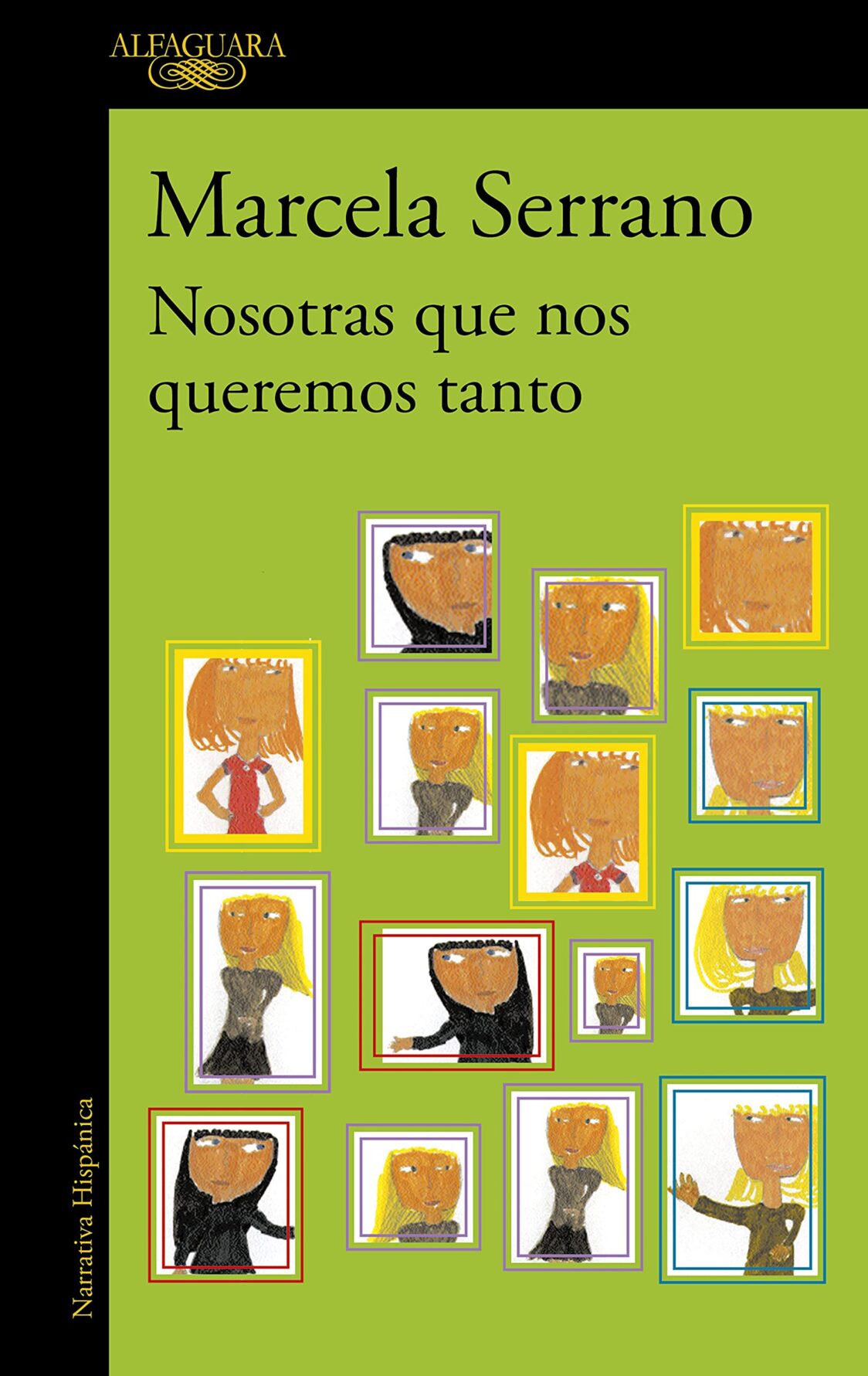
In the final years of the Chilean dictatorship, four friends reunite at an isolated lakeside house and, through intimate confessions, unearth the traumas and secrets that have shaped their lives. One carries the burden of her mother’s suicide. Another, the heartbreak caused by a revolutionary leader. A third, the death of a politically active sister. The last, a secret kept for twenty-six years. Together, they discover that friendship, in times of horror, is the last refuge.
Ana settles alone into a wooden house on the shores of a lake in southern Chile. She has rented this retreat for the summer and awaits the arrival of her three closest friends: Isabel, Sara, and María. She senses this may be the last summer they spend together. The end of the dictatorship and the imminent transition to democracy are about to send them down different paths.
The story is built around this suspended present at the lake, but unfolds through extensive flashbacks. Through conversations and confessions, Ana reconstructs the history of the four women, alternating between the present-day reunion and episodes from their childhood, youth, and lives under the dictatorship.
Ten years earlier, in the late 1970s, Ana joined a Research Institute in Santiago, one of the institutions created during the dictatorship to provide a space for professionals and intellectuals displaced from public and academic life. More than a workplace, the Institute serves as a refuge and meeting point in a climate of repression. It is there that she meets the other three women, whose lives, all shaped by the same political context, converge in that space.
Isabel is a young educator, disciplined and demanding of herself, marked by a childhood overshadowed by her mother’s emotional fragility, which ultimately ended in suicide. Sara is a civil engineer, practical and independent, raised in a family of strong women who taught her self-reliance, although in adulthood she becomes involved with a political leader whose instability deeply wounds her. María, an upper-class journalist, returns from exile in London: brilliant, provocative, and contradictory, she is shaped by both her privileged background and a series of intense but ultimately unsustainable relationships. Ana, older than the others and a literature professor, brings a reflective perspective and a calm presence that position her as both observer and narrator of the group.
Over the years, the Institute becomes the place where their friendship solidifies, while the dictatorship grows increasingly oppressive and shapes their personal lives. Each woman carries an intimate story marked by loss, frustration, and difficult choices.
The reunion at the lake serves as a pause in their respective journeys. In this isolated setting, amid boat rides, shared meals, and long conversations, the four women begin to reveal what they have kept hidden for years. Isabel confesses the relationship she had with a student and the crisis triggered by her son’s arrest for drug use, forcing her to reconsider her life. María confronts the pain of the murder of her sister Soledad, a left-wing activist, and the depression that led to her hospitalization in a psychiatric clinic after a profound personal breakdown. Sara relives the loss of Cristián, her partner, during the 1988 plebiscite, a historical moment that encapsulates both political hope and her own emotional collapse. Ana, in a moment of intimacy, reveals a secret she has guarded for decades: an affair in New York that casts doubt on the paternity of her daughter.
As the days go by, the lake becomes a space for confession and reconstruction. The women’s personal stories intertwine with the history of the country itself: fear, exile, political commitment, loss, and silence. Friendship emerges as the only stable territory amid uncertainty.
When summer ends, democracy has become a reality, and the group inevitably disperses. Isabel and Sara join the new democratic government. María turns down an opportunity abroad and chooses to prioritize her personal relationships: she attempts to rebuild her relationship with Ignacio and prepares to care for her orphaned niece. The future remains open and uncertain, but for the first time it appears as a matter of choice.
RELEVANT INFORMATION: Marcela Serrano is a Chilean writer of contemporary fiction and one of the most prominent voices in Latin American literature since the 1990s. Her work has been translated into numerous languages and has received several literary awards.
We Loved So Much, winner of the Premio Sor Juana Inés de la Cruz in 1994, is an ensemble novel featuring four protagonists from very different social backgrounds and life experiences. The story offers a lucid and deeply moving generational portrait of Chilean women during the dictatorship and the democratic transition. Its shifts between childhood, youth, and adulthood, combined with alternating narrative perspectives, make it especially well suited for a television adaptation.
WHAT READERS SAY:
“A writer with an excellent command of storytelling; her style is fresh, light, and remarkably skillful in developing her characters.” El Forastero Lector
“Marcela Serrano sheds light on male-female relationships from a uniquely female perspective and confronts, without concessions, the light and shadow of the female existential condition.” Hablemos Escritoras
“I loved it. I highly recommend it. It’s the kind of book where you can identify with at least one character. My favorite Marcela Serrano novel.” Quelibroleo
AUDIOVISUAL POTENTIAL: In development.
AVAILABLE LANGUAGES: Spanish, Chinese, French, Italian, Portuguese.