
When Ari arrives in Camariñas, she finds a village marked by the death of a teenage girl and a silence filled with anger. As she draws closer to the women who uphold the memory of the place, she discovers that beneath the calm of the harbor lie old wounds and ancient forces. At the crossroads between tradition and mystery, Ari becomes entangled in a story where the everyday and the mythical intertwine.
THEMES: Slice of life – Empowerment – Spain – Feminism – Folklore – Magic – Mythology – Magical realism – Rural – Supernatural – Tragedy
GENRE: Drama – Women’s fiction
PITCH: Ari, a 29-year-old woman, arrives in Camariñas, a village on the Costa da Morte wrapped in mist and legend, to run the bobbin lace museum. Her arrival coincides with the funeral of María, a teenage girl whose body has been found shattered on the shore.
Soon, the village’s lace makers—the palilleiras, women who have upheld the tradition of bobbin lace for generations—reveal to Ari the truth the men keep silent: María did not die in an accident. Her father took her along as a lookout during a drug trafficking operation, and something went terribly wrong. Her death is not an isolated case, but the symptom of a system that has been operating in silence for years. While the men make decisions, control the money, and disappear for months, the women sustain the village through invisible labor: shellfishing, repairing nets, tending to homes, and each afternoon weaving together the lace that made the place famous.
Fed up, the palilleiras gather. Lita, the mother of the deceased girl, devastated by grief, proposes calling upon the Ladies of the Costa da Morte. One by one, the others agree to take part in the ancestral ritual. On the top of a hill, dressed in their ancestors’ linen garments, they form a circle and weave three small spider-shaped pieces of lace. Then, the impossible happens: the spiders carved into an ancient stone come to life, and from the rock emerge three women wrapped in black lace. They are Navia, Briana, and Otile—the primordial weavers.
The Ladies reveal an ancient secret: human language is a fabric. Every word, every thought, is constructed through the same movements used to make lace. For centuries, women have sustained the world without knowing it, silently weaving speech itself. As an act of vengeance, the deities command a lace strike to culminate on the day of the Virgin of Carmen. For three months, the women must unravel everything they have created. And they warn them: a woman has been summoned to guide them. That woman is Ari. Her arrival was no coincidence, but part of a pattern woven long before her.
On the eve of the Virgin of Carmen, the palilleiras hang their bobbins on their doorways and begin to unravel frantically: mantillas, thread boats, tulips… everything comes undone. At sea, the consequences are immediate and brutal. The men of the village are caught in an impossible storm. The ropes of their boats rebel, tangle, and snap. And at the moment of greatest danger, when they try to call for help, they discover in horror that they have lost their voices. The fabric of speech has been torn, and language no longer sustains them.
Amid a ghostly collective shipwreck, in the midst of chaos and silence, only one voice can be heard: Ari’s. Pulled by a force that seems to rise from the earth itself, she awakens in the storehouse, surrounded by the palilleiras and the three Ladies.
Then she understands: she was not chosen by chance. She is the thread that connects everything—the only one capable of guiding the men in rebuilding their own voices.
A year of profound transformation begins. Humiliated and voiceless, the men of the village learn the craft they once despised: weaving. Stitch by stitch, syllable by syllable, they reconstruct language. And in doing so, the balance of power in Camariñas changes forever.
Years later, the village is no longer the same. Women occupy positions of decision-making, labor is shared equally, and drug trafficking has disappeared. They have created a new language, woven in their own image. Ari, now a resident herself, guides visitors through the village and tells them about the lace and its history.
When asked how long she has been giving that tour, she looks out at the salty horizon and smiles.
“Forever.”
KEY INFORMATION: Nerea Pallares Vilar is a Galician writer and journalist, author of short story collections and contributor to various literary anthologies. Her writing is characterized by a poetic взгляд on everyday life, with particular attention to community bonds, traditions, and women’s voices.
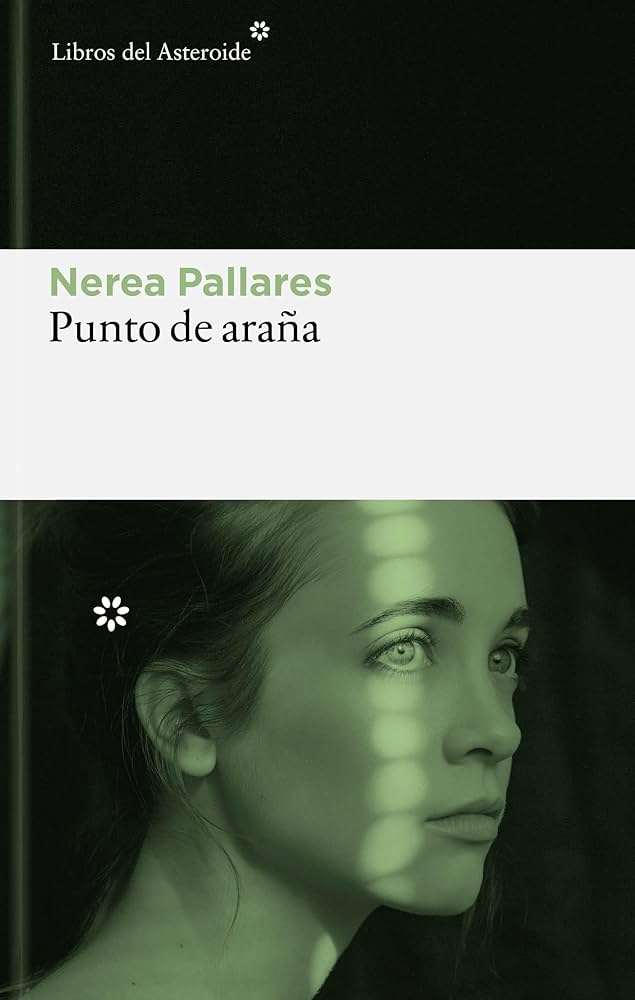
In 2025, she published her first novel, Spider Stitch, which was awarded the García Barros Prize for Novel (2025). Pallares has also received other recognitions, including the Las Dalias International Short Story Prize (2018) and the Energheia Spain Prize (2022).
Originally written in Galician, Spider Stitch is an ensemble novel with strong audiovisual potential due to both its plot and the power of its setting and imagery. The story combines a deeply realistic portrayal of everyday village life—the work of the palilleiras, the relationships among its inhabitants—with a mythic dimension that expands and transforms the narrative into something almost fantastical.
This blend of realism and myth creates a highly distinctive atmosphere and gives the story a clear visual identity that translates naturally to the screen.
What critics say:
“With magnificent ensemble technique, Pallares tells the intimate story of women who transform inherited silences into the only cry capable of unravelling abandonment.” — Lucía Solla Sobral
“Her writing, Dionysian and wild, is also wisely Apollonian: of controlled, crystalline perfection. True literature—of the kind that endures.” — Blanca Riestra
“An original debut in which Pallares weaves beautiful and unsettling words to shape a mysterious novel that restores silenced voices and bodies, revealing her as one of the most delicate voices in contemporary fiction.” — Fernando Navarro
“A short, intense novel in which not a single word is superfluous, and where every stitch sustains the story, leaving us breathless.” — Marta Barrio
“It had been a long time since a work of fiction captivated me in this way […] a beautifully woven prose that lingers long after reading.” — Luisa Tieppo, Todavía Livros (Brazil)
“I loved the language, the force of the sea, its universal resonance […] A true masterpiece.” — Juliette Ponce, Éditions Dalva (France)
AUDIOVISUAL POTENTIAL: TV Series, Miniseries, Film, TV Movie
AVAILABLE LANGUAGES: Galician, Spanish
Adquirir los derechos
Para ponerte en contacto con nosotros completa el siguiente formulario y te responderemos en breve.
Error: Contact form not found.
