
In working-class Madrid during the 1930s, the deaths of three labor activists at the hands of the police trigger a general strike that shakes the city to its core. Amid repression, violence, and political upheaval, a young journalist must choose between love and revolution.
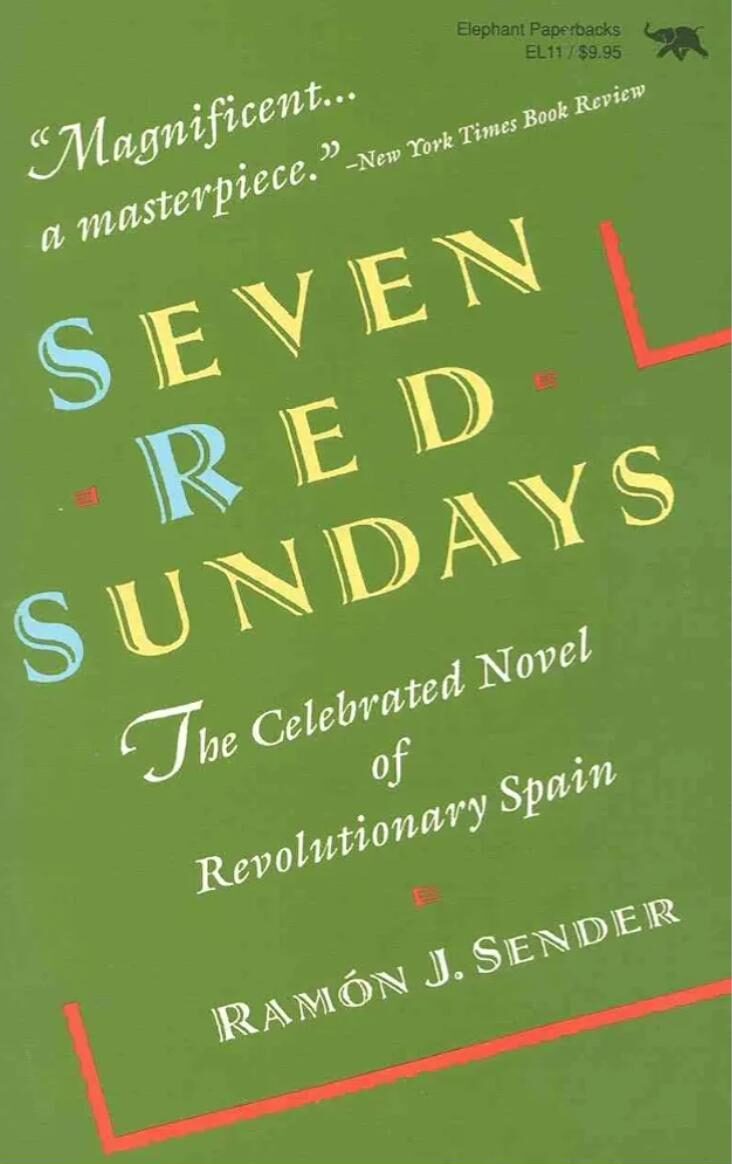
In working-class Madrid during the 1930s, an anarcho-syndicalist rally becomes the spark that ignites a social uprising. When authorities ban the use of loudspeakers, a violent confrontation erupts between demonstrators, the police, and the Civil Guard. The repression leaves three activists dead—Germinal, Spartacus, and Progress—whose deaths transform them into martyrs of the labor movement and trigger a citywide general strike.
Among those caught in the turmoil are Leoncio Villacampa, a shop clerk and committed activist; Lucas Samar, a young journalist torn between his political convictions and his love for Amparo, the daughter of a military colonel; and Star, Germinal’s daughter, who assumes her father’s revolutionary legacy with determination and courage.
Madrid rapidly becomes a battleground. Workers seize food supplies and weapons, organize acts of sabotage against the electrical grid, and distribute clandestine pamphlets across the city. The strike spreads from neighborhood to neighborhood as police repression intensifies through brutal crackdowns and funerals that become new demonstrations. Against this backdrop, the characters move between heroism and tragedy. Star grows increasingly radicalized, the fiery Aunt Isabela embodies popular anger, and Samar finds himself torn between revolutionary commitment and his irresistible attraction to Amparo, who represents a bourgeois world he despises yet cannot resist.
Internal tensions soon fracture the movement itself. Younger militants demand immediate revolution, while veteran activists insist on preserving ideological purity. At the same time, informants and betrayals threaten to destroy the organization from within. Fau, an infiltrator and police informant, is ultimately executed by the workers themselves. As events escalate, the movement undertakes increasingly dangerous operations: factory sabotage, attempted military uprisings, and a failed assault on Moncloa Prison. The authorities crush the operation, forcing the strikers into retreat.
The contrast between the two worlds becomes unbearable. While Samar conspires in taverns and spends nights in parks alongside his fellow activists, Amparo waits for him in her protected social sphere, dressed as a bride and clinging to the hope of an impossible future together. Unable to reconcile the gulf separating their lives, Amparo ultimately takes her own life, becoming a tragic casualty of a revolution that never fully materializes.
The story culminates in defeat. The strike is crushed, union headquarters are shut down, and Samar is imprisoned. Stripped of everything except his ideals, he writes one final manifesto from his prison cell, declaring that freedom endures even behind bars.
RELEVANT INFORMATION: Ramón J. Sender was not only a journalist but also one of the most important Spanish writers of the 20th century, winner of the National Prize for Literature in 1935. Following the Spanish Civil War, he lived much of his life in exile in Mexico and the United States.
Seven Red Sundays combines the scope of historical drama with the urgency of a political thriller. Built around the chain reaction between state repression and popular resistance, the novel is driven by layered and symbolic characters: Samar, caught between love and revolution; Star, who embodies a new generation of political struggle; and Amparo, the tragic victim of an impossible romance that exposes the deep divide between social classes.
Epic and tragic in equal measure, the story offers exceptional audiovisual potential. Its combination of large-scale social conflict, political intrigue, emotional stakes, and timeless human dilemmas provides the foundation for a powerful adaptation capable of resonating with contemporary audiences while portraying a pivotal moment in Spanish history.
AUDIOVISUAL POTENTIAL: TV Series, Miniseries, Film, TV Movie
AVAILABLE LANGUAGES: Spanish, English, Greek.
Adquirir los derechos
Para ponerte en contacto con nosotros completa el siguiente formulario y te responderemos en breve.
