
A Spanish au pair believes she has uncovered a monstrous secret within the family she works for. Her accusation turns her into a pariah… and condemns her to live with an eternal doubt: did she flee from a real abuse, or from her own imagination?
A young Spanish woman arrives in Ireland to work as an au pair. Insecure, overly sensitive, and with a fragile command of the language, she settles into the home of a widowed father and his twelve-year-old son. From the very beginning, the world around her feels slightly incomprehensible: she half-understands conversations, fills in silences, interprets gestures. She describes herself as “so stupid,” and her perspective—naïve, anxious, and often disproportionate—becomes the only filter through which the story is told.
The boy, bright and charismatic, is obsessed with music, dancing, and the idea of becoming famous. He rehearses choreographies and turns the protagonist into his accomplice: he shares secrets, asks her to apply his makeup, makes her feel special. For her, burdened by a traumatic past and a constant sense of failure, the bond becomes a lifeline. What begins as tenderness soon blends with discomfort.
The house operates under rigid rules imposed by the father, a polite yet distant man who seems to live in unshakable calm. The protagonist begins to detect unsettling signs—glances, silences behind closed doors, ambiguous phrases—that, amplified by the language barrier and her own imagination, take on disproportionate weight.
When the Polish cleaner witnesses the boy’s dances, she reacts bluntly and accuses the father of failing in his parental role, of leaving him too alone and allowing behavior she considers inappropriate. She demands that he spend more time with his son and stop treating him as if he were invisible. Terrified of being implicated, the protagonist lies and claims she has seen nothing troubling. Shortly afterward, the father fires the cleaner for interfering, reinforcing the atmosphere of enclosure and silence within the house.
Isolated and increasingly absorbed by her own narrative, the young woman begins to imagine that something dark is happening. First she targets the piano teacher, until she impulsively bursts into a lesson and discovers a completely ordinary scene, humiliating herself. That moment, tinged with awkward and almost absurd humor, does not dissolve her suspicions—it merely displaces them.
From then on, all her doubts focus on the father. The bond between him and his son seems excessively intimate to her, summarized in ambiguous expressions such as “men’s nights.” During a short trip, the boy sleeps in his father’s bed. Upon their return, he receives a new mobile phone. For her, who has already constructed a mental theory, the pieces fall perfectly into place.
Trying to regain the boy’s lost complicity, the protagonist secretly buys pink accessories for his phone—a naïve and desperate gesture that borders on the inappropriate. The father discovers the gifts and explains that he chose a sober black phone to prevent the boy from becoming a target of bullying at school. But she, trapped in her own theory, interprets that caution as a form of control and concealment.
In an outburst of anguish mixing courage and delirium, she confronts the father in the kitchen and directly accuses him of abuse. The scene, heroic in her imagination, turns into disaster. He responds with cold logic: he calls her unstable, fires her, and gives her three days to disappear without leaving a trace or contacting his son again. Before she leaves, he asks a devastating question: if he were guilty, why would he have brought a foreign au pair to live with them?
Years later, the protagonist leads a gray existence in the same city, working at a call center. She avoids speaking English on the phone out of fear that one day it might be the boy calling. Although she has officially disappeared from his life, she continues to monitor him on social media through a fake account. Now a teenager, he posts videos dancing and speaking about the abandonment of his nanny.
The story does not resolve the enigma. The narrator remains trapped in an irreconcilable doubt that also extends to the audience: was she the only one who saw a real monstrosity and then fled? Or was it her wounded gaze, her need for meaning, and her overactive imagination that created the monster?
Between the uncomfortable humor of her clumsiness and the growing unease of her suspicions, the novel turns a domestic story into a psychological thriller in which the true threat may not lie inside the house, but within the mind that observes it.
RELEVANT INFORMATION: Carlos Catena Cózar is a Spanish poet, novelist, and translator, awarded the Premio Hiperión de Poesía, the Certamen Ucopoética (2015), and the Premio Málaga Crea de Poesía (2017) for his poetry.
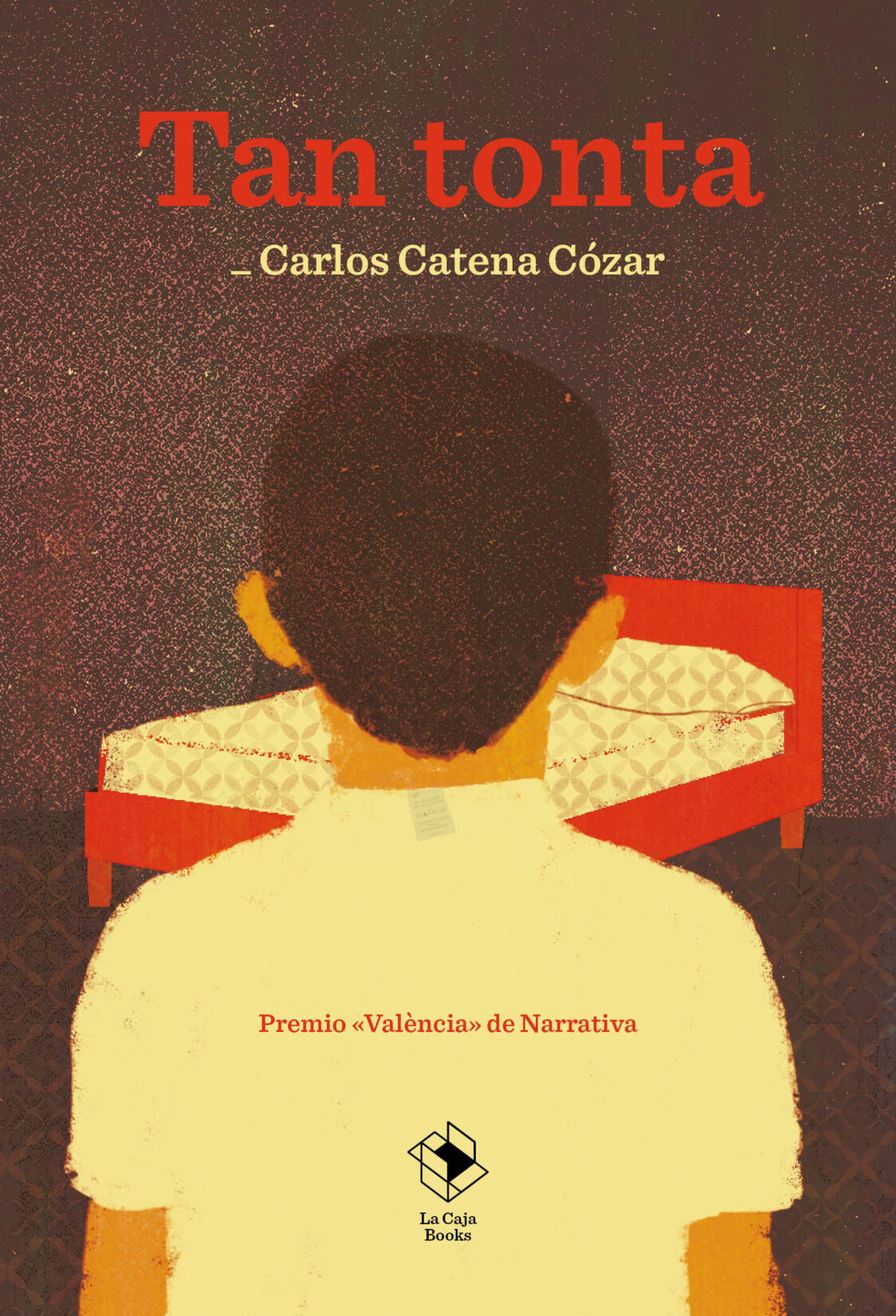
Tan tonta, his second novel, received the Premio València de Narrativa. The story is an unsettling psychological suspense novel that grips from the outset through its disturbing atmosphere and constant ambiguity.
The novel’s greatest strength lies in its unreliable protagonist: the audience shares her point of view and doubts, never knowing whether what she perceives is a real threat or a distorted interpretation. From that fracture emerges both the tension and an uncomfortable dark humor that arises when her suspicions clash with the cold normality of her surroundings. It is a story easily adaptable to audiovisual format, ideal for a disturbing, suggestive feature film.
AUDIOVISUAL POTENTIAL: TV Series, Miniseries, Feature Film, TV Movie.
AVAILABLE LANGUAGES: Spanish.
Adquirir los derechos
Para ponerte en contacto con nosotros completa el siguiente formulario y te responderemos en breve.
Error: Contact form not found.
