
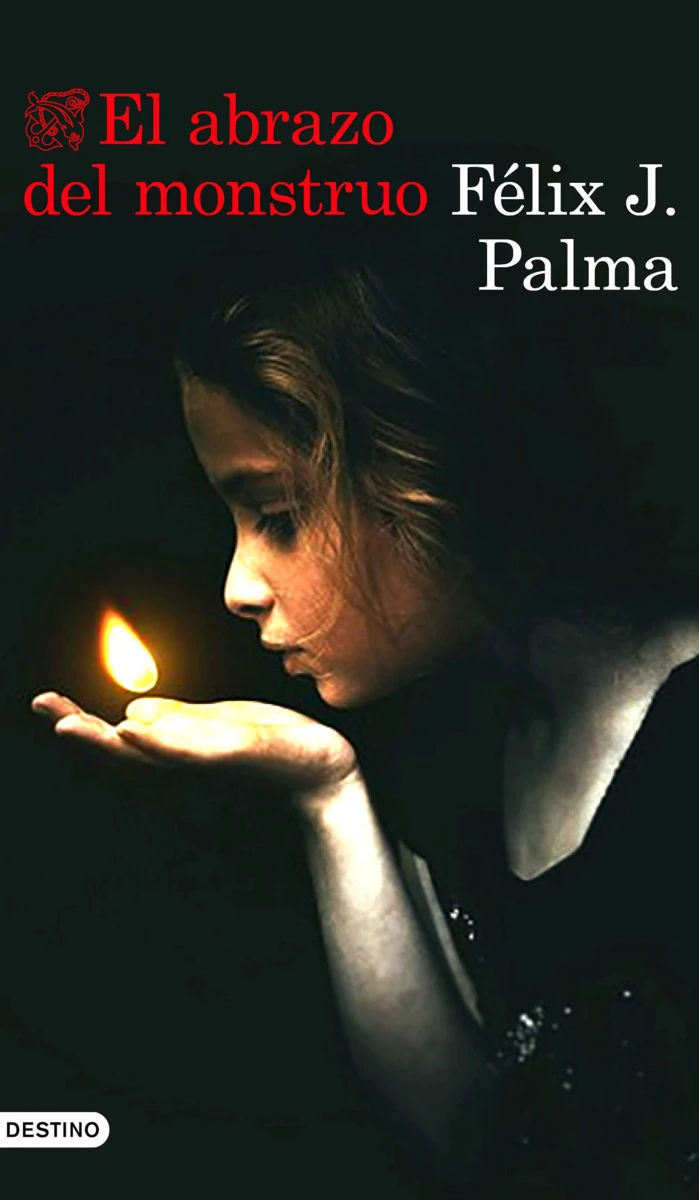
The Embrace of the Monster (El abrazo del monstruo)

Topics

Genres

Subgenres

When the daughter of a bestselling writer is kidnapped following to the letter the trials of his most famous novel, the author is forced to turn his own fiction into a race against time to save her—and to confront the real origin of the monster he created.

Diego Arce, a bestselling author thanks to Blood and Amber, is attending a literary conference in Barcelona when his daughter Ariadna is abducted from her own home. This is no ordinary kidnapping: the perpetrator calls himself “the Monster,” the very killer Diego created in his most famous novel, and announces that he will force the writer to overcome a series of trials identical to those he imagined in his fiction. If he succeeds, Ari will live. If he fails, she will suffer the consequences.

Disturbing signs appear in the family home: the original manuscript of Blood and Amber, which Diego kept under lock and key, has been torn apart and covered in red ink. Shortly afterward, the first letter from the Monster arrives, detailing the initial challenge. The trials, broadcast publicly, are designed to test how far a father is willing to go for his daughter, reenacting the perverse game that turned the novel into a publishing phenomenon.

The case explodes into a global media spectacle. While the police, led by Inspector Gerard Rocamora, launch a massive operation, public opinion follows every step of the ordeal. Sales of the novel skyrocket. The kidnapping appears to be a meticulous replica of the fiction, to the point that the Monster knows details only his creator should command.

At the same time, Diego’s troubled childhood comes to light. As a boy, he took part in a ritual intended to summon a supernatural entity. The experience ended in tragedy with the death of a friend, Sergi. Since then, Diego has been haunted by nightmares of a figure opening bodies with a scalpel. He wrote Blood and Amber as an exorcism: he transformed that presence into a character and symbolically locked it inside the manuscript, convinced that words could contain what tormented him.

As the trials and the investigation progress, inconsistencies accumulate. No solid external figure emerges. The clues point obsessively to Diego. The structure of the kidnapping requires intimate knowledge of the novel and of his private life. The supernatural hypothesis collapses: the Monster has not returned from another world. The Monster is a psychic split within Diego himself, born from childhood trauma and guilt over Sergi’s death. Under a dissociated identity, he has kidnapped his own daughter and designed the trials as a literal reenactment of his fiction. The letters, the challenges, and the staging are part of an extreme self-judgment—an unconscious attempt to confront his guilt and prove that this time he would indeed be capable of doing anything to save a child.

Ariadna is found alive. She has not been subjected to the tortures described in the novel. Diego is exposed as both author and executor of the plan, forced to confront the truth that the Monster was never an external entity or a summoned spirit, but the crystallization of his trauma, amplified by success, alcohol, and the literary exploitation of horror.

In the end, the girl returns home, but the fear of losing her remains forever embedded in him. Diego comes to understand that it is not enough to lock monsters away on paper: some are born within, and they cannot be destroyed.

RELEVANT INFORMATION: The Embrace of the Monster has is a total sensation in the social media, where people have assured that it is “a complete story, with intrigues, fantasy, love and horror, compared to Stephen King’s style”.

Félix J. Palma has won over one hundred awards throughout his career. Among his many recognitions, we can find the XL Ateneo de Sevilla, the Premio Tiflos, the Premio Gabriel Aresti or the Premio Alberto Lista.

His novels have appeared in the bestsellers list of The New York Times, and have been published in more than 25 countries.


AUDIOVISUAL POTENTIAL: TV Series, Miniseries.

AVAILABLE LANGUAGES: Spanish.
Adquirir los derechos

Para ponerte en contacto con nosotros completa el siguiente formulario y te responderemos en breve.

Error: Contact form not found.