
Thirteen years after the kidnapping of three girls, a new crime reproduces exactly the same pattern. For Balma Dalmau, daughter of the alleged killer, it is an opportunity to prove that her father was wrongly accused; for Verdugo, the police officer who survived the first case, it is the last chance to confront those who hid the truth.
In July 2022, Aitana, a fifteen-year-old girl, disappears from a campsite in Valencia. Traffic cameras capture a disturbing detail: the same white SUV involved thirteen years earlier in the kidnapping of three girls. Back then, two were found murdered, and the third, Elena, was never found. The case was quickly closed, pointing to Arturo Dalmau, a government delegate who was found hanged, and declaring Oriol—the man who was supposed to be arrested—missing.
Sergeant Alonso Gracia, who took part in that investigation, knows that nothing added up. Now, forced to revisit what happened, he understands that this is not a new case, but the continuation of one that was never solved.
Balma Dalmau, the daughter of the accused politician, has spent years living under that stigma. Now a journalist, she sees Aitana’s disappearance as an opportunity to prove that her father was not the killer. Her investigation leads her to Verdugo, the officer who came closest to uncovering the truth in 2009 and ended up with a gunshot wound to the head. Since then, he has lived in isolation, sedated and under the care of a nurse. Balma discovers that his condition is partly feigned: Verdugo has spent thirteen years silently observing, reconstructing events, and convinced that the crimes were not the work of a single man.
While the official investigation attempts to trace the vehicle, it is revealed that the SUV had been stolen from the judicial impound lot with inside help. One of the guards involved is found murdered on a sailboat after admitting he had been paid to facilitate it. Shortly afterward, a journalist following that lead manages to record a video showing Oriol alive; hours later, she is found dead. From that moment on, it becomes clear that someone is still active, eliminating any trace.
The new kidnapping is not solely part of that scheme. Soler, Elena’s father, has decided to act on his own. After thirteen years without answers, he abducts Aitana to force the case to be reopened and push the police to search for his daughter. His plan coincides with Oriol’s, who had also prepared another kidnapping. When their paths cross, Soler recognizes him, attacks him, and holds him captive.
From that moment on, the investigation accelerates. Under pressure, Oriol eventually confesses that he was not the one making decisions. He points to Braulio Bou, a prestigious lawyer and close friend of Arturo Dalmau, as the true mastermind.
Braulio orchestrated the kidnappings over the years, used Oriol as the executor, and steered the investigation toward a false conclusion. When the police came close to uncovering him, he chose to frame Dalmau and construct a version that identified him as the sole culprit. His motivation is not driven by a single impulse, but by a combination of dominance, resentment, and a need for control: he operates from a position of power that allows him to decide, conceal, and sustain the lie for years.
The final confrontation leads to him. When he realizes he has been discovered, he attempts to eliminate Balma, but is cornered and dies. Later, on his property, the remains of Elena and other victims are found, definitively confirming what happened.
The truth clears Arturo Dalmau’s name, but it does not repair the damage done. For thirteen years, the case rested on a false narrative accepted by institutions, the media, and public opinion.
Balma and Verdugo close the investigation knowing that what happened was not due to one man alone, but to a series of decisions that allowed the crime to continue and the truth to remain buried for far too long.
RELEVANT INFORMATION: Álvaro García Hernández, a graduate in Hispanic Philology, is a renowned Spanish writer. He has received several prestigious awards in Spanish young adult literature, including the Premio Hache (awarded by a jury of 1,200 young readers) and the Premio Gran Angular for his novel León Kamikaze. This novel was unanimously selected by the jury for the first time in the award’s thirty-eight-year history. He has also been a finalist for the Emilio Murcia Novel Prize.
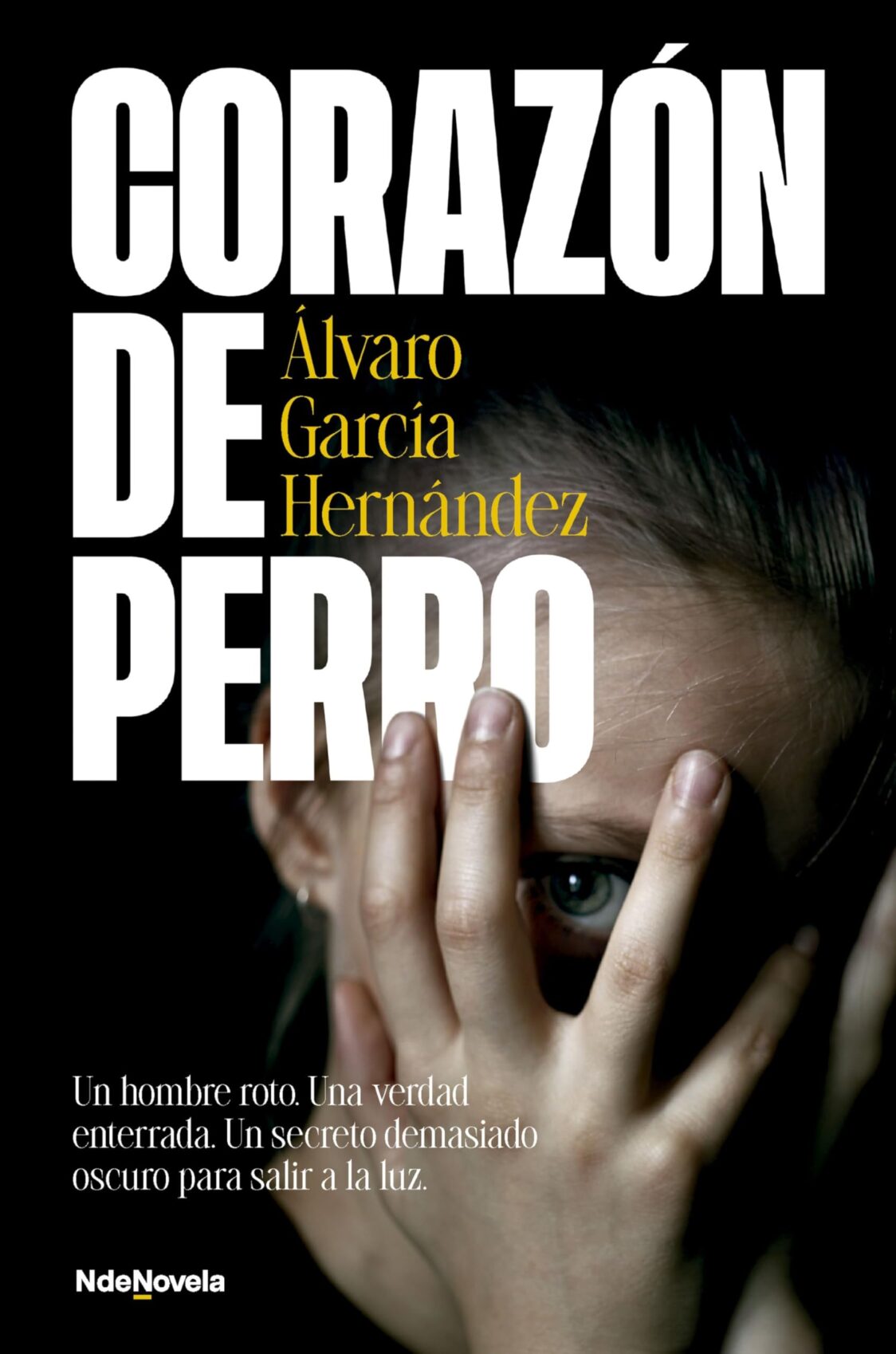
Corazón de perro is a crime thriller filled with tension and suspense, built on a complex criminal investigation intertwined with the intimate drama of characters marked by guilt, obsession, and the secrets of the past. The plot advances with a steady pace and constant twists that sustain the intrigue until the end. The story has strong audiovisual potential thanks to its dark, realistic atmosphere and a structure ideal for a miniseries or a suspense film.
AUDIOVISUAL POTENTIAL: TV Series, Miniseries, Film, TV Film.
AVAILABLE LANGUAGES: Spanish.
Adquirir los derechos
Para ponerte en contacto con nosotros completa el siguiente formulario y te responderemos en breve.
