
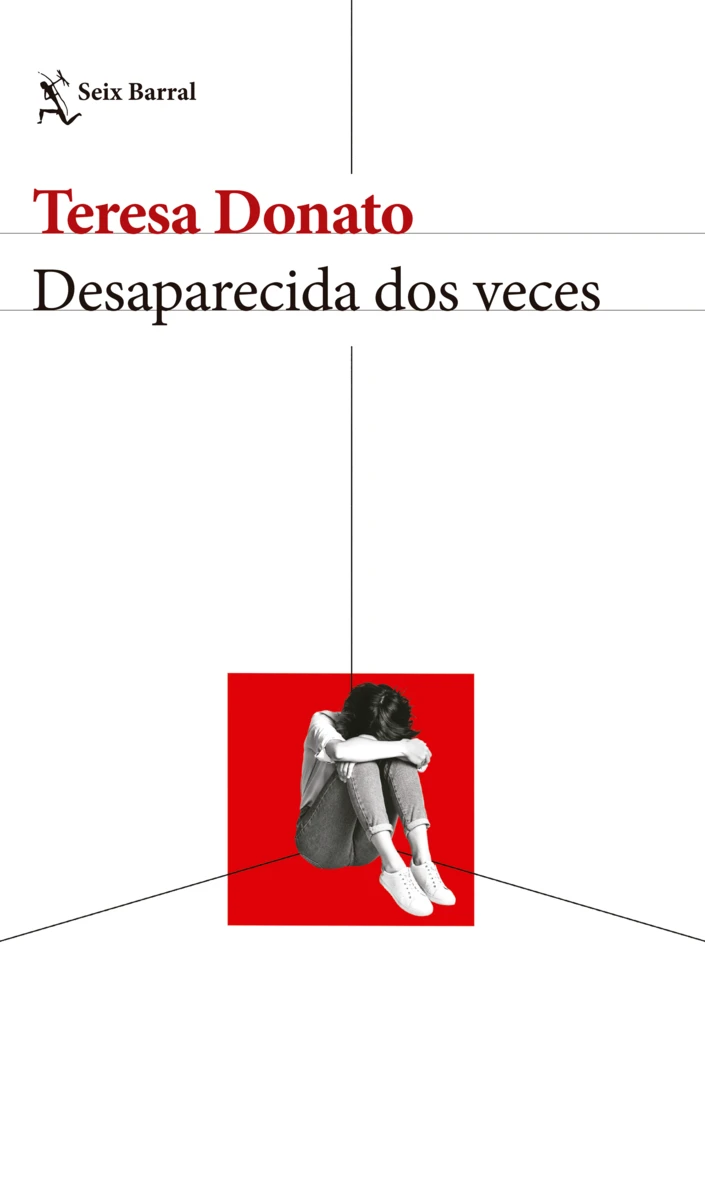
After surviving the Argentine dictatorship and going into exile in Brazil with her son in her arms, Ana María Massochi rebuilt her life and became a renowned chef in São Paulo. Decades later, at her son’s request, she decides to reveal for the first time her extraordinary story: that of a young Montonera who lost everything and, far from her country, found a second chance.
Ana María Massochi is now a renowned chef in São Paulo. Her restaurant is part of the city’s life, and those who know her can hardly imagine that, decades earlier, she was a militant and guerrilla member of Montoneros, survived the repression of the Argentine dictatorship, was kidnapped and tortured, and had to flee to Brazil with her one-year-old son in her arms to start over. For more than fifty years, she did not tell her story. After long conversations with writer Teresa Donato, that silence is broken in this novel based on real events.
Ana was born in 1951 in Buenos Aires. The early death of her father left her mother alone with six children and forced the family to reinvent itself. Ana studied social work and, like many young people of her generation, became involved in the political struggles of the early 1970s, convinced that Argentina could be a more just country.
In that context, she first joined social work in the neighborhoods and later became part of Montoneros, a leftist political and guerrilla organization. There she met Jorge Livieres, with whom she fell deeply in love. They married in 1973, and the following year their son Carlos was born. As political violence escalated and the organization went underground, Ana combined motherhood with an increasingly dangerous militancy.
October 5, 1975, marked a point of no return. Jorge took part in Operation Primicia, an attack on a military barracks that left several dead. He was one of them. Ana had to flee immediately to avoid arrest. Thus began a long escape through several cities across the country, always with false documents and the constant fear of being discovered. Around her, comrades and friends were killed or disappeared. During those years of clandestinity, her son Carlos was moved and protected within a network of relatives and acquaintances who kept him safe from danger.
In May 1978, she was arrested and taken to a clandestine detention center. There, she was tortured and reduced to a number: 34. In that place, she came under the control of an Army officer she calls Beto. The relationship that developed between them was marked by abuse and coercion. Beto kept her alive, subjected her sexually, and at the same time allowed her to improve her conditions of captivity and prevent the death of some fellow prisoners. Ana accepted that situation in order to survive and to reunite with her son, who by then was under the care of his maternal grandmother.
In 1979, she was granted permission to leave the country and arrived in Rio de Janeiro with her mother and Carlitos. She later lived in Nova Iguaçu and in Asunción, until she realized that only in Brazil could she rebuild her life. In 1980, she settled permanently in São Paulo and opened, with very few resources, a small empanada shop. Over time, that venture became an iconic restaurant and a symbol of a life built from the ruins.
This is the true story of a woman that reveals the extremely high cost of political violence and the extraordinary capacity of a person to survive, reinvent herself, and find, far from her country, success.
RELEVANT INFORMATION: Teresa Donato is an Argentine journalist, playwright, and screenwriter whose career has spanned radio, television, theater, and contemporary narrative. She has worked on productions with significant international impact such as Patito Feo —winner of an Emmy Award— Chica Vampiro, Viudas e hijos del Rock & Roll, El elegido, and Amor en custodia.
As a playwright and writer, her work focuses on memory, human rights, and experiences of survival. In addition to telling the life of Ana María Massochi and her son in Desaparecida dos veces, the author also brought this story to the stage in Mi vida anterior, a play praised by both audiences and critics.
The book avoids simplistic perspectives and explores the most complex areas of memory, guilt, fear, and survival. Through an intimate and deeply human voice, it addresses an individual experience that reflects that of an entire generation of women who fought for the future of their country. Its extraordinary dramatic arc, its historical dimension, and the strength of its protagonist make it a work with enormous audiovisual potential for a film or an international series set between Argentina and Brazil.
AUDIOVISUAL POTENTIAL: TV Series, Miniseries, Film, TV Film.
AVAILABLE LANGUAGES: Spanish.
Adquirir los derechos
Para ponerte en contacto con nosotros completa el siguiente formulario y te responderemos en breve.
