
Two men awaken locked in adjoining cells inside an impossible brothel where nothing obeys the laws of space. Horacio Kustos and Francisco Molinar will attempt to escape from a building that speaks through its walls, erases identities, and protects a secret garden that should not exist.
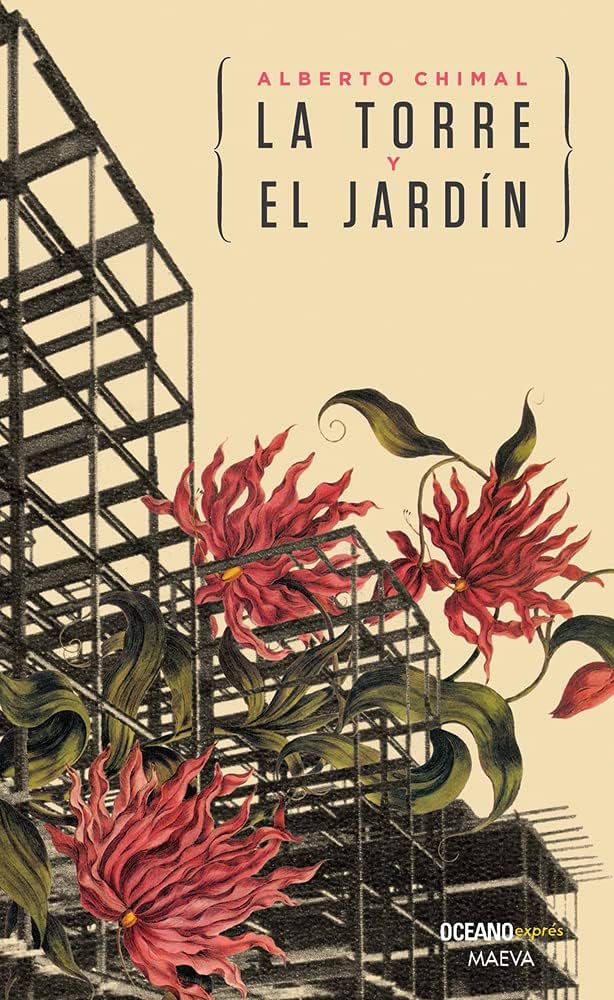
An apparently ordinary building is, in reality, an architectural anomaly: it is larger on the inside than on the outside and functions as a conscious system. The tower records everything that occurs within it, alters its own structure, and decides who may remain inside. It was built to fulfill a single function: to contain and protect something that cannot exist in the open world.
On its lower levels operates El Brincadero, a clandestine brothel of extreme practices that serves as a façade. The business is not the center of the place, but its cover. The tower exists to safeguard a hidden garden, a living ecosystem that grows within an impossible space.
The story begins when Horacio Kustos, an investigator specializing in anomalous places, and Francisco Molinar, a doctor who returns to the building while pursuing a childhood memory he was never able to explain, find themselves locked in adjoining cells inside the tower. As they attempt to communicate and escape, they discover the first rule of the place: the tower listens.
An omnipresent voice begins to describe their movements, thoughts, and actions in real time. It is Zenhya, the building’s narrative and operational system. It is not merely a voice: it is the mechanism through which the tower recognizes, organizes, and sustains the existence of those inside it. As long as Zenhya names and describes them, they can move, speak, and act.
Corridors change shape, elevators do not reach the expected floors, and spaces constantly reorganize themselves. The tower is not a fixed setting, but an active architecture that responds to its own internal logic.
When Zenhya stops narrating Horacio—when its voice ceases to mention him and integrate him into the building’s continuous narrative—Horacio physically disappears. He does not die or escape: he simply ceases to be there. His clothes remain on the floor, untouched. Francisco then understands the central rule of the place: within the tower, existence depends on being recognized by the system. Whoever ceases to be narrated ceases to exist inside the building.
The only person who understands these rules is Isabel García, the administrator of El Brincadero. Raised within the tower, she spent years trying to escape before accepting her true role: not to run a business, but to maintain the building’s balance and protect its secret. Isabel possesses the “blue book,” a record that allows interaction with the tower’s internal logic and access to levels that would otherwise remain closed.
With the help of Nata, an employee who has learned to communicate with Zenhya, Francisco manages to make the system recognize Horacio again. Once more narrated by the voice, Horacio reappears, fully restored. But the building’s equilibrium begins to strain.
Faced with this situation, Isabel makes a decision that should never have been made: to guide them toward the forbidden level, the place for which the tower was built.
There, the final truth is revealed. The brothel is only a smokescreen. The building’s true purpose is to protect the garden: a wild, autonomous ecosystem inhabited by undomesticated animals and primitive humans, separated from the rest of the world by a fragile boundary. The garden is not symbolic or allegorical. It is real. It is alive. And it grows a little more every year.
The tower contains it, watches over it, and isolates it. But it cannot halt its expansion indefinitely.
The ending offers no victory. Francisco confirms the origin of his childhood memory. Horacio understands that there are discoveries that permanently alter those who witness them. Isabel fully accepts her role as guardian.
The tower remains, listening and narrating. The garden continues to grow. And when it can no longer contain it, the building will do whatever is necessary to fulfill its function, even if that means destroying those who come too close.
RELEVANT DATA: Alberto Chimal is a Mexican writer considered one of the most singular voices in Ibero-American fantastic literature. His work shows a marked inclination toward the fantastic, the speculative, and the unsettling. He has received several awards, including the Nezahualcóyotl National Short Story Prize, the Bellas Artes Colima Prize for Published Narrative, and the FILEM International Prize (2024) for his literary career.
A finalist for the Rómulo Gallegos International Novel Prize, The Tower and the Garden is a spin-off of the Kustos Saga, an ambitious work that blends science fiction and fantasy within a distinctive and recognizable universe. It is built around a powerful central idea: an impossible building that functions as a closed space, antagonist, and narrative engine. This conceptual clarity favors a direct and highly visual audiovisual adaptation. The plot maintains tension from beginning to end, articulating mystery and fantasy around a clear conflict, while the characters embark on a journey of revelation that is precise and cinematic. The contrast between the sordid and the magical constructs an adult, disturbing imaginary with a strong personality.
AUDIOVISUAL POTENTIAL: TV series, Miniseries, Feature film, TV film.
AVAILABLE LANGUAGES: Spanish.
Adquirir los derechos
Para ponerte en contacto con nosotros completa el siguiente formulario y te responderemos en breve.
