
Days before his mother’s death, a man inherits the obsession that consumed his father for decades: solving a series of murders that terrorized a rural region. As he tries to fulfill an old family promise, he discovers that the monster may have been far closer than anyone ever imagined.
Just days before she dies, a woman tries to leave her son a message he cannot understand. She writes the word AMEN on the palm of his hand and, when Max arrives, the cousin he has always admired and regarded as the moral pillar of the family, she covers her face in terror. After the funeral, the memory of that scene begins to haunt him. What seemed like a confused farewell gradually turns into a disturbing suspicion: the possibility that his mother was trying to warn him about Max.
Driven by that intuition, he begins reconstructing a family history marked by silence and obsession. At the center of his search stands the figure of his father, a kind, insecure man who struggled to express himself but devoted much of his life to a mystery he never managed to solve. For decades, he regularly visited Florita Gironi, the mother of Marcos, one of the children murdered by the legendary Monster of the Olive Groves, a killer who spread terror across the rural districts of the region for more than half a century. His victims were found hanging upside down from olive trees, strangled and mutilated, while the police failed to identify the perpetrator.
Marcos’s murder profoundly scarred both Florita and the narrator’s father. Convinced that he would one day uncover the truth, the father made a promise that would guide the rest of his life: to find the killer, make him ask for forgiveness, and recover a small object the boy had been carrying when he disappeared. Florita never revealed what that object was. Only she, her son, and the killer knew the secret.
As the investigation progresses, the narrator discovers that his father died believing he was close to fulfilling that promise. Shortly before his death in what was supposedly a mushroom-picking accident, he had spoken about a mysterious discovery connected to a hole in the ground and the red earth surrounding the region’s prehistoric cave paintings. He had also delivered a strange and seemingly incoherent speech during a New Year’s Eve dinner hosted by Max, one that everyone dismissed as the ramblings of a nervous man. Years later, however, his son rereads the speech and finds repeated references to a hidden wine cellar, secrets buried beneath the earth, and red figures associated with pain and death. What once appeared nonsensical begins to sound like an accusation.
The investigation repeatedly leads him back to Max. Charismatic, intelligent, and universally admired, the family patriarch seems to embody absolute respectability. Yet the deeper the narrator digs into the past, the more convinced he becomes that his father had suspected Max for years. Recovered conversations, childhood memories, Max’s unusual behavior, and the clues hidden in his father’s speech gradually form a terrifying possibility: that the most admired man in his family is also responsible for the crimes that have haunted generations.
The novel never provides definitive proof nor fully reveals the truth. Instead, it accumulates clues: an estate built beside ancient cave paintings, a wine cellar that appears to conceal more than it reveals, a secret protected for decades, and the suspicion that the father was silenced when he came too close to discovering it. Little by little, the narrator becomes convinced that Max is the Monster of the Olive Groves and that behind the murders lies a dark logic he will never completely understand.
Everything culminates during Max’s traditional New Year’s Eve gathering. Before family members, neighbors, and friends, the narrator takes the floor and reconstructs his father’s story, vindicating a man who had been ridiculed for years because of his awkwardness and inability to make himself understood. He then turns his attention to Florita and asks only one thing of Max: that he return the object that belonged to Marcos.
Then something unexpected happens. Without denying the accusation or arguing his innocence, Max reaches into his pocket and produces a small music box. He hands it to Florita and asks for forgiveness. For the elderly woman, who has spent almost fifty years waiting for an answer, the object is the last remaining trace of her son. For the narrator, the gesture amounts to a confession. There is no explicit admission of the murders, but there is evidence impossible to explain any other way.
In that moment, he realizes that he has achieved what his father pursued his entire life. He has given Florita an impossible form of closure and compelled the man he believes responsible to offer an apology at last. Yet he does not seek revenge or turn to the police. Like his father, he is incapable of holding on to hatred. The novel even suggests that Max may have caused the father’s death in order to protect his secret, but the narrator ultimately abandons the pursuit of a justice he can no longer prove.
In the end, The Bulgarian Nights of the Crooked Woman reveals itself to be less a detective novel than a story about memory, loss, and the weight of family secrets. The monster may remain free, and the full truth may stay buried beneath the red soil of the olive groves, but the son finally understands the message his mother tried to leave him before her death, rescues his father’s memory, and fulfills a promise that had waited decades to be kept.
RELEVANT INFORMATION: Vital Citores is a Spanish writer, educator, and painter. His work is characterized by a highly literary and at times experimental style in which existential reflection, memory, and the exploration of his characters’ inner conflicts coexist.
His literary career began in the 1990s, when he was shortlisted for the New Narrators Prize (1996) and the Primavera Prize (1999).
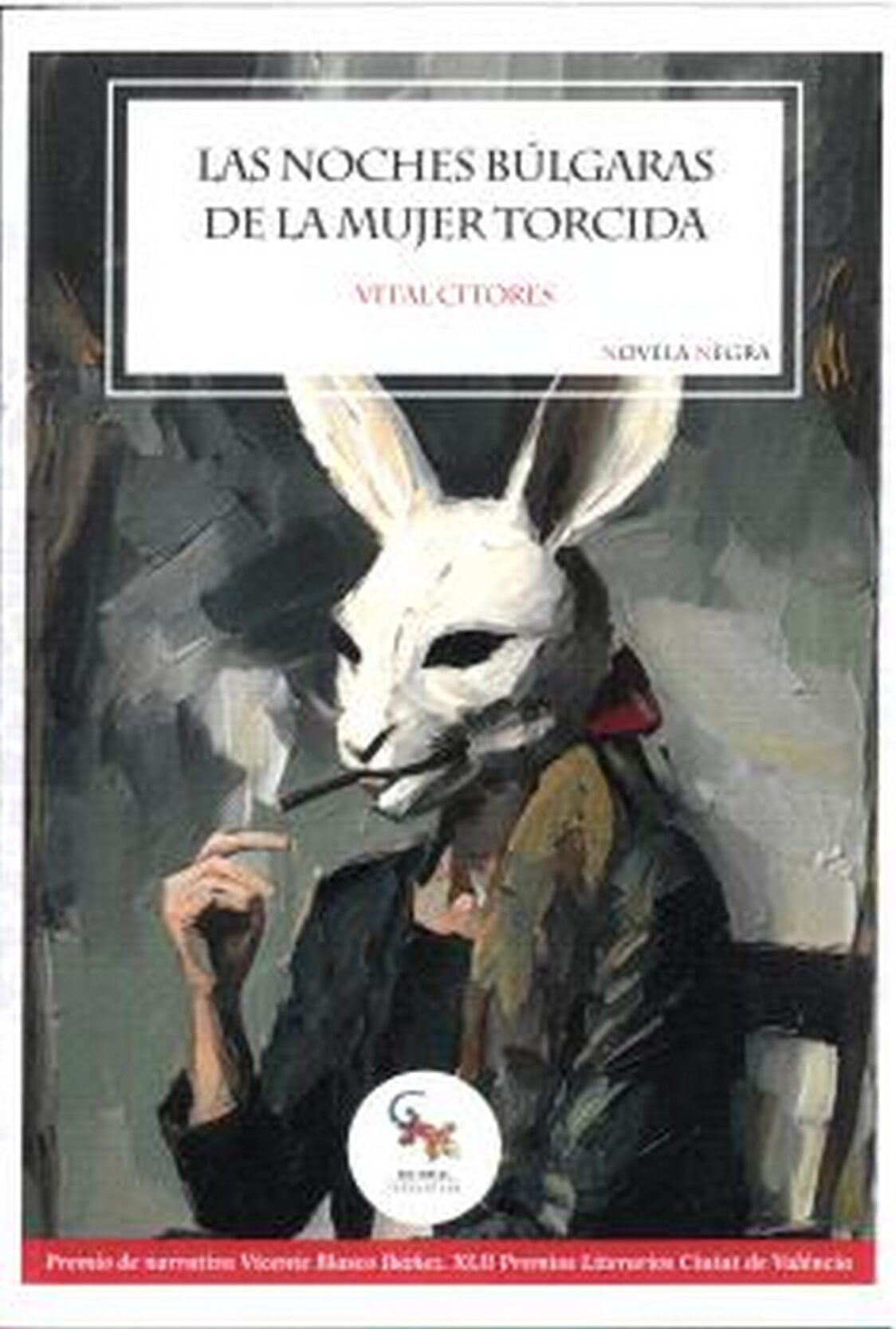
The Bulgarian Nights of the Crooked Woman is a psychological horror and mystery novel distinguished by its oppressive atmosphere and profound psychological depth. Its audiovisual potential stems from a storyline that combines detective reconstruction with the narrator’s psychological journey, a striking rural setting, and the ambiguity and complexity of its characters. In 2024, the novel received the Vicente Blasco Ibáñez Spanish-Language Narrative Prize.
WHAT READERS ARE SAYING
“The Bulgarian Nights of the Crooked Woman is a horror story that leaves your head spinning. I thought it was a perfectly crafted novel, even with its open ending. I can assure you I’m still thinking about it.”
María Doménech, Perdamos la perspectiva
“Addictive, real, and bitter, the story of a contradictory protagonist returning to the town where he grew up and that now torments him. Fascinating.” Goodreads user
AUDIOVISUAL POTENTIAL: TV Series, Limited Series, Feature Film, TV Film.
AVAILABLE LANGUAGES: Spanish
Adquirir los derechos
Para ponerte en contacto con nosotros completa el siguiente formulario y te responderemos en breve.
