
Artist, vedette, writer, activist, and pioneer of naturism, Dora Vivacqua transformed her own life into an act of rebellion against the conventions of her time. A vibrant portrait of one of the most provocative and fascinating figures of twentieth-century Brazil, a woman who turned her existence into a myth and challenged an entire nation in her pursuit of freedom.
Dora Vivacqua was a Brazilian woman who chose to turn her own life into a legend. Born in 1917 into an influential upper-class family, she grew up surrounded by strict social conventions and under the watchful eye of a severe mother who imposed an almost religious discipline. From an early age, Dora sensed that she did not belong to that world. The violent death of her father, murdered when she was fifteen, severed her remaining ties to that environment and pushed her toward a life that would become increasingly free, provocative, and daring.
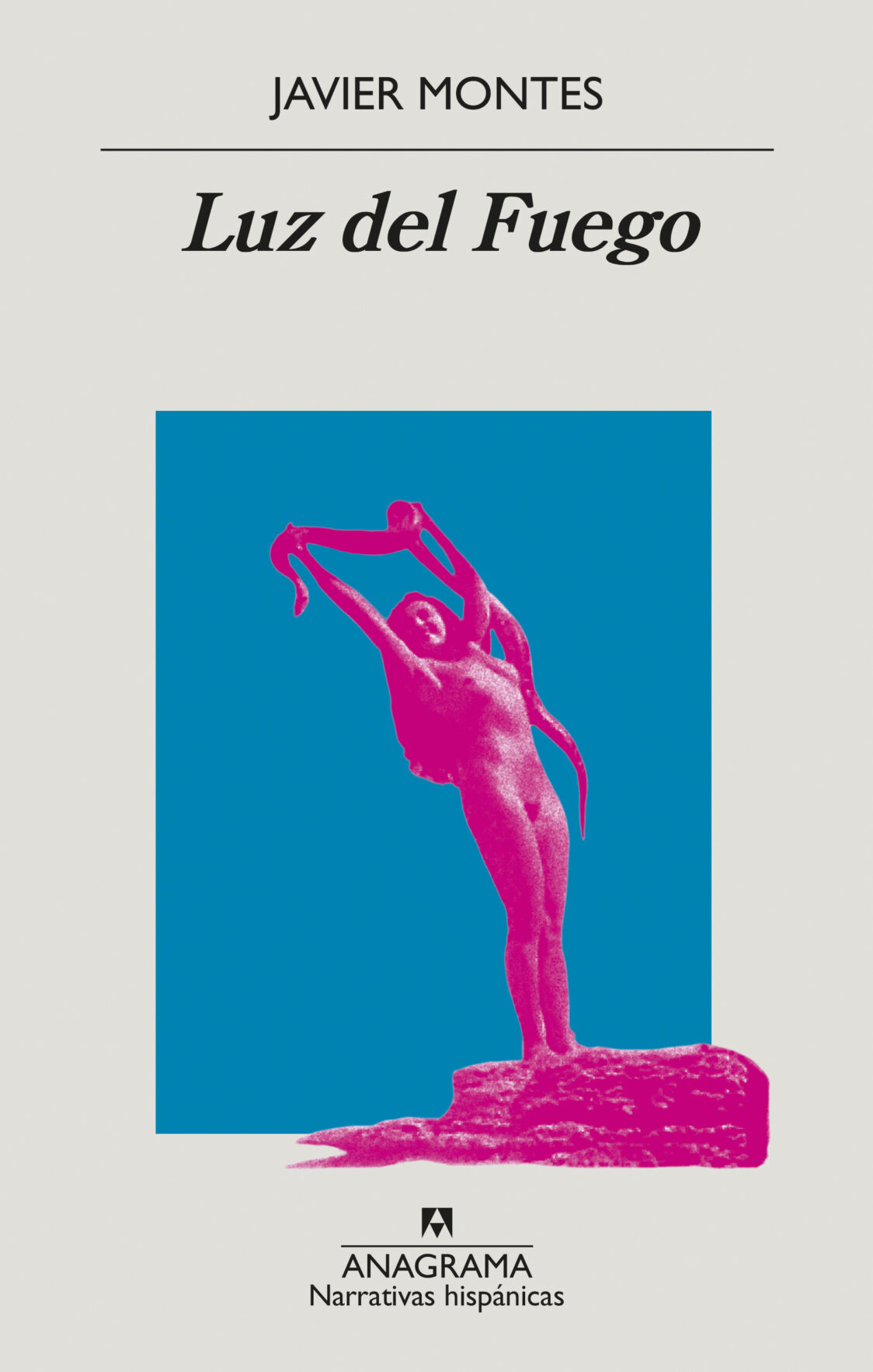
At the age of seventeen, she fled to Rio de Janeiro and consciously began constructing a persona capable of captivating an entire nation. She longed for fame, applause, and public admiration, and found in show business the path to achieve them. Realizing that her talent as a dancer alone would not make her a star, she turned to an element as unusual as it was sensational: snakes. After confronting venomous reptiles and learning to handle enormous boas, she created Luz del Fuego (Light of Fire), a stage identity that transformed provocation into an art form. Her most famous performance, Eve’s Temptation, in which she danced nude alongside a giant snake, made her a national celebrity.
Yet Luz del Fuego was not content merely to shock audiences. For her, nudity was also a political statement. She championed naturism as an expression of freedom, equality, and emancipation. She wrote books, challenged both her family and the Church, and in 1949 founded the Brazilian Naturist Party under the slogan “Less Clothing, More Bread!” Her ambition was to bring those ideas into Parliament and advocate for controversial causes of the time, including women’s rights, divorce, and a society less constrained by convention.
Her most ambitious project arrived in 1952, when she obtained an uninhabited island in Guanabara Bay. She named it Sun Island and established the first naturist club in Brazil and throughout Latin America. For years, the small island acquired an almost mythical status. Politicians, artists, aristocrats, and international celebrities attended its gatherings, while Luz del Fuego strengthened her reputation as one of the country’s most distinctive and impossible-to-ignore public figures.
But Brazil changed. The modernization of the 1960s and, above all, the military coup of 1964 brought an end to the world that had enabled her rise. The island was abandoned, the public moved on, and Luz, increasingly forgotten and financially ruined, was forced to accept precarious jobs in order to survive. In 1967, at the age of fifty, she was brutally murdered by two poachers she had previously reported to the authorities. After killing her, they tied her body to stones and sank it in the bay.
Javier Montes’s novel reconstructs this extraordinary life through an investigation that follows the traces of Dora Vivacqua and the larger-than-life persona she created. The result is a fascinating portrait of a woman who transformed freedom into spectacle, challenged the norms of her era, and ultimately paid a terrible price for refusing to stop being the person she had chosen to become. Her legacy survives to this day in a rare Brazilian orchid that bears her name: Luz del Fuego.
RELEVANT INFORMATION: Javier Montes is a Spanish writer, translator, and art critic, recipient of the José María de Pereda Prize and the Anagrama Essay Prize. In 2010, he was selected by Granta as one of the best young Spanish-language novelists. His work, translated into seven languages, moves fluidly between fiction, essay, and cultural criticism, with a particular interest in art, literature, and singular figures from contemporary culture.
Luz del Fuego is one of his most acclaimed works, a fictionalized biography of the Brazilian dancer and vedette of the same name, built upon extensive documentary research. Dora Vivacqua’s transformation into the public persona of Luz del Fuego provides a powerful dramatic arc and remarkable audiovisual potential. Her rise, provocations, and eventual downfall offer a unique journey through mid-twentieth-century Brazil, a country undergoing profound social and political transformation. The result combines an extraordinary personal story with a rich, exotic, and visually stunning historical backdrop, making it ideal material for a distinctive and dramatically powerful biopic.
WHAT CRITICS AND READERS SAY
“This account of Dora Vivacqua’s life is impossible to put down thanks to the fascination of its protagonist and the effectiveness of its storytelling.” Ascensión Rivas, El Cultural.
“This extravagant and addictive novel brings an entire fascinating era back to life.” El Confidencial.
“This novel by Javier Montes possesses the invaluable quality of knowing how to captivate.” Libros, nocturnidad y alevosía.
“A hypnotic story about an icon of Brazilian culture.” Ale, Goodreads reader.
AUDIOVISUAL POTENTIAL: TV Series, Limited Series, Feature Film, TV Film.
AVAILABLE LANGUAGES: Spanish, Portuguese.
Adquirir los derechos
Para ponerte en contacto con nosotros completa el siguiente formulario y te responderemos en breve.
