
A restorer agrees to rehabilitate an abandoned mansion to help her unstable partner, a tormented photographer, but soon discovers that the house is marked by a presence that feeds on everything its inhabitants tried to hide. As the boundaries between past and present begin to dissolve, the house starts claiming her as its own. To survive, she must confront a truth that perhaps should never have been unearthed.
A restorer is trapped in an obsessive relationship with Zuri, a brilliant yet unstable photographer haunted by panic attacks and an unhealthy dependence on his mother. After disappearing for three weeks, he suddenly returns with a proposal: to restore the Neo-Colonial mansion of his great-uncle, the renowned photographer Eligio Vargas Pani, who has recently died.
The mansion has been locked up for more than thirty years. It seems both perfectly preserved and utterly dead, covered in dust and permeated by the unsettling sensation of a life abruptly interrupted. From the moment she steps inside, the restorer senses that something lives within the house, something that watches and waits.
Among the forgotten objects, she finds clothing belonging to a missing woman, children’s toys, sealed hiding places, and a strange shrine still tended with devotion by Oralia, an elderly servant.
In the attic, she discovers a trunk filled with negatives, letters, and photographs. One image horrifies her: a dismembered body tied to three stakes and held upright by two men. The victim’s face, strangely serene, feels unbearably familiar, as though she were looking at herself. On the back of the photograph, dated August 1962, are the words: “Is there anything more tenacious than memory?”
As she restores the house, it seems to awaken. Dreams become messages that guide her toward hidden objects: gold coins, jewelry, a ring concealed inside a pipe, and human remains hidden within a vase. Every discovery points toward a truth that has lain buried for decades.
That truth belongs to Gertrudis, Eligio’s wife: a woman trapped in a marriage defined by abuse and infidelity. She attempted to flee with her twin daughters but was forced to return, confined to an asylum, and eventually disappeared without a trace.
While the restorer pieces together the past, Zuri prepares a photographic series and asks her to pose for him. At first the sessions seem merely strange, but they take a disturbing turn when he binds her to a tripod identical to the one depicted in the photograph from the trunk.
Suddenly, everything falls into place. The image did not portray a forgotten execution. It documented the murder of Gertrudis.
Eligio and two accomplices drugged her, tortured her, dismembered her while she was still alive, and photographed the crime. They then buried her remains beneath the garden and hid her ring inside the house. Zuri is not recreating those images out of artistic obsession. He is repeating the ritual.
The restorer escapes and enters the forbidden darkroom, where she discovers further evidence of the horror: photographs of Gertrudis’s dismemberment and degrading images of the twins. She finally understands that the house did not simply preserve these memories. It fed upon them.
When all hope seems lost, Oralia appears, or what remains of her. She guides the restorer into the garden, where together they perform a ritual involving fire and water. The restorer abandons her name, her body, and her history, transforming into something impossible to define.
But the house remains.
Beneath the avocado tree, its secrets are still buried. And as the narrator, now separated from herself, walks toward a faint emerging light, she understands that memory never truly dies. It simply waits beneath the earth for someone to dig it up again.
RELEVANT INFORMATION: Ave Barrera is a Mexican writer, editor, and translator. Her debut novel won the Sergio Galindo Latin American First Novel Prize. She has also explored femicide in the artist book project 21,000 Princesses, created with Lola Hörner and awarded the Lía International Artist Book Competition Prize in 2015.
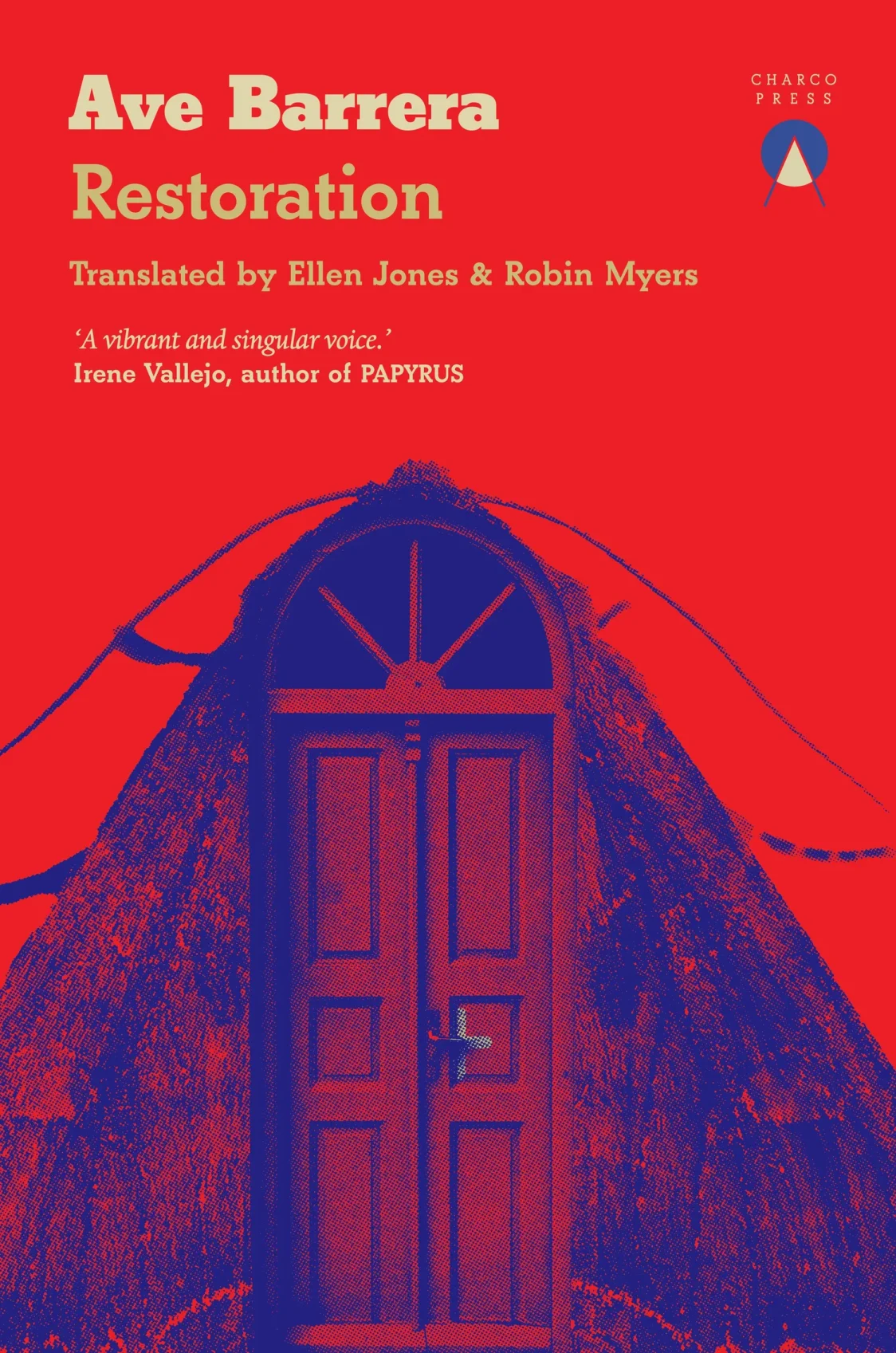
Restoration, recipient of the Lipp La Brasserie Prize, is one of her most acclaimed works. A horror novel that reflects on memory and violence against women, it constructs an oppressive atmosphere in which the house functions not merely as a setting but as an active character. Its audiovisual potential is considerable: photography as a central narrative device, temporal shifts between past and present, the tension between the contemporary storyline and Gertrudis’s tragic history, and the gradual unveiling of horror make it ideally suited for a limited series or a visually striking feature film.
AUDIOVISUAL POTENTIAL: TV Series, Limited Series, Feature Film, TV Film.
AVAILABLE LANGUAGES: Spanish, English, Portuguese.
Adquirir los derechos
Para ponerte en contacto con nosotros completa el siguiente formulario y te responderemos en breve.
