
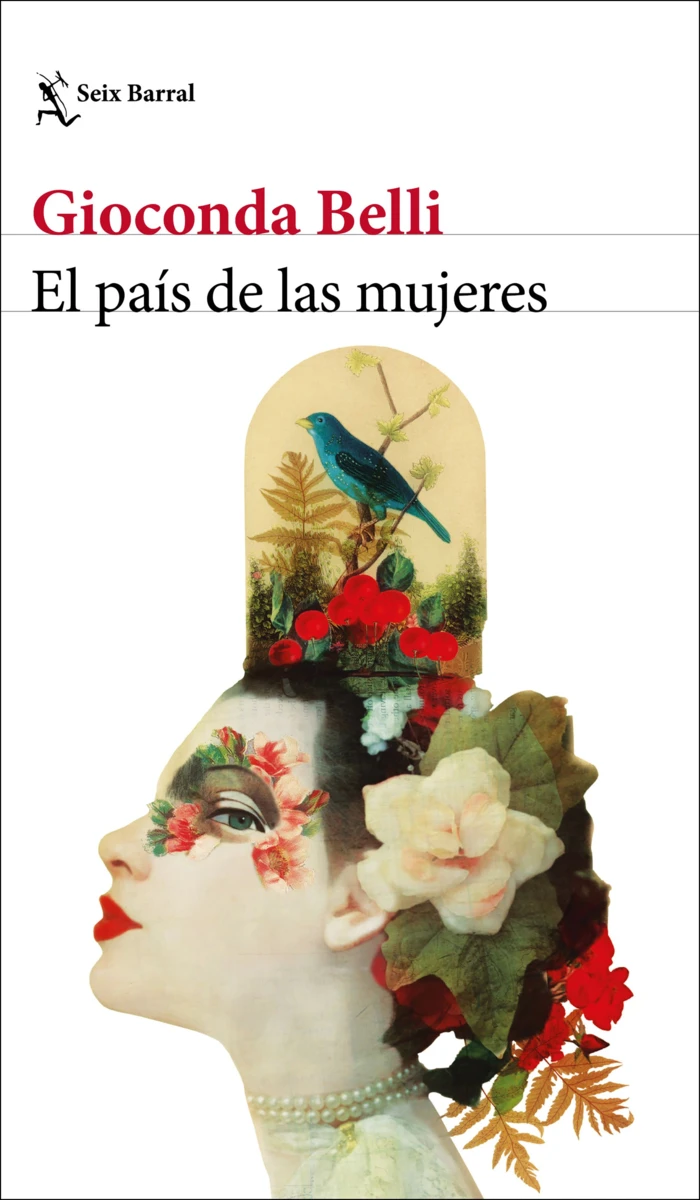
The Republic of Women (El país de las mujeres)

Topics

Genres

Subgenres

In a country where women take power and impose a new way of governing based on equality and care, men who feel displaced rebel and threaten to bring down the government. A bold and provocative political satire by the acclaimed writer Gioconda Belli.

In the fictional republic of Faguas, popular television host Viviana Sansón founds, together with her friends Martina, Eva, Rebeca, and Ifigenia, the Party of the Erotic Left (PIE), a feminist political force that proposes to transform the country through an ethic of care, genuine equality, and “felicism”: governing in order to generate everyday well-being.

The context that makes their victory possible is extraordinary. The eruption of the Mitre volcano covers the country with a toxic cloud that drastically reduces men’s testosterone levels. The male population becomes apathetic, stripped of competitive drive and aggression. In that climate—after years of corruption and the discrediting of the traditional government—the PIE wins the elections with a legislative majority.

Before coming to power, Viviana had investigated the corruption of Judge Jiménez and exposed a network of abuses that included the kidnapping and exploitation of minors. The rescue of a teenage girl, Patricia—who would later become her assistant under the name Joan of Arc—marks the beginning of a direct confrontation with entrenched sectors of the judicial and political establishment.

Once in the Presidency, Viviana launches sweeping reforms: she creates the Ministry of Unrestricted Freedoms, headed by Martina, to dismantle discriminatory language and practices; promotes campaigns of “care-izenship” and civic education; implements community kitchens and solidarity networks to ease domestic burdens; and adopts a controversial and temporary measure—excluding men from government, military, and police positions while they recover from hormonal imbalance, urging them instead to focus on family responsibilities.

The transformations spark enthusiasm, but also resentment. Male groups emerge that view their exclusion from power as humiliating. Although most men remain passive due to low testosterone levels, radicalized sectors begin to organize.

In the second year of her term, during the celebration of Equality Day, Viviana is shot in a public square. The bullet comes from within the crowd. She survives surgery. The investigation reveals that the shooter is Dionisio, manipulated by a network of resentful men linked to the circle of former Judge Jiménez. With key testimony obtained by José de la Aritmética, the conspiracy is confirmed and those responsible are prosecuted.

As testosterone levels begin to normalize, male protests against the government intensify. Riots break out, along with an uprising encouraged by conservative and religious sectors demanding the return of “women to their homes.” The trial of the conspirators exposes the web of corruption, resentment, and fanaticism that led to the attack.

However, Viviana realizes that the country stands on the brink of a deep social fracture. She has become a polarizing figure and a catalyst for potential widespread violence. Prioritizing institutional stability and civil peace over her hold on power, she decides to resign from the Presidency.

Her resignation does not signify the defeat of the project. The PIE leaves structural reforms in place, reshapes public debate, and introduces a new paradigm of power based on care, equality, and shared social responsibility. The experience proves that women can govern and redefine the rules of the political game. Viviana remains alive, aware that she has led a historic experiment that irreversibly transforms the political culture of Faguas.


RELEVANT INFORMATION: The Country of Women (El país de las mujeres) is a fun and brave novel that won the Premio Hispanoamericano de la Novela La Otra Orilla. Belli has been awarded with many awards like the Premio Casa de las Américas, the Premio Pluma de Plata, the Premio Sor Juana Inés de la Cruz, the Premio al Mérito Literario Internacional Andrés Sabella, the Premio de Bellas Artes de Francia and the Premio Eñe. She was also a finalist of the Los Angeles Times Book Prize, and has been given the Medalla de Reconocimiento del Teatro Nacional Rubén Darío and the Ordre des Arts et des Lettres of France. She is a member of the Academia Nicaragüense de la Lengua and of the PEN Club Internacional.

This story can become a fantastic franchise, since it can be set both in the imaginary country suggested by the author or in any other real region.


AUDIOVISUAL POTENTIAL: TV Series, Miniseries, Film, TV Movie.

LANGUAGES AVAILABLE: Spanish, Arabic, Portuguese, Italian, German, Turkish, Dutch, and French.
Adquirir los derechos

Para ponerte en contacto con nosotros completa el siguiente formulario y te responderemos en breve.

Error: Contact form not found.
