
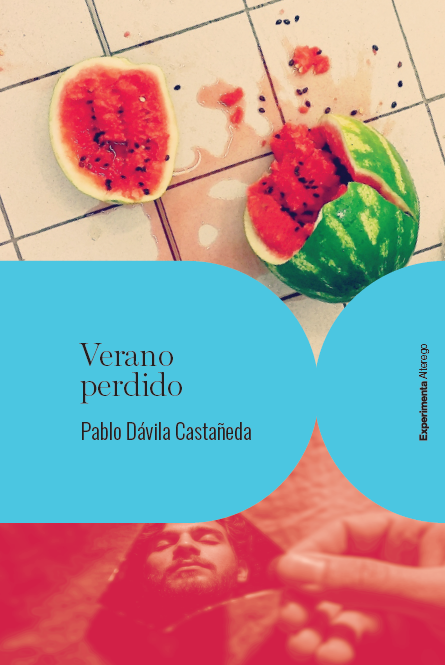
Tito waits in a hospital room for the trial that will determine his future. It all began with a vacation alongside his girlfriend Valeria, who had grown increasingly distant, and ended in a spiral of jealousy, alcohol, and conflicts on the verge of tragedy. As he reconstructs what happened, Tito will be forced to confront the truth about the trip and, above all, about a relationship that may have been broken long before it finally ended.
Tito, a thirty-five-year-old architect, wakes up in a hospital on a volcanic island with both hands bandaged and a trial looming ahead. From his bed, he follows the proceedings by videoconference while his lawyer, Eleuterio Lopo, a chain-smoking, cynical loudmouth with a talent for turning every disaster into an improbable legal theory, struggles to save him from what seems an inevitable conviction.
As testimony unfolds, Tito relives the vacation that brought him there. Just days earlier, he had traveled to the island with Valeria, his partner of nearly twelve years; Pelayo, his best friend since childhood; Pilar and her young son Lucas; and Anna Paola, one of Valeria’s Italian friends, who is once again navigating one of her recurring romantic crises. What should have been a week of relaxation quickly becomes a coexistence as entertaining as it is uncomfortable.
From the very first day, Tito senses that something has changed. Valeria is distant, avoids spending time alone with him, and seems increasingly more comfortable in the company of others. As he struggles to recover an intimacy slipping through his fingers, the vacation fills with a series of small everyday disasters: absurd excursions, tense dinners, ridiculous accidents, awkward silences, and arguments that begin as jokes but end up exposing old wounds.
Life within the group offers little relief. Anna Paola turns every conversation into an unpredictable monologue about love, men, Italy, or Spain. Pelayo attempts to act as a universal mediator while patiently enduring Tito’s constant teasing. Pilar watches the deterioration of the couple’s relationship with growing discomfort. Even Lucas, with his endless curiosity and innocent questions, ends up bringing uncomfortable truths to the surface.
Little by little, Tito begins to feel displaced within a group that seems perfectly capable of functioning without him. The feeling intensifies when Domenico appears. A former business partner of Valeria’s, a longtime friend to both of them, and a recurring source of insecurity for Tito, Domenico is charismatic, successful, and admired by everyone. To Tito, he embodies everything he feels he has lost over the years: professional prestige, self-confidence, and a privileged place in Valeria’s life.
From that point onward, the conflicts multiply. Tito argues with Anna Paola, ridicules Pelayo, interprets every gesture as a personal affront, and becomes obsessed with a single goal: talking to Valeria and repairing a relationship that has been crumbling for far too long. Yet the more desperately he tries to recover the past, the more evident it becomes that the past no longer exists.
Everything culminates at a party hosted by Domenico. What is a celebration for everyone else turns into a nightmare for Tito. He drinks too much, confronts several friends, loses sight of Valeria, and ultimately follows the group to a nearby volcano, convinced that there is still time to salvage something.
The conversation he has been searching for never takes place.
During an argument and a physical struggle, Tito does something that finally blows the entire vacation apart.
Back in the hospital room, the trial gradually begins to resemble less a criminal investigation and more a reckoning. Testimony after testimony, memory after memory, the proceedings dismantle Tito’s self-image and reveal a man who is brilliant, imaginative, and funny, but also incapable of accepting failure, the passage of time, and the deterioration of the most important relationship in his life.
The real verdict arrives in the hospital room. Valeria comes to say goodbye and tells him that the relationship is over and that she will be leaving without him. For the first time, Tito understands that the conflict was never Domenico, Anna Paola, his friends, or even what happened at the volcano. The real problem was his inability to accept that the story he had spent years trying to save had already come to an end.
RELEVANT INFORMATION: With a background in Audiovisual Communication and Advertising Graphics, Pablo Dávila Castañeda specializes in storytelling for social and cultural organizations as well as private companies, drawing on many years of experience in film marketing.
Lost Summer is his second novel, a work infused with dark humor that combines comic situations with a sharp and perceptive look at failure, relationships, and emotional stagnation. Particularly noteworthy is its interplay between reality, imagination, and perception, as well as a distinctive narrative voice capable of creating unsettling situations without losing narrative momentum.
The novel possesses strong audiovisual potential. Its vivid settings, humor, dialogue-driven storytelling, and underlying mystery lend themselves to a dynamic film or television adaptation, with room to explore both the comedic elements and the story’s more unusual, psychological dimensions.
AUDIOVISUAL POTENTIAL: TV Series, Limited Series, Feature Film, TV Film.
AVAILABLE LANGUAGES: Spanish.
Adquirir los derechos
Para ponerte en contacto con nosotros completa el siguiente formulario y te responderemos en breve.
